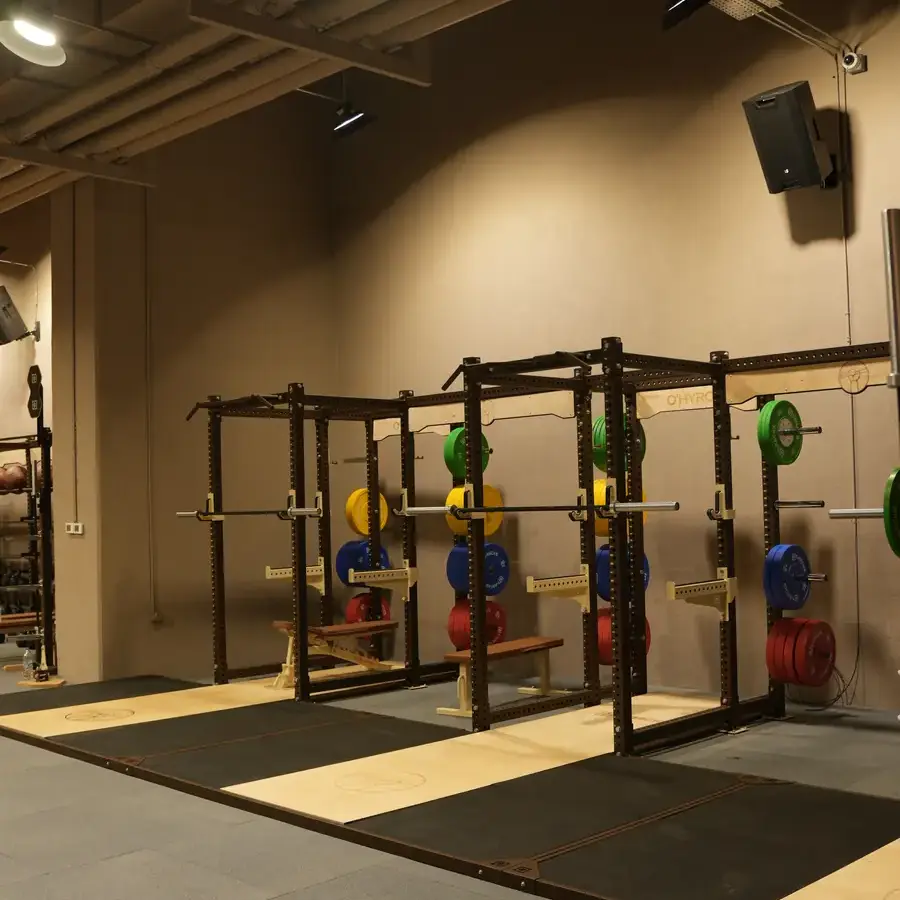
Hybrid training is an approach that tries to develop strength and endurance within the same program without one undermining the other. In the classic divide, an athlete either lifts or runs; the hybrid approach combines both in a planned way. HYROX is this philosophy turned into a race format: 8 kilometers of running demands pure endurance, the sled and sandbag demand pure strength, and you can't separate the two.
What hybrid training is not
Another misconception: hybrid training doesn't mean doing a bit of everything in every session. On the contrary, in a good hybrid program each session has one clear goal. Monday is a strength day, and raising your heart rate isn't the goal on a strength day; Saturday is an aerobic day, and there's no lifting target that day. Clarity of purpose is the line that separates hybrid from chaos.
Since it's a misunderstood concept, let's draw the boundary first. Hybrid training isn't adding ten minutes on the treadmill to the end of a weights session. Nor is it randomly doing everything in the same session. Those two are “mixed training” and usually produce no meaningful progress in any area.
The defining feature of hybrid training is planned separation: a clear set of rules about which stimulus is delivered on which day, in what order, and at what intensity. Without this rule set, the two stimuli blunt each other; in physiology this is called the interference effect, and the details interference effect we covered in the article.
What the two stimuli do differently in the body
This relationship also has a positive side that usually goes unmentioned: strength training doesn't harm endurance, and in most cases contributes to it. Stronger legs produce the same running speed with less relative effort. So the interference is largely one-way — aerobic volume blunts strength somewhat, strength doesn't blunt aerobic capacity.
For HYROX, that's good news. Rather than fearfully cutting strength work, distributing aerobic volume smartly is the right strategy.
Simply put: strength training tells the body “produce more contractile protein.” Endurance training says “produce more mitochondria, multiply capillaries, use fuel more efficiently.” The two messages press different pathways within the same cell, and up to a point these pathways can run at the same time.
The problem starts when a threshold is crossed. When weekly aerobic volume gets very high and recovery falls short, strength gains slow down. The reverse is also true: if very high strength volume keeps your legs constantly heavy, running quality drops. So hybrid training is a balance problem, not a contradiction.
Why HYROX is a purely hybrid race
This becomes clear when you look at the race format. Eight kilometers of running requires a good aerobic base — that's entirely the endurance side. The 50-meter Sled Push and 50-meter Sled Pull require high strength and power. The 200-meter Farmers Carry is grip endurance. 100 Wall Balls are leg endurance and shoulder tolerance. The 100-meter Sandbag Lunges are single-leg strength.
| Race segment | Dominant quality | Training equivalent |
|---|---|---|
| 8 × 1 km run | Aerobic capacity, running economy | Zone 2 volume + threshold run |
| 1000 m SkiErg | Upper-body endurance | Pulling volume + ergometer intervals |
| 50 m Sled Push | Leg strength, power | Squat, step-up, sled repeats |
| 50 m Sled Pull | Pulling strength, grip | Row variations, dead hang |
| 80 m Burpee Broad Jump | Lactate tolerance, plyometrics | High-intensity intervals + jumps |
| 1000 m Row | Leg-dominant aerobic power | Ergometer threshold sessions |
| 200 m Farmers Carry | Grip endurance | Loaded carries, plate pinch |
| 100 m Sandbag Lunges | Single-leg strength endurance | Lunge, Bulgarian split squat |
| 100 Wall Balls | Leg endurance, breathing | Front squat + high-rep Wall Balls |
Looking at the table, one thing is clear: no column wins the race on its own. The athlete who only runs loses on the sled; the one who only lifts loses on the run. To measure your station-specific weakness, you can use the station analysis protocol.
Five rules of hybrid programming
These five rules correspond to five questions to ask when writing a program: what's today's priority, which day does this day sit next to, how many of my aerobic minutes are easy, are my strength sets high quality, and how did I recover last week.
- Priority goes at the start of the session. Whatever you most want to improve that day, do it while fresh. If strength is the priority, lift first; if running speed is the priority, run the intervals first.
- Separate high-intensity days. Heavy squats and hard running intervals don't go on the same day or on two consecutive days. Put at least one low-intensity day in between.
- Most aerobic volume is done at low intensity. Roughly 75-80 percent of weekly aerobic minutes should be at an easy pace. This is the form of aerobic work that least undermines strength gains; details Zone 2 training article.
- Keep strength volume low-rep and high-quality. In a hybrid program, heavy sets of 3-6 reps are more efficient than exhausting sets of 12-15; they deliver the same gains with less fatigue.
- Measure recovery, don't guess it. Morning heart rate, sleep duration, and subjective RPE are three simple indicators. How we use the RPE scale RPE scale article.
A four-day hybrid week
The template below is for an amateur who trains regularly and can set aside four days a week. Its HYROX-specific setup in our program writing guide we explored in depth.
| Day | Main work | Duration | Intensity |
|---|---|---|---|
| Monday | Strength: squat 4 × 5, Bulgarian split squat 3 × 8, Farmers Carry 4 × 40 m | 65 min | High |
| Wednesday | Intervals: 5 × 800 m, 2 min rest; then 3 × 25 m Sled Push | 55 min | High |
| Friday | Strength: deadlift 4 × 4, row 4 × 8, dead hang 3 × 40 s | 60 min | Medium-high |
| Saturday | Zone 2 run 60-75 min + 500 m easy SkiErg | 80 min | Low |
| Other days | Walking, mobility, active recovery | 20-30 min | Very low |
For an athlete who can set aside five or six days, the added session is almost always low-intensity aerobic work or a mixed simulation— not a new high-intensity day. The simulation setup HYROX simulation we laid out step by step in the article.
What should a hybrid athlete realistically expect
The practical benefit of managing expectations is that you measure progress with the right metric. For a hybrid athlete, the meaningful metric isn't a squat PR or a 10K PR but both rising together on the same calendar. If your squat stayed flat over a block and your 5K time dropped by 40 seconds, that block was a success.
We need to be honest here. Hybrid training won't make you as fast as a marathoner and as strong as a weightlifter. What it does is produce a “high but not peak” level in both areas at once. A concrete example: an athlete who runs 10 kilometers in 45 minutes and can squat 1.5 times bodyweight is very good in hybrid terms; but a pure runner and a pure lifter are each clearly above those two numbers.
The value of HYROX is that it measures this balance. An athlete can rank high without setting a record in any single area, because they built the balance well. If you're wondering how to protect your strength and muscle mass goals, the HYROX and muscle mass article is devoted to that question.
The four most common mistakes when switching to hybrid
- Increasing volume in both areas at once. Doubling weekly running volume while maintaining strength volume is the classic burnout recipe. When you increase one area, hold the other steady.
- Making strength sessions exhausting. In a hybrid program, strength work's job is to produce force, not raise your heart rate. Aerobic sessions handle the heart rate work.
- Not keeping low intensity truly low. This is the most common mistake. Easy runs must be truly easy; weeks spent at a “moderate” pace neither build an aerobic base nor allow recovery. We defined zone boundaries in the heart rate zones article.
- Taking sleep and nutrition out of the equation. Hybrid load taxes two systems at once; the recovery budget becomes twice as critical. The sleep and performance article makes this link concrete.
Who it's for, and who it isn't for
Your starting point matters too. For a runner who has never done strength work, the first eight weeks go almost entirely to learning technique and foundational strength; a weightlifter who has never run first needs to build tendon tolerance with walking and easy running. We wrote separate roadmaps for both transitions: how a marathon runner switches to HYROX and how a weightlifter builds endurance.
Hybrid training suits a broad audience that wants to be “both strong and enduring.” It isn't the right choice in two situations: if you have an upcoming marathon or powerlifting meet and that result is your only goal, specializing for that season makes more sense. And if you have an active injury, rehab comes first; we covered the return protocol in the return after injury article, and if the complaint persists you should see a doctor.
For the large majority beyond that, the most concrete benefit of the hybrid approach is measurability: your squat number, your 5K time, and your HYROX finish time are all recorded on the same calendar. At Hybrid Sky, programs are written with exactly this logic — each athlete's strength and aerobic data are tracked separately, and the week is built accordingly. Session types on the classes page, the weekly flow in the class schedule for more.
Does hybrid training cause muscle loss?
Generally no, as long as protein intake and strength volume are maintained. The risk appears when aerobic volume rises excessively and the calorie deficit grows.
How many days a week does hybrid training need?
Four days is enough for most amateurs: two strength, two endurance. In five- and six-day programs, the added session is usually low-intensity aerobic work.
Can I do strength and cardio on the same day?
Yes, but order matters. Put the priority goal at the start of the session and, if possible, leave at least six hours between the two.
Can a hybrid athlete be as fast as a marathoner and as strong as a weightlifter?
No. The hybrid approach produces a high level in both areas at once but doesn't reach a specialized athlete's peak values; HYROX measures exactly this balance.
A stronger version of you.
Just one step away.
24 hours from your first message to your first session. Let's build your program together — reach out on whichever channel suits you.
Weekdays 06:00 - 23:00