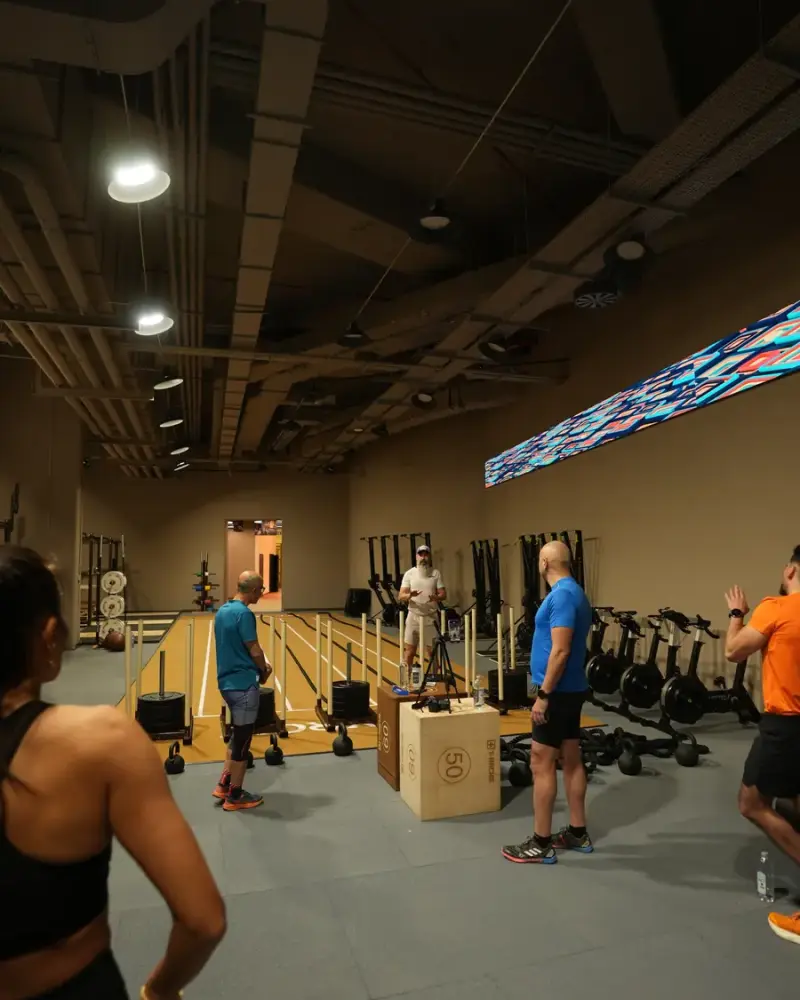
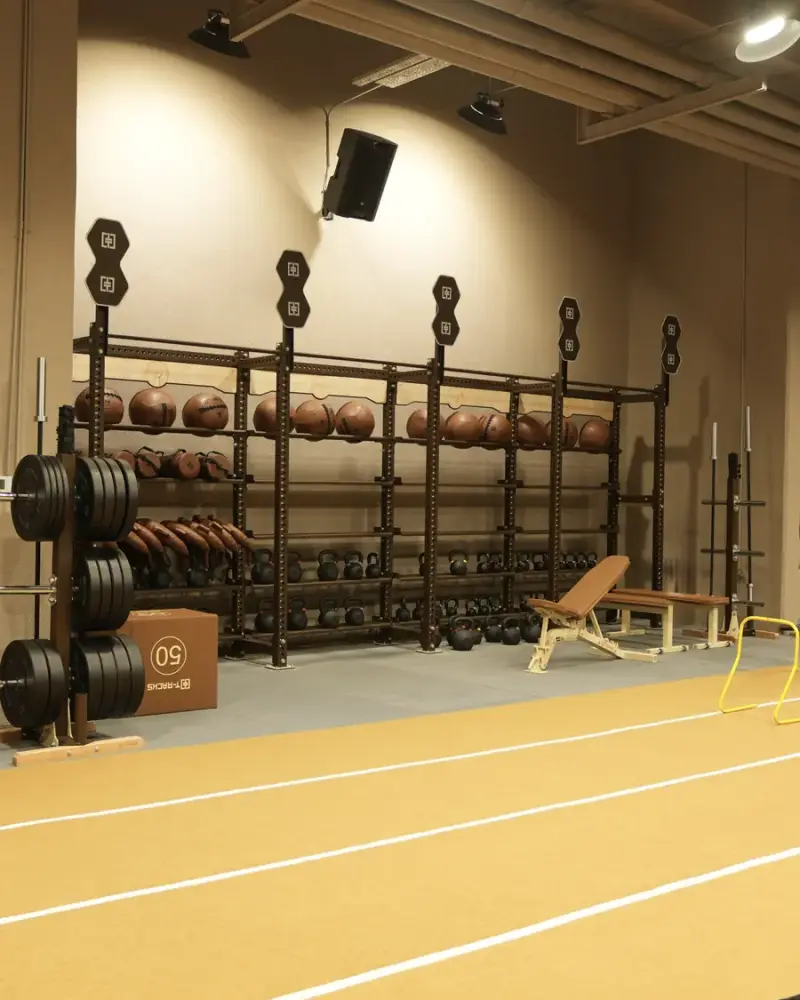
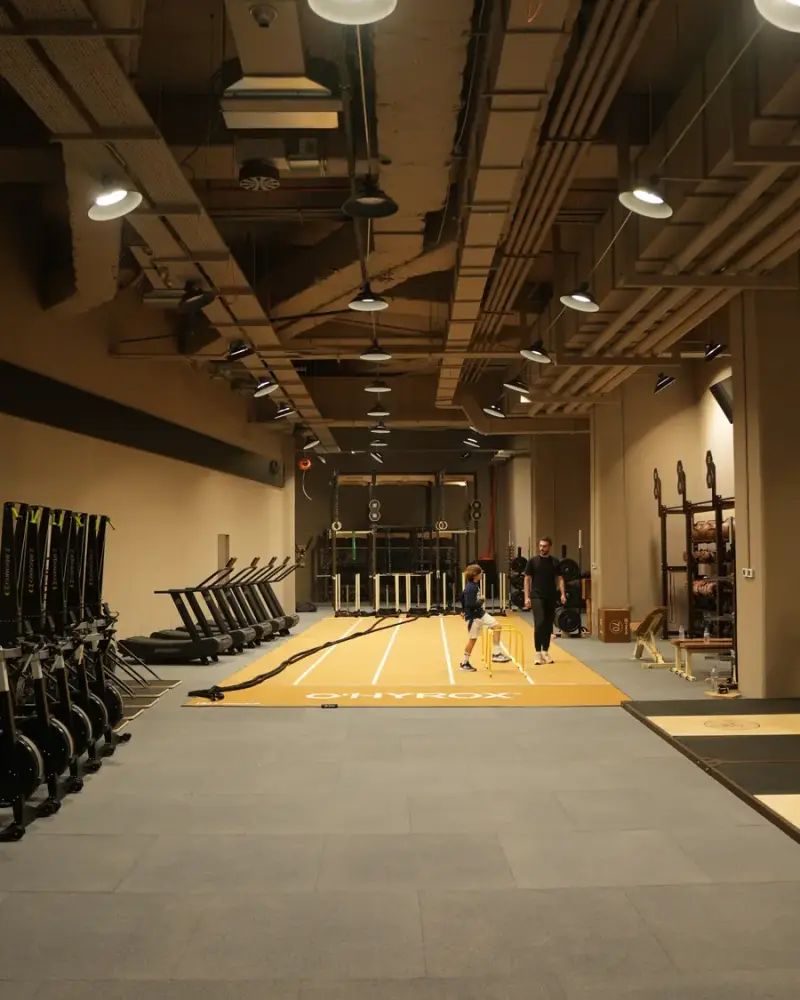
The HYROX story began with the first race held in Hamburg at the end of 2017. The format has barely changed from day one to today: eight 1-kilometer runs with eight fixed stations placed between them. This consistency was a design choice and became the main reason the sport spread on a global scale. Today, HYROX has become a series held in dozens of countries with directly comparable results.
The gap it emerged from: the space between mass participation sport and competition
In the mid-2010s there was a clear split in endurance sports. On one side stood mass races like marathons and triathlons that measured only endurance; on the other, competitions like CrossFit that were strength- and skill-heavy but had variable formats. A big gap remained in between: there was no race that measured strength and endurance together while being standardized so that everyone took the same test.
This gap was also a commercial gap. Millions of people around the world went to the gym, but most of them had no measurable goal. While a marathon runner had a finish line and a time, someone who regularly lifted weights and did cardio had no standard to compare themselves against. HYROX answered exactly this need and turned gym members into racers.
The founders and the first race
HYROX was founded by event manager Christian Toetzke and Olympic champion hockey player Moritz Fürste. The pairing of these two shaped the character of the format: one came from experience organizing mass sporting events, the other from the performance culture of professional sport. The result was a structure that thousands of people could take part in, with a serious competition at the top.
The first race was held in Hamburg at the end of 2017, and the number of participants was small compared to today's scale. But the core of the format was set that day: eight runs, eight stations, fixed order and an indoor venue. These four decisions set HYROX apart from every other alternative. For a full breakdown of the format today, see our eight stations guide.
Why indoors? An overlooked strategic decision
Most obstacle course races take place outdoors, in mud and on rough terrain. HYROX's choice of indoor exhibition halls looked less “epic” at first glance but proved decisive in the long run. The indoor venue has three concrete advantages:
- Weather independence. Rain, mud or temperature differences don't distort results; this keeps times in different cities comparable.
- Spectators and broadcasting. An indoor venue brings spectators right next to the course and makes camera setups possible. Its watchability as a sport was born here.
- Scalability. The same exhibition hall layout can be repeated in every city. The event turns into a setup template.
This choice has a price too: floor friction can vary from venue to venue, and this is felt especially at the sled stations. Why the same load feels different in different venues is detailed in the friction and floor factor the article explains.
The engine of growth: the gym partnership model
There was one element more influential than race organization in HYROX's spread: the preparation ecosystem. Early on, the company began forming official training partnerships with gyms. Gyms launched HYROX-specific classes, organized their equipment inventory around the stations and prepared their members for the race.
This model worked for both sides. The gym could sell its members a clear goal and a measurable program; HYROX gained a promotional network in every city without spending a marketing budget. Today, the best way to gauge how high interest in HYROX is in a city is to look at the number of HYROX-focused gyms there. The picture in Istanbul is covered in our HYROX Istanbul guide and our article on growth in Türkiye in our running guide.
Why is keeping the format fixed an advantage?
Most sports brands diversify their format as they grow: new distances, new movements, new variations. HYROX did the exact opposite and froze its core. Categories were added, an elite tier was established, the number of events grew; but the order and distances of the eight stations didn't change.
The practical result: an athlete's time from 2019 and their time today are on the same scale. This is what makes a personal-best culture possible in endurance sports. It also simplifies training planning; because what you're preparing for is fixed, writing a program becomes engineering rather than guesswork. The logic of writing a weekly program shows how this clarity is used.
The evolution of categories: from individual to team
While individual participation stood out in the early days, the move that broadened the format's reach was team categories. Doubles split the station work between two people, making the race accessible for those who wanted to try it for the first time. Team Relay brought corporate teams and groups of friends onto the floor; this structure, in which each of four people takes on two runs and two stations, turned HYROX into a group event.
The Pro category and the elite tier above it defined the sport's peak. This layered structure means someone racing for the first time and an athlete in the world rankings can be on the same course on the same day at the same event. For today's comparison of categories see our categories guide, and for the elite tier see our Elite 15 explainer for more.
Timeline: milestones
Following HYROX's development is instructive for seeing how a sport is built. The timeline below should be read not as an exact chronology but as a summary of the stages the sport has gone through.
| Stage | What happened | Result |
|---|---|---|
| Founding | The format was designed; eight stations and eight runs were fixed | A comparable test was born |
| First race | Held in Hamburg at the end of 2017 | The concept was proven on the floor |
| Expansion within Germany | The same setup was repeated in different cities | The event template was established |
| Gym partnerships | A network of training gyms was built | A preparation ecosystem formed |
| Intercontinental expansion | Expansion beyond Europe | Global rankings became meaningful |
| Elite tier | Professional series and championship structure | It became a watchable sport |
The most critical row in the timeline is gym partnerships. Building the preparation infrastructure before the number of races grew meant participants arrived ready to race, which kept finish rates high. A high finish rate creates the self-sustaining cycle of a mass participation sport: those who finish sign up again and bring their friends.
Three ways it stands apart from competitors
It would be wrong to say there was no competition in the market when HYROX emerged, but it wasn't without rivals either. Obstacle course series had already gone global, and functional fitness competitions had become institutionalized. HYROX stood apart in three ways.
The first is the learning curve. None of the movements in the format require months of technical learning; wall balls, lunges, carries and rowing are patterns most people can bring to an acceptable level in two weeks. This widened the entry gate. The technical difference between the two disciplines in our CrossFit comparison on its own page.
The second is measurement. In variable-format competitions, the sense of personal progress is subjective; in HYROX, the difference between two races is known to the second. The third is category flexibility. The option to race solo, with a partner or in a team of four at the same event significantly expanded the participant pool.
HYROX in Türkiye: a late start, fast growth
Türkiye joined HYROX late compared to Europe's core countries, but this delay turned into an advantage: because it came in after the format had matured, preparation knowledge, program templates and equipment standards were already in place. The first wave consisted of athletes who traveled individually to events in Europe; when they returned, they set up prep groups at their own gyms.
The second wave came from the gyms. As facilities opened that dedicated space to HYROX and added equipment like sleds and SkiErgs to their inventory, there was no longer any need to look abroad to prepare. Today in Istanbul it's possible to train all eight stations under one roof; to compare the options our article on places to train is a practical starting point.
The third wave is the community side: group travel arrangements, in-club simulation races and doubles partner matching. This third stage is considered the most reliable sign that a sport has become permanent in a country.
Practical lessons from history
HYROX's decade-long history holds three lessons an athlete can use too. First: the value of a standard lies in repeatability. Taking the same test twice a year produces far more information than taking a different test each time. Second: there are no surprises at the heart of preparation; the eight stations are known, so finding your weak link is a matter of measurement. Third: the sport grew through community, not individual heroics.
The third lesson is especially important, because when HYROX prep is done alone, the hardest items are exactly the ones that require a group: judged standards checks, sled rehearsals and simulation races. To see how we've built this structure within the club concept page and for the weekly flow the class schedule take a look.
When was HYROX first held?
The first HYROX race was held at the end of 2017 in Hamburg, Germany. The distances and station order haven't changed since then.
Who founded HYROX?
It was founded by event manager Christian Toetzke and Olympic champion hockey player Moritz Fürste. One brought the mass event side, the other the professional sport side.
Why did HYROX grow so fast?
Because the format is fixed, results are comparable; this gave participants a measurable goal and gyms a clear preparation product. Choosing indoor venues also eliminated weather dependency.
When did HYROX become popular in Turkey?
Interest grew noticeably in the first half of the 2020s, driven by athletes who raced in European events and the opening of HYROX-focused gyms.
A stronger version of you.
Just one step away.
24 hours from your first message to your first session. Let's build your program together — reach out on whichever channel suits you.
Weekdays 06:00 - 23:00