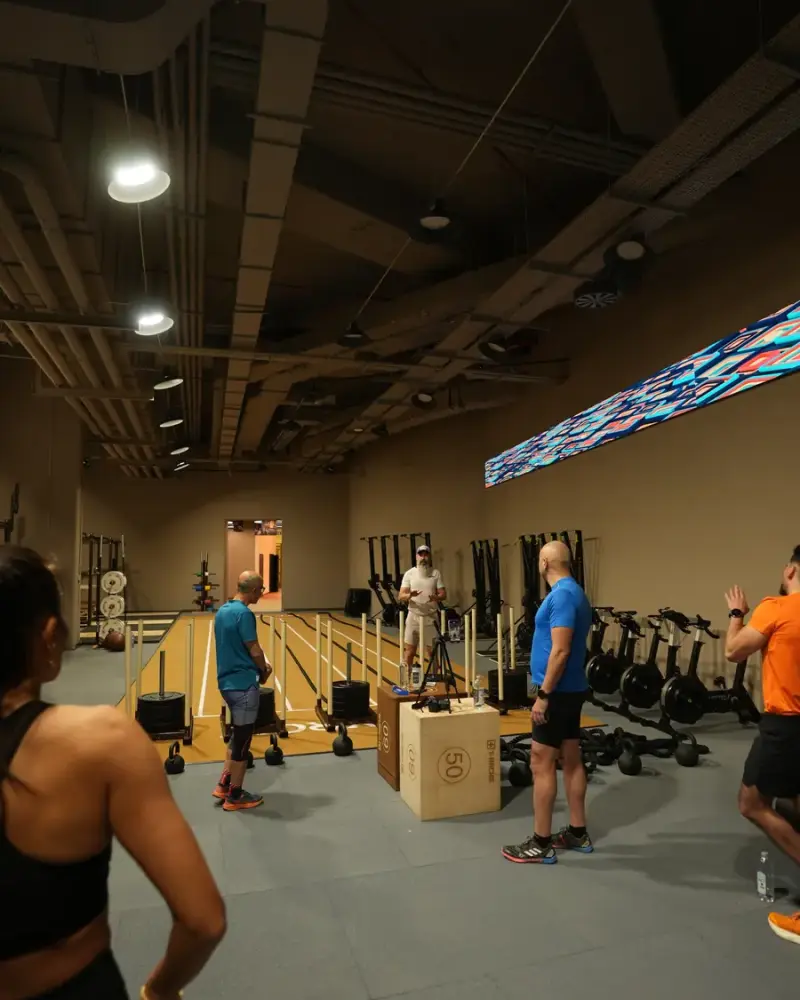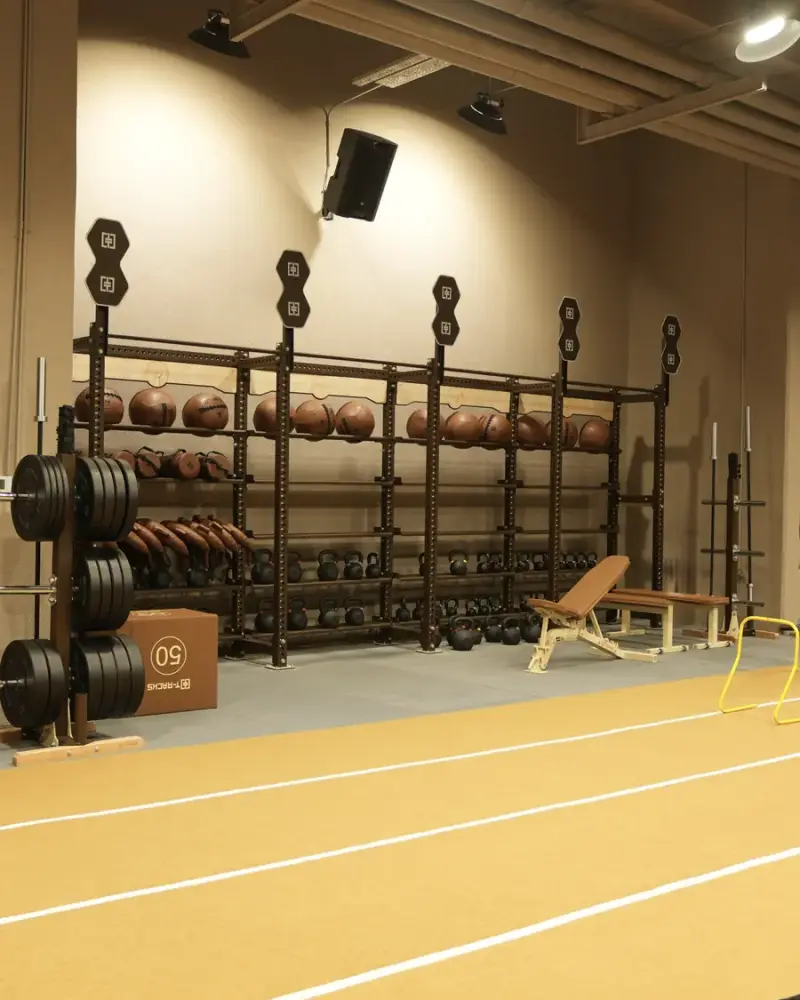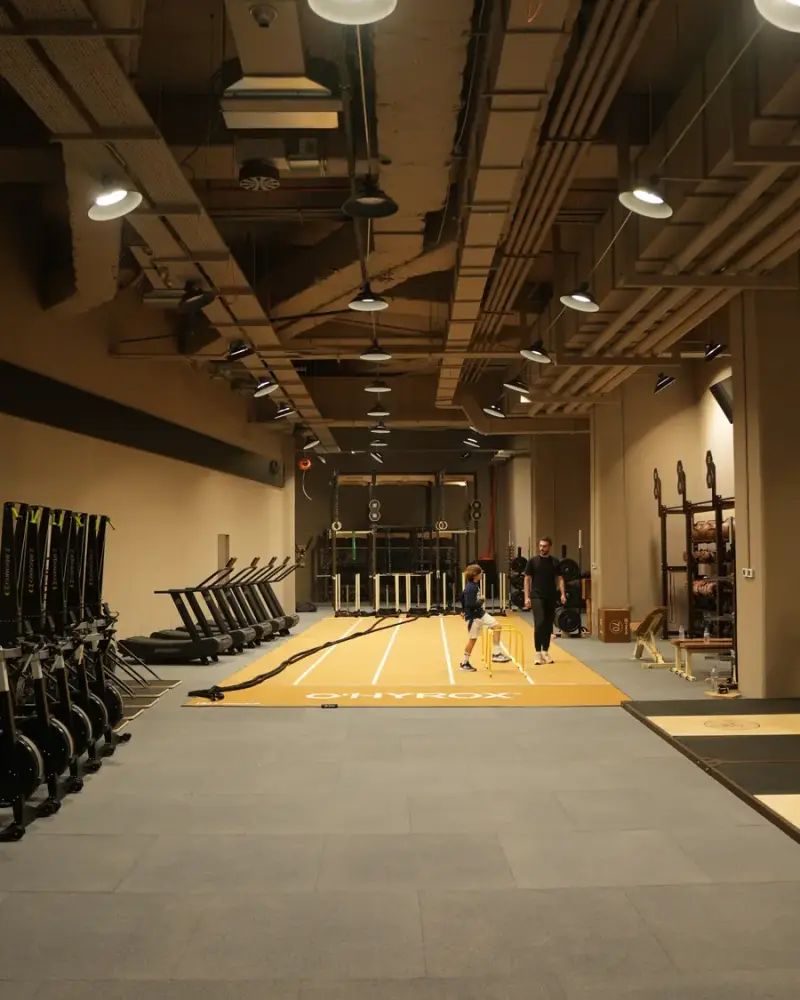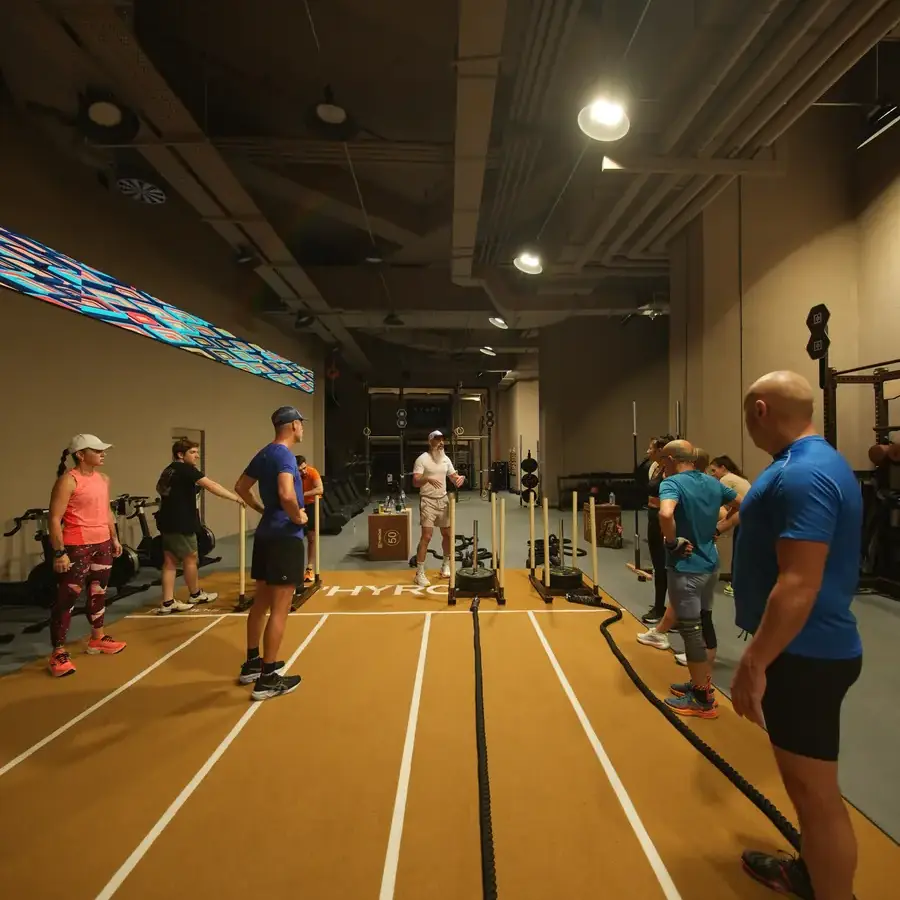
Elite 15 is the top competitive tier of HYROX: a professional series in which 15 women and 15 men who stand out in the world rankings face off in their own start wave at selected major races. The loads are the same as the Pro standard; what sets it apart isn't the load but the caliber of the athletes on the floor, its broadcast-ready format and the ranking system that runs throughout the season. An ordinary participant can't register for the Elite 15; you get in through performance.
What exactly is the Elite 15?
HYROX grew as a race open to mass participation; but to become a watchable sport, it needed a clear professional tier at the top. Elite 15 meets that need. At certain major events, a wave is held at the most visible time of the day in which a limited number of athletes take to the course at the same time. The advantage for spectators and broadcast is huge: no crowded traffic, no waiting in line at stations, just a straight head-to-head race.
This tier also sets the sport's measurement standard. Elite 15 results show where the upper limit lies for what an amateur calls “a good time.” If you want a refresher on the overall category structure, the HYROX categories comparison lays out the differences between Open, Pro, Doubles and Relay in a single table.
The difference between Elite 15, Pro and Open
| Criterion | Open | Pro | Elite 15 |
|---|---|---|---|
| Who it's open to | Everyone | Everyone (with registration) | Only athletes who qualify through the rankings |
| Loads | Standard | Heavy | Same as Pro |
| Wall ball target | Standard ball | Heavier ball | Same as Pro |
| Start wave | Crowded | Crowded | Limited, separate wave |
| Main goal | Finishing | Climbing the rankings | Championship and broadcast |
The most misunderstood row in the table is load. Many people think Elite 15 races with heavier loads; it doesn't. The elite athlete's advantage is handling the same load in much less time with far fewer recovery breaks. For the full breakdown of the difference between Open and Pro loads, see the load comparison table for more.
The role of Elite 15 in HYROX’s growth
For a race format to be accepted as a sport, it needs three things: standardized measurement, comparable results and recognizable athletes. HYROX has provided the first two since its founding; Elite 15 brought the third. A participant seeing a name they watched on a broadcast later on the same course at an event in their own city has noticeably increased the sport's power to build connection. If you're curious how the format got here, the history of HYROX completes the context.
The second function of the elite tier is protecting the standards. Judging is enforced most strictly here, because the credibility of the rankings depends on it. Details like wall ball depth, the back knee touching the floor on lunges and the chest reaching the floor on burpees are watched to the millimeter in elite racing. This rigor filters down too, ensuring that no-rep culture is taken seriously in amateur categories; knowing the penalty and no-rep rules pays off in every category.
How do you get into the rankings? The season logic
Elite 15 isn't an application list; it's a results list. In general, it works like this:
- You race in the Pro category. This is the first step for anyone on the elite path; Open results don't count toward the top rankings.
- You race several times over the season. Consistency is valued over a single good result; producing similar times in different cities is decisive.
- You collect ranking points at major races. Placings earned at big events carry more weight.
- The top 15 are determined at the end of the season. The list isn't fixed; it changes during the season based on performance.
The details of qualification and scoring are a separate topic; the article on the ranking system and qualification explains the mechanism step by step. If you're curious how it relates to the World Championships, the article on how the World Championships work is a complementary read.
What do times at the elite level mean?
At the elite level, total time is usually compressed between 55 and 65 minutes. What makes that number meaningful is how the time is distributed. While roughly half of an amateur's time is spent at stations, an elite athlete's station share is smaller, because they don't stop at time-eating stations like the sled and wall balls.
The three places where the gap between elite and advanced amateur shows most clearly are:
- Running consistency. The difference between an elite athlete's first and eighth kilometer is often under 20 seconds. For an amateur, that gap climbs to 60-90 seconds.
- Roxzone efficiency. Elite total transition time stays limited to a few minutes. The same number can reach 6-8 minutes for an amateur. That's why Roxzone management counts as free time savings.
- Unbroken wall balls. Finishing 100 reps with very few breaks or none at all is the signature skill of the elite level.
These three headings are actually a roadmap for amateurs too: you don't have to be elite, but working on the same three areas is the fastest way to bring your time down.
What do station splits look like at the elite level?
The table below isn't a definitive results list; it's a directional table showing at which stations the gap between elite and advanced amateur opens up. Tendencies vary from athlete to athlete.
| Station | Elite-level tendency | Advanced amateur tendency |
|---|---|---|
| 1 km run | Very small difference between splits | Noticeable slowdown in the last three kilometers |
| SkiErg 1000 m | Unbroken, steady stroke rate | Pace drop in the last 300 meters |
| Sled Push 50 m | At most one short stop | Three or four stops |
| Burpee Broad Jump 80 m | Rhythm never breaks | Frequent and lengthening breaks |
| Wall Balls 100 | Very little breaking up, or none | Sets of 10-15 reps |
| Roxzone total | A few minutes | 6-8 minutes |
The practical lesson from the table: the elite edge doesn't come from a single superpower but from leaving no weak link across the eight stations. To find your own weak link, you can apply the station analysis method.
How do elite athletes train?
At the elite level, weekly volume climbs to two to three times that of an amateur. A typical professional week includes double-session days, high running mileage and two or three specific station blocks per week. But what's worth copying isn't the volume, it's how the volume is distributed: most sessions are still done at low intensity, and high intensity is saved for two or three key sessions a week.
The second decisive element is measurement. The elite athlete knows the target split time for each station, tracks those splits in sessions and corrects deviations in the program. It's possible to build the same discipline at the amateur level too; the split calculation method shows the practical way to do it.
The third is periodization. The elite athlete targets a limited number of races per year and builds the season around them. An amateur who tries to race every month can never bring their form to a peak. Periodization logic is the easiest way to close that gap.
Why does the Elite 15 matter to amateurs?
Even if it isn't a direct goal, watching the Elite 15 has practical benefits. In broadcast elite races, cameras show station technique up close: torso angle on the Sled Push, rope-pulling rhythm on the Sled Pull, energy conservation on the Burpee Broad Jump. This footage carries details you can't learn from a book.
The elite race is also a live laboratory of pacing decisions. Watching an elite athlete who ran the first kilometer too fast collapse at the fifth station is more convincing than any text explaining the cost of the first kilometer.
Moving up to Pro: a realistic checklist
Elite 15 may be a distant goal, but the Pro category is within reach for many athletes who train regularly. Check these five items before moving up:
- Having gotten under 75-80 minutes in Open. The most practical indicator of the general capacity to handle Pro loads.
- Handling the heavy sled without technique breaking down. The Pro sled load is significantly heavier; you need to be able to move forward without your torso angle breaking down.
- 30 unbroken reps with the heavy wall ball. The benchmark for shoulder and leg endurance.
- Grip endurance. Finishing 200 meters of heavy farmers carry with at most one break.
- An annual plan. Preparing for Pro requires a structured four-to-six-month block; it isn't a threshold you cross in two weeks.
If you don't meet all of the items, moving up to Pro will lengthen your time and take the joy out of the race experience. To progress step by step, the plan for getting under 90 minutes followed by the 75-minute goal build a sensible sequence of steps. If you want to structure your season around these steps, periodization logic is useful additional reading.
Start from wherever you are
Elite 15 is the pinnacle of HYROX; but the real body of the sport is made up of thousands of participants in the Open and Pro categories. If you're thinking of moving up to Pro, the right question shouldn't be “am I fast enough” but “can I handle the loads without my technique breaking down.” Doing this assessment with a coach is the fastest way. For the general framework on format and levels, our HYROX page, and to see the level-based group structure, the classes page for more.
How do you get into the Elite 15?
You don't get in by direct application. The top 15 women and 15 men are determined based on results in the Pro category over the season and placings at major races.
Do Elite 15 and Pro use the same loads?
Yes, the loads and distances are the same as the Pro standard. The difference isn't in the loads; it's the separate start wave, the caliber of competition and the broadcast format.
How many minutes do elite athletes take to finish HYROX?
The world's best usually race in the 55-65 minute range. At that level, running consistency and transition efficiency are as decisive as station speed.
Can an amateur athlete aim for the Elite 15?
In theory yes, in practice the road is long. First racing in the Pro category and getting into the top percentile of your age group is a meaningful and measurable intermediate goal.
A stronger version of you.
Just one step away.
24 hours from your first message to your first session. Let's build your program together — reach out on whichever channel suits you.
Weekdays 06:00 - 23:00