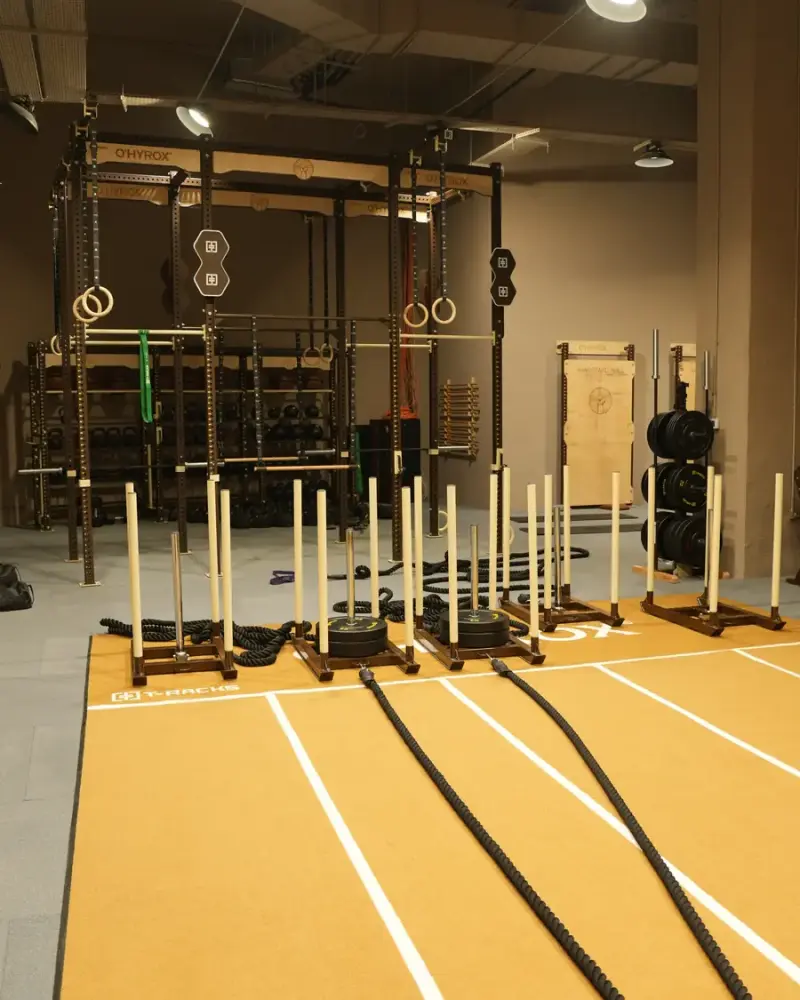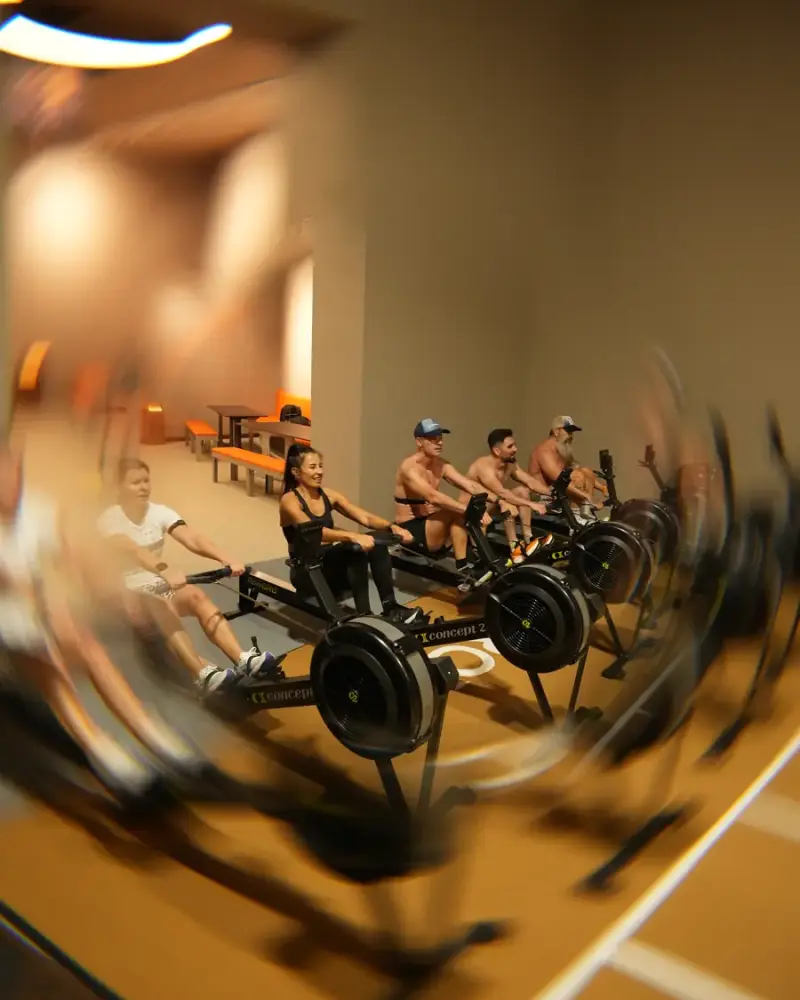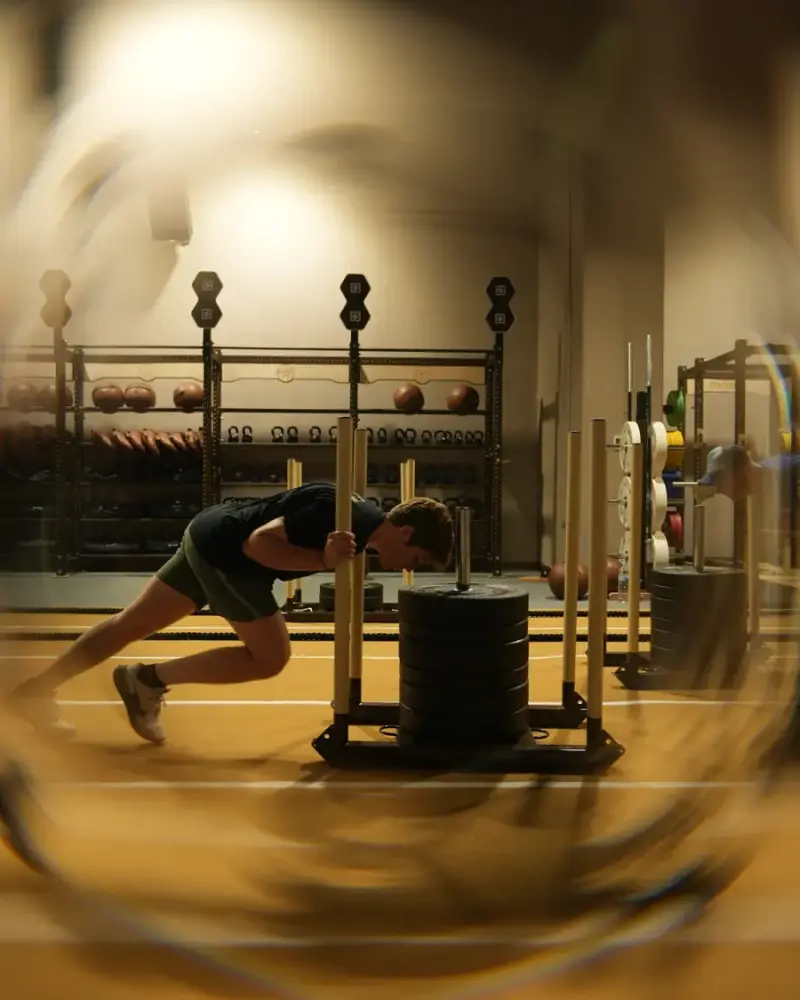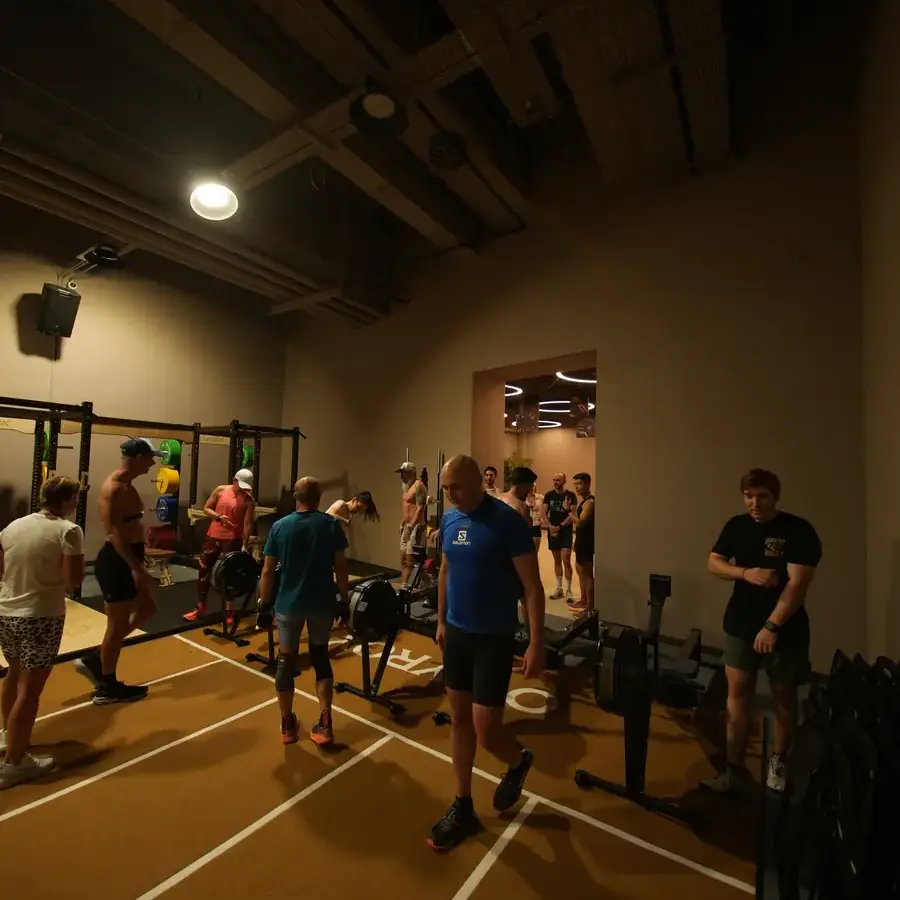
HYROX has spread rapidly in Turkey in recent years, mainly because the format is fixed, measurable and requires no specialized skills. The unchanging order of 8 × 1 km runs and eight stations lets anyone who trains regularly set a concrete goal without learning complex technique. The second pillar of the growth is community: a setup where preparation happens in a group, times are shared and finding a partner comes naturally produces far greater consistency than training alone.
Four reasons the format took off in Turkey
The first is comparability. In HYROX the distances, loads and order are the same worldwide, so a simulation time set in Istanbul can be compared directly with someone racing in another city. That's impossible in variable-format competitions, and a goal you can't measure won't carry your motivation over the long term.
The second is the low barrier to entry. The format has no Olympic lifts, gymnastics skills or movements that demand advanced technique. Running, pushing, pulling, carrying, lunging and throwing a ball are all learnable. We discussed how fit you need to be in this article.
The third is the indoor advantage. Because races are held indoors, weather isn't a source of uncertainty; the pace you measure during preparation largely holds on race day. The fourth is the variety of categories: you can race solo, with a partner or as a four-person team. We compared the categories in our categories article here.
How the community forms: from club to race
The HYROX community in Turkey grew not from a single hub but at the club and gym level. The typical formation goes in this order: a facility starts station-based group sessions, a core group of regulars forms, the group starts timing itself, then a few people decide to go to a race, and when they come back the experience spreads through the group.
The most critical link in this cycle is the third stage: measurement. A group that doesn't time itself is a social sports group; a group that does becomes a community, because comparison and progress create a shared language. We explained how in-club simulations are set up in the simulation races article.
The measurable benefits the community gives an athlete
| Benefit | How it works | Practical effect |
|---|---|---|
| Consistency | Meeting others at a fixed time | Session skip rate drops noticeably |
| Pace reference | The rhythm of the athlete working next to you | Less speeding up on easy sessions and less easing off on hard ones |
| Technical feedback | Coach and group observation | Lower risk of no-reps and injury |
| Partner access | A pool for Doubles and Relay | More category options |
| Knowledge transfer | The experience of those who have raced | Fewer travel and race-day mistakes |
The second row is the most underrated benefit. The two most common mistakes of athletes training alone are doing easy days too fast and hard days too slow. In a group, both deviations shrink on their own. We covered the scale for pace control in the RPE article, and the limits of training alone in the community article.
How does a beginner join the community?
- Join a group session. The first step isn't race registration; it's trying some of the eight stations while fatigued.
- Take your first measurement. A 1000 m SkiErg, 1000 m row, 5 km run and 100 wall balls make a simple but sufficient starting set.
- Build a weekly rhythm. Three sessions, fixed days. At this stage consistency is worth more than intensity.
- Join a simulation. A half simulation is the best tool for safely introducing the feel of a race.
- Pick a partner or a goal. A Doubles goal is more binding than a solo goal; two people's schedules keep each other on track.
For most people, these five steps take about two months. You'll find the testing protocol in the level test article, the plan for the first four weeks in the beginner plan . We covered how the partner search works in the article on finding a doubles partner.
The practicalities of traveling from Turkey to race
A large share of athletes living in Turkey take part in races by traveling abroad. This adds an extra layer of planning to preparation: flights, accommodation, registration category and start time. In a community with experienced members this layer is largely solved; which mistakes get made, how many days early to arrive and what belongs in the bag all become shared knowledge.
We covered the framework for travel planning in the article on racing abroad, and the calendar logic in the European calendar article. The steps of the registration process are in the registration article .
The community's shadow side: the comparison trap
Measurability is the community's greatest strength and also its biggest risk. In a group where times are shared, a beginner may mistake a two-year athlete's time for their own target. The result is usually the same: volume that rises too fast, fatigue that builds within three weeks, and pain in the fourth.
The right comparison is with your own past data. Someone else's time in the group isn't a target; it's a source of information. You can find how to set your target time in the split calculation article, and the distribution of average finish times in the average time article . The early signs of overreaching in this article .
How is the community being built at the Sky complex?
Hybrid is the HYROX club inside the O’Wellness Sky complex. Its community side rests on three things: group sessions at fixed times, regular measurements and in-club simulation days. When all three come together, preparation turns from an individual project into a shared calendar, and attendance consistency rises with it.
Differences in level aren't an obstacle. Because distances and loads are scaled, someone in their first month and someone preparing for their third race can work in the same session. You can look at the session types on the classes page, and the format as a whole on the HYROX page ; for joining and current times you can message us.
Three practical obstacles to starting HYROX in Turkey
The format's growth isn't moving at the same pace in every city. The obstacles facing someone who wants to start in Turkey are usually about infrastructure, not motivation.
- Equipment access. Most conventional fitness gyms don't have a sled track or a SkiErg. Going to a race without ever trying these two stations makes your finish time unpredictable. What to look for when choosing a gym in a separate article too.
- Getting to races. The calendar is mostly in European cities, which makes travel and accommodation part of your preparation. For planning details, see the race travel guide.
- Access to reliable information. Turkish-language resources are still limited; most athletes learn from English videos, which makes it easier for technical errors to spread. That gap is exactly why this blog exists.
What will the community's next stage be?
A sport takes root not by how many people go to races but by how many train regularly. That is HYROX’s threshold in Turkey too: as the number of people training in the HYROX format without ever planning to race grows, the format stops being an event and becomes a training culture.
In practice, this means in-club simulations, testing days and Doubles pairings becoming routine. We explained how this structure is built at Sky in the simulation races article; to join, message us .
From club to race: what does a typical first year look like?
The path people take when starting HYROX in Turkey follows a similar sequence regardless of country. This sequence isn't a rule but an observed pattern; it offers a useful framework for seeing where you stand.
| Period | Focus | Typical milestone |
|---|---|---|
| Months 0-2 | Learning movements, building a base | Running 5 km without stopping |
| Months 3-4 | Station technique and strength | Working sled and wall balls unbroken |
| Months 5-6 | Simulation and pacing | Finishing a half HYROX under control |
| Months 7-12 | First race and repeat | Finish, then bring the time down |
What stands out in this table is that the entire first six months come before a race. In Turkey, most people who rush to a race in the first three months do finish, but the share who actually enjoy the experience is noticeably higher among those who complete their preparation. To decide when to go to your first race, the readiness thresholds article gives a practical checklist.
Why did HYROX spread so quickly in Turkey?
Because the format is fixed and measurable, it's easy to set concrete goals. Not requiring complex technique also opens the door to a wide audience of people who train regularly.
Do you have to race to join the community?
No. Anyone who joins group sessions, takes measurements and looks for a partner is part of the community; racing is entirely optional.
Which divisions do athletes from Turkey choose for races?
The common entry points are Open and Doubles. Most first-time racers start with Open, and those going with a partner start with Doubles.
Does a club community put pressure on beginners?
Not in a well-built group. Because distances and loads are scaled, very different levels can work together in the same session.
A stronger version of you.
Just one step away.
24 hours from your first message to your first session. Let's build your program together — reach out on whichever channel suits you.
Weekdays 06:00 - 23:00