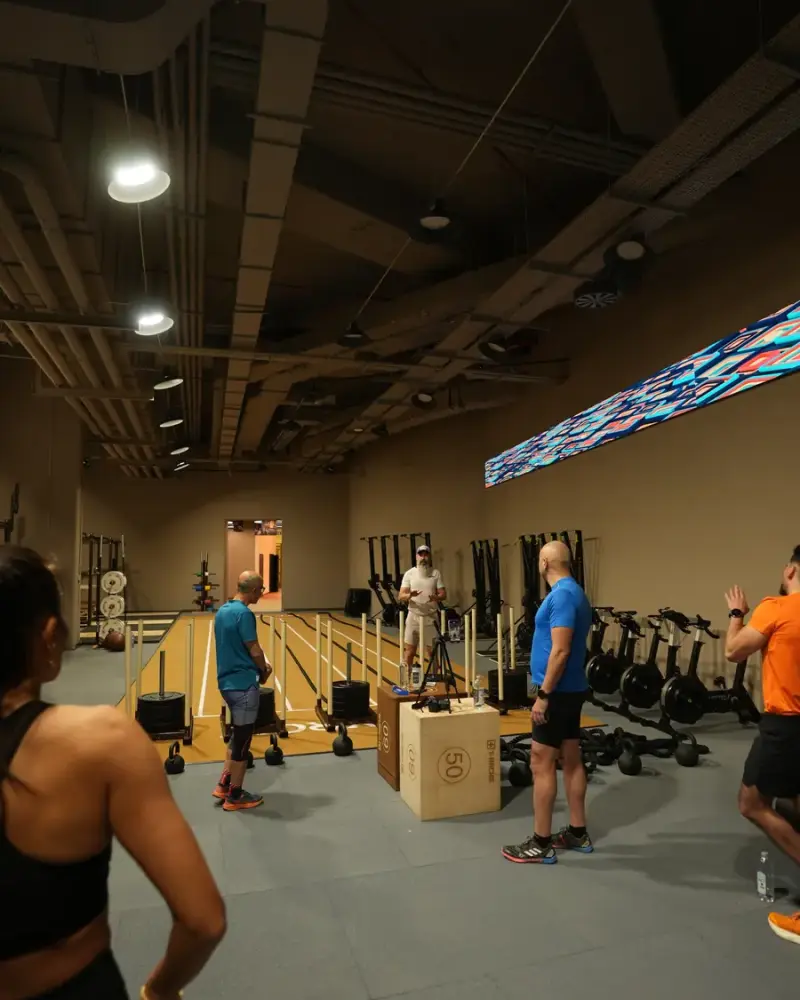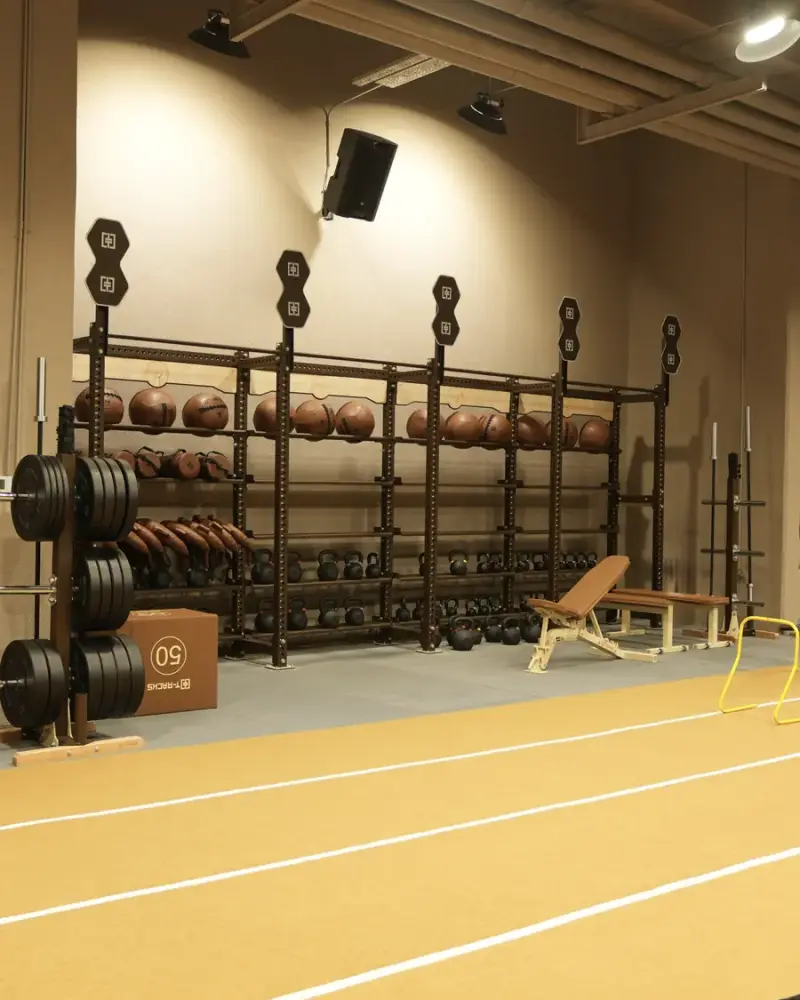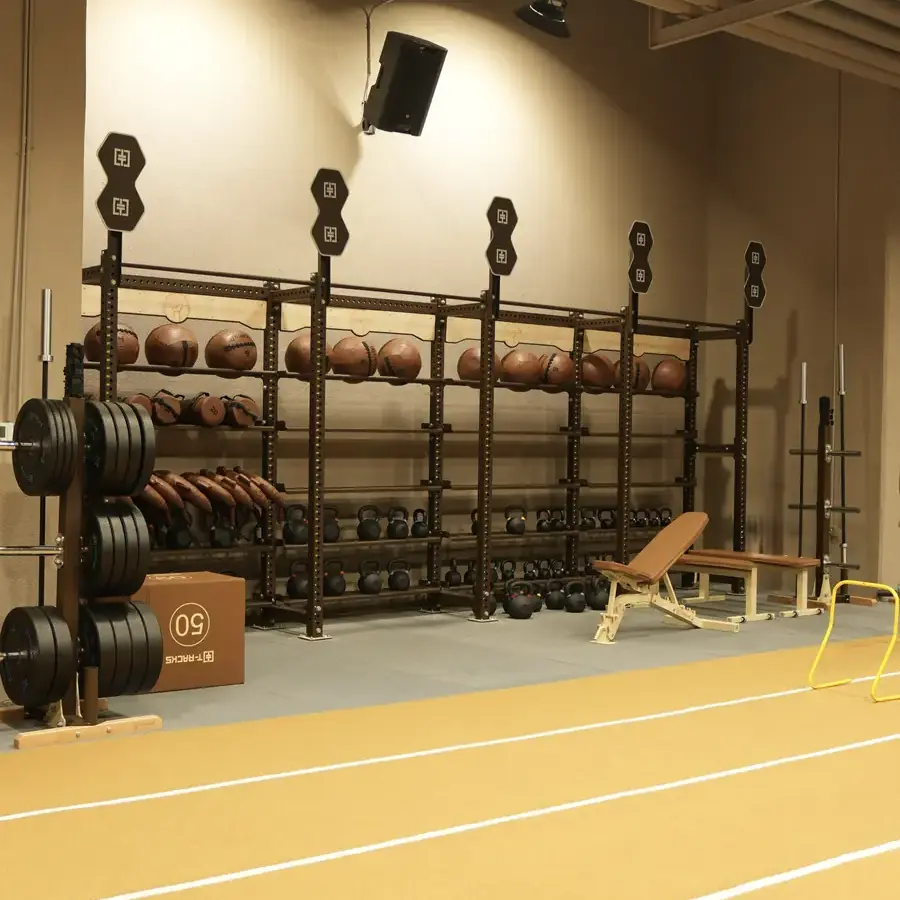
Antrenmanda yük seçimi, HYROX’a yeni başlayan sporcuların en çok kafa yorduğu konulardan biridir. Salona ilk geldiğinizde raflarda farklı ağırlıklarda kettlebell’ler, wall ball topları ve sandbag’ler görürsünüz. Sled’e takılacak plakaların sayısı da bir soru işaretidir. Çok hafif bir yük seçmek gelişimi yavaşlatırken, çok ağır bir yük tekniği bozabilir ve sakatlık riskini artırabilir. Doğru yük, bu iki uç arasında, sizin bugünkü seviyenize uygun bir noktadadır.
In this article we cover which criteria can be used to choose loads, why technique comes first, when and how to increase load and how to approach race loads. The aim of these suggestions is to help you make informed decisions by listening to your own body.
The basic criterion for load: perceived effort
For beginners, the most useful tool is perceived effort. When you finish a set, you can ask yourself: how many more reps could I have done with the same technique? If the answer is a few reps, the load is probably in a suitable range. If there were no reps left, the load is heavy; if many reps were left, it is light.
This method lets you adapt to each day's conditions without being tied to fixed numbers. On a day when you are short on sleep or tired, the same weight can feel heavier. Choosing load by perceived effort keeps you from straining unnecessarily on such days and lets you push a little further on days when you feel good.
In the first weeks your sense of effort may not be fully calibrated. Some athletes judge themselves weaker than they are, others stronger. A coach's observation or a video recording of your movements helps you calibrate that sense.
Warm-up sets are part of load selection too. Instead of starting the main sets straight at working weight, preparing the movement with a few light sets lets you test both technique and how you feel that day. If the weight feels heavier than expected during the warm-up sets, working with a slightly lighter load in the main sets is a decision suited to that day's conditions. This small step prevents unnecessary straining, especially in evening sessions after a busy working day.
Technique always comes first
The most important rule in choosing load is that technique comes before load. The heaviest load you can move correctly is the right load for you at that moment. The moment technique starts to break down, the load is too much; this is a decision made by movement quality, not by ego.
Recognizing the signs of breaking technique makes this decision easier. The signs below indicate the load may be too much for that moment.
- Belin yuvarlanması: Kaldırma hareketlerinde sırtın düz konumunu kaybetmesi.
- Dizlerin içe kaçması: Squat ve lunge sırasında dizlerin ayak parmaklarının hizasından içeri kayması.
- Hareket açıklığının kısalması: Squat derinliğinin azalması ya da lunge adımının kısalması.
- Ani hız değişimleri: Yükü kontrol etmek yerine savurarak ya da hızla düşürerek hareket etmek.
- Nefesin tutulması ve yüz ifadesinin gerilmesi: Her tekrarın aşırı zorlanmayla tamamlanması.
Reducing the load when you notice one of these signs is not a failure but a smart training decision. Strength gained with correct technique is safer and longer lasting in the long run.
When should load be increased?
A good sign for increasing load is being able to complete all sets with the current weight using clean technique and a comfortable sense of effort. If a movement has become easier over several sessions, a small increase can be considered. What matters here is that the increase is small; big jumps raise the risk of breaking technique.
Raising the weight is not the only way to increase load. Increasing reps, adding sets or shortening rest also provide progress. For beginners, increasing reps and sets first and then moving to weight helps the tissues adapt to load more gradually.
Changing only one variable at a time is a good principle too. Increasing weight, reps and the number of sessions all in the same week can exceed the body's capacity to adapt. Observing the effect of changes over a few sessions lets you take the next step with more confidence.
Approaching race loads
HYROX has set race loads for each category. For beginners, these loads should be seen as a target to reach in time, not as a starting point. Building a base of technique and endurance by working below race loads in the first weeks of training provides healthier progress.
As the race approaches, loads are brought gradually closer to race loads. In this process it makes sense to try the race load first over short distances or for few reps, then progress toward the total work in the race. That way you get used to race load both physically and mentally.
Beginners at Hybrid Sky also usually progress with this gradual approach. In the first weeks movement patterns are learned with light loads, and then load and volume are raised step by step. This approach shows that patient preparation gives better results in the long run.
Different movements, different approaches
Load selection is not done the same way for every movement. At stations such as the sled push and sled pull, floor friction changes the feel of the load; the same plates can feel different on different floors. That is why in sled work it is more meaningful to focus on stepping rhythm and body position than on the number of plates.
In high-rep movements such as wall balls and kettlebells, the load should be at a level where you can sustain the reps with quality. In carries, grip and posture are decisive; when grip tires before the load does, it may be necessary to lighten the load or shorten the distance.
Pain, on the other hand, is always a signal to take seriously. Distinguishing between muscle fatigue and joint or sharp pain is important. If a movement brings a sharp twinge or discomfort that lasts for days, drop the set and talk it over with your physician.
Keeping a training log
A simple way to make load selection easier is to record the weights you use and how the sets felt in short notes. This record lets you know which weight to start with in the next session instead of guessing. Seeing your progress over weeks also supports motivation.
It helps to write not only the weight but your general state that day in your notes. Factors such as sleep, stress or fatigue affect performance. This information helps you interpret a bad session correctly and avoid unnecessary worry. There is no need to keep the log complicated; the date, movement, weight and a one-sentence note on how it felt are usually enough.
Frequently Asked Questions
Should I train with race loads from day one?
It is generally not recommended. Race loads are a target. Building a base of technique and endurance with lighter loads in the first weeks, then gradually approaching race loads, is a safer and more productive path.
How often should I increase the load?
Look at your body's response rather than a fixed calendar. When you can complete all sets with the current load using clean technique and comfortable effort, a small increase can be considered. This can sometimes take a few sessions, sometimes a few weeks.
Is it a problem if I use lighter loads than everyone else in a group class?
No. Everyone's starting point is different. Working with correct technique at a load that suits you is far more valuable than trying to match the weight others use. Progress is meaningful when compared with your own past. Looking back after a few months and seeing how far you have come matters far more than today's weight.