In HYROX, the Open and Pro divisions use the same distances and the same station order; the only difference is the weights at the Sled Push, Sled Pull, Farmers Carry, Sandbag Lunges, and Wall Ball stations. As a general rule, Pro women’s weights are close to Open men’s weights, while Pro men’s weights are significantly heavier. SkiErg, Burpee Broad Jump, Row, and the 8 × 1 km runs are the same in every division. The table below compares the commonly used current weights at a glance.
Open vs. Pro: what’s the basic difference?
One of HYROX’s biggest advantages is standardization: wherever in the world you race, you carry the same weights in the same division. Within this standard there are two main levels. The Open division is designed for most athletes who train regularly, and the majority of HYROX participants race in it. The Pro division demands more strength and strength endurance with heavier weights.
The key point is that Pro isn’t a longer or different race. Running distances, station distances, rep counts, and order are the same. The difference shows up in the weight of the sleds, the kettlebells you carry, the sandbag on your shoulders, and the ball you throw. These seemingly small differences noticeably change the race time and how the race feels; Pro weights on the Sled Push and Sandbag Lunges in particular demand far more leg strength than Open.
For an overview of the divisions, you can check out the HYROX categories article. Here, we focus only on the weights and what they mean for training.
Full comparison table
The values below are the standard weights commonly used in recent seasons. Sled weights refer to the total load including the sled itself. Since HYROX rules may be updated each season, always check that season’s official rulebook before registering for a race.
| Station | Women’s Open | Women’s Pro | Men’s Open | Men’s Pro |
|---|---|---|---|---|
| 1. SkiErg | 1000 m | 1000 m | 1000 m | 1000 m |
| 2. Sled Push (50 m) | 102 kg | 152 kg | 152 kg | 202 kg |
| 3. Sled Pull (50 m) | 78 kg | 103 kg | 103 kg | 153 kg |
| 4. Burpee Broad Jump | 80 m | 80 m | 80 m | 80 m |
| 5. Row | 1000 m | 1000 m | 1000 m | 1000 m |
| 6. Farmers Carry (200 m) | 2 × 16 kg | 2 × 24 kg | 2 × 24 kg | 2 × 32 kg |
| 7. Sandbag Lunges (100 m) | 10 kg | 20 kg | 20 kg | 30 kg |
| 8. Wall Balls (100 reps) | 4 kg, 2.70 m target | 6 kg, 2.70 m target | 6 kg, 3.00 m target | 9 kg, 3.00 m target |
As the table shows, Pro women’s weights are largely the same as Open men’s weights (except for the Wall Ball target height). Pro men’s weights are one step heavier at every weighted station. For the technical details of each station, see our guide to the 8 stations.
It’s also instructive to look at how big the weight difference is in percentage terms. For example, between Women’s Open and Women’s Pro, the Sled Push load increases by about 50 percent, while the Sandbag Lunges load doubles. Between Men’s Open and Men’s Pro, the Farmers Carry kettlebells get about a third heavier and the Wall Ball goes from 6 kg to 9 kg. These ratios show that moving up to Pro isn’t just a “slightly heavier” race; at some stations it requires a different level of strength.
On the other hand, the lack of any difference on the erg stations and the Burpee Broad Jump means the aerobic part of the race stays the same across divisions. So an athlete racing Pro needs the same running and erg capacity as in Open, with more strength on top. That’s why Pro preparation doesn’t replace Open preparation; it builds on it.
Weights in the Doubles and Relay divisions
In the Doubles division, two athletes do all the runs together and split the station work between them however they like. Doubles also has Open and Pro levels, and the weights are usually the same as the individual weights for the corresponding level. For mixed (woman-man) Doubles teams, the weight level applied is set by the rules; you should check this detail when you register.
In the Relay format, a team of four races in a structure where each member does two runs and two stations. Here too, weights are set by the team’s division (women, men, mixed). For Doubles strategy and division of labor, our HYROX Doubles rules article is a good starting point for understanding the team formats.
How the weight difference changes the race
The weight difference doesn’t affect every station equally. At some stations the Pro weight lengthens your time slightly, while at others it changes the character of the race.
Sled Push and Sled Pull
The sled stations are the part most affected by the weight increase. As the load increases, the sled’s friction against the floor makes it harder to start and keep moving. A sled pushed at a smooth pace in Open can become, for many athletes, a station progressed with short pauses at Pro weight. We explained the floor and friction factor in detail in Why Sled Push is so hard .
Farmers Carry
In Pro, the 8 kg difference per kettlebell seriously taxes your grip over 200 meters. A distance you can finish without putting the bells down in Open may require a few drops in Pro if your grip preparation is lacking.
Sandbag Lunges
The extra 10 kg on your shoulders noticeably increases leg fatigue over 100 meters of lunges and makes the final run and Wall Balls that follow harder.
Wall Ball
In Wall Balls, both the ball’s weight and the target height matter. A ball that’s a few kilos heavier on every one of 100 reps can completely change your set-splitting strategy.
Which division should you choose?
Choosing a division matters for both safety and the race experience. The questions below make the decision easier.
- Is this your first HYROX? For most athletes, Open is the right choice for the first race. Learning the format, transitions, and pacing is more valuable than battling heavy weights.
- Can you complete the stations with Pro weights in training? If you can finish the Sled Push at Pro weight with short pauses, put the Farmers Carry down no more than once or twice, and complete the Wall Balls in reasonable sets, Pro is worth considering.
- Is your goal a time or a challenge? If you’re aiming for a faster time and ranking, staying in Open may make sense. If you want a strength-focused challenge, Pro may be more satisfying.
- Do you have a qualification goal? Some elite races and qualification processes are tied to specific divisions. We explained these details in our article on the ranking system and qualification.
Another practical approach is to take a level test first and compare your station results against Pro weights. Your test results will show which division gives you a more enjoyable and safer race.
Training tips for moving up to Pro
For athletes who want to move from Open to Pro, the basic need is to increase strength and strength endurance. Since the running and erg stations don’t change, you need to focus on the weighted stations while maintaining your aerobic capacity.
- Leg strength: heavy, low-rep sets of squats, deadlifts, and single-leg movements. This gives you a higher strength ceiling for the sleds and lunges.
- Heavy sled work: short distances (10-20 m) at and above Pro weight, and full distances at race weight.
- Grip: short and medium-distance carries with Pro kettlebells, dead hangs, and rope work.
- Wall Ball endurance: start with small sets using the race ball and build the total rep count over the weeks.
- Gradual transition: in training, first use Pro weight at one or two stations while staying at Open weight on the others, then train all stations at Pro weight.
For most athletes, this transition takes a few months. Rushing can lead to overload, especially in the lower back and knees. If you feel pain during training that doesn’t go away, reduce the weight, and see a doctor if the complaint persists.
How should you use the weights in training?
Whichever division you race in, you don’t always need to train at race weight. A balanced approach is to work below race weight for technique and volume work, and at or slightly above race weight for strength and endurance work. In the last 6-8 weeks before the race, regularly doing the stations at full race weight ensures no surprises on race day.
Also remember that gym equipment may not be identical to race equipment. Especially when the sled floor is different, the same weight can feel easier or harder in training. So use your sled times as an indicator of progress, not as an exact prediction.
Choosing weights at Hybrid
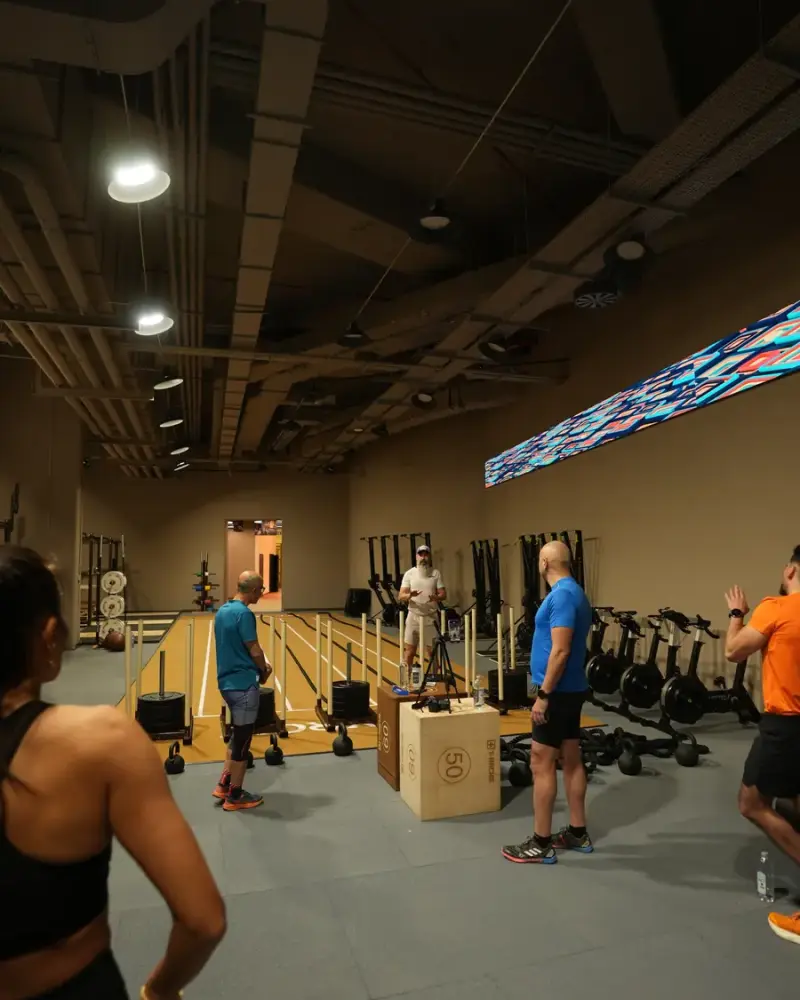
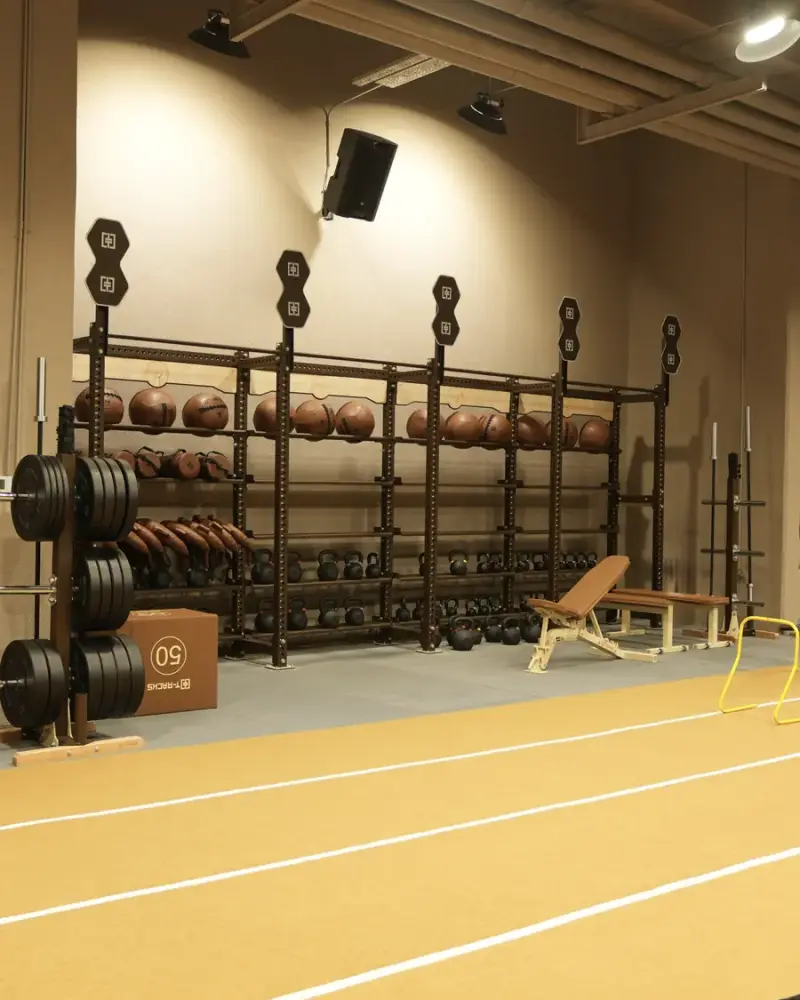
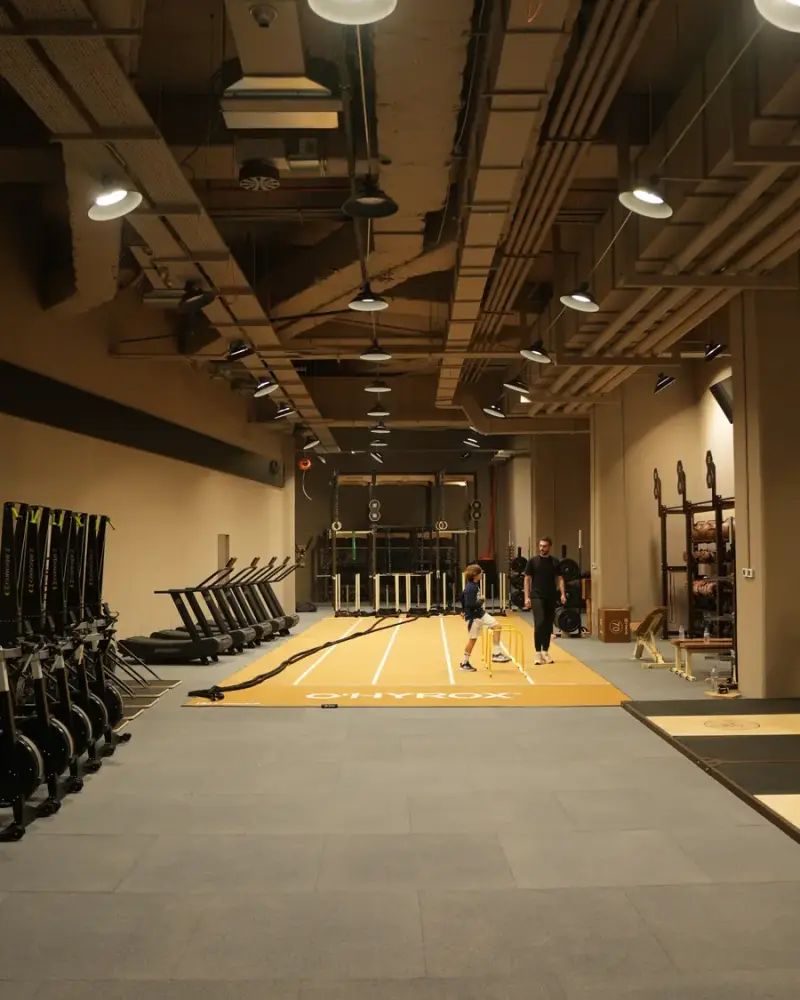
Hybrid’s space in the O’Wellness Sky complex in Sarıyer has the equipment to train with all Open and Pro weights. In HYROX Strength classes, we adjust the weights to your level and build a gradual loading plan for athletes who want to move up to Pro. If you’re not sure which division suits you, you can review your level test results with our coaches.
Open or Pro, both are the same race: 8 runs, 8 stations, the same finish line. The right division is the one that challenges you and lets you enjoy the race.
What’s the difference between HYROX Pro and Open?
The distances and station order are the same. The only difference is the weights for Sled Push, Sled Pull, Farmers Carry, Sandbag Lunges, and Wall Balls.
Are Pro women’s weights the same as Open men’s?
Largely, yes. Except for the Wall Ball target height, Pro women’s weights largely match Open men’s weights.
Can I race in the Pro division in my first HYROX?
It’s possible, but for most athletes Open is the better choice for a first race. Learning the format is more valuable than battling heavy weights.
Are HYROX weights the same every season?
The weights are usually fixed, but the rules may be updated each season. You should check the official rulebook before registering.
A stronger version of you.
Just one step away.
24 hours from your first message to your first session. Let's build your program together — reach out on whichever channel suits you.
Weekdays 06:00 - 23:00