The list of what you really need to start HYROX is short: a pair of balanced running shoes, a sweat-wicking T-shirt, above-the-knee tights or shorts, long socks, a 750-milliliter water bottle and a towel. Everything else — gloves, knee sleeves, a heart rate strap, compression wear — is a comfort or performance detail, not a necessity. Below we explain one by one which items you need on day one, which after the first month and which only on race day.
Order of priority: what to buy and when?
The budget spent on equipment is far more efficient when used in the right order. A beginner needs only shoes, apparel and a water bottle in the first session; those three account for eighty percent of the overall experience. By the second month, small additions aimed at grip and knee comfort start to pay off. Race equipment only comes into play after you register.
Breaking this order is a common mistake. Someone who hasn't yet done their first 100 wall balls buys a compression set and special gloves, but slips on the Sled Push because their shoes are too soft. Buying equipment as a solution to a concrete problem you've run into is the most economical approach.
The table below suggests a three-stage buying plan. We've given a priority ranking rather than prices, because prices vary significantly by brand and season.
| Stage | Essential | Useful | Unnecessary |
|---|---|---|---|
| First session | Shoes, T-shirt, tights/shorts, water, towel | Long socks | Gloves, knee sleeves, vest |
| Months 1-2 | A second training outfit | Thin gloves, heart rate strap, foam roller | Weight vest, special belt |
| Race preparation | Tested race shoes | Knee sleeves, compression socks, gels | Anything new and untested |
Shoes: the only real investment
Because HYROX is half running and half stations, the shoe has to do two conflicting jobs at once. An overly soft, high-stack running shoe is comfortable over 8 kilometers but swallows energy on the Sled Push and allows sideways slipping. A completely flat lifting shoe stays stable at the stations but tires the calves and Achilles tendon when running.
The balance in between is moderate cushioning and a low-to-medium heel-to-toe drop; most athletes are comfortable in the 4-8 millimeter range. The sidewall should be stiff and the outsole rubber with good grip, because gym floors can be slippery. All of the selection criteria are covered in the shoe guide we covered in detail.
A practical rule: buy your race shoes at least six weeks before registration and run at least 40-50 kilometers in them. Racing in new shoes significantly raises the risk of blisters and unexpected pain. You can track when the sole has reached the end of its life by keeping a monthly mileage log.
Apparel: managing friction and heat
The race takes place in an indoor hall, and the hall temperature often climbs to 24-28 degrees; humidity is high too. That's why a moisture-wicking synthetic or merino-blend top is preferred over a cotton T-shirt. Sleeved or sleeveless is personal; but because the sandbag is carried on the shoulders, chafing on the shoulders is common in sleeveless tanks.
For the bottom half, two options work: tight above-the-knee shorts or lined short shorts. Loose shorts bunch up during lunges and burpees and cause chafing. Full-length tights can increase the heat load in summer races but protect the thighs when carrying the sandbag; they're an advantage when running outdoors in the winter months.
Sock choice looks minor but changes the outcome. A seamless, knee-high, moisture-wicking sock both protects the calves from sandbag friction and reduces blisters. A spare pair of socks for race day is one of the first three things that should be in your bag.
Gloves, chalk and grip solutions
The Sled Pull, Farmers Carry and SkiErg are tough on the palms. Calluses forming in the first three or four weeks are normal for beginners; tearing is not. A thin glove with a rubber-coated palm provides protection without hurting grip feel too much. Thick fitness gloves slip on the rope and make the Sled Pull harder.
Chalk is used in some gyms but may be restricted at race events. For sweaty palms, the practical solution is to wipe your hands on a towel before each station. Working on grip endurance is a more effective solution than equipment; doing the protocols in the grip exercises article twice a week makes a noticeable difference within a few weeks.
Callus care counts as part of your equipment too: filing them down with a pumice stone once a week and moisturizing largely prevents tearing. If you have an open wound on your palm, it's right to cut back on rope work that week and wait for it to heal; if it doesn't heal, see a physician.
Knee sleeves, belts and support gear
Sandbag Lunges is the station that stresses the knees most in the race; over 100 meters, the knee comes close to the floor with a load on your shoulders. A thin neoprene knee sleeve protects the knee from impact and friction, and many athletes use one only for this station. Knee sleeves shouldn't be used to mask pain; if knee pain persists, technique is checked first, then see a physician. We explain the link with technique in this article.
A lifting belt doesn't have a practical use in the HYROX format; there's no maximal lift in the race that would require a belt. It can be used in training for heavy squat or deadlift sets, but it's unnecessary in station rehearsals and disrupts your breathing rhythm.
The evidence on compression socks and tights is mixed; there's no strong finding that they directly improve performance, but many athletes report their legs feel less swollen after long sessions. Trying them and deciding based on your own response is a reasonable approach.
Measurement and tracking gear
A heart rate strap gives more accurate data than watches that measure heart rate; wrist-based readings drift especially in movements that tense the wrist, like the sled and wall balls. Doing zone work correctly depends on this, because a 10-beat error shifts the intensity of an entire block.
Three features to look for in a watch: an easy-to-press lap button, the ability to estimate distance indoors with an accelerometer, and long battery life. GPS doesn't work reliably in an indoor hall during the race; that's why taking splits manually with the lap button gives better results.
Knowing which data to track matters more than the equipment. For most athletes, weekly running mileage, average heart rate and station times are enough. Writing these into a simple table is more useful than subscribing to an expensive platform.
Minimum equipment for training at home
Someone who can't get to the gym every day can carry out a significant part of HYROX preparation with three pieces. The list below is in order of priority.
- One heavy kettlebell (20-24 kg for men, 12-16 kg for women): On its own, it's enough for swings, goblet squats, single-arm carries and lunges.
- A sandbag or fillable bag (10-25 kg): Rehearsing lunges and carries with a load on the shoulders; it mimics the most specific load in the race.
- A gym mat and some wall space: For Burpee Broad Jumps and practicing wall ball rhythm without a ball.
- Jump rope: For warm-ups and low-impact conditioning; it takes up very little space.
- Foam roller: Post-session routine; the lowest-cost recovery tool.
Session templates you can do with this list are collected in the home training article . Alternatives that stand in for large equipment like the sled and ergometers are in the same article.
How should you set your equipment budget?
For someone who wants the best result on a limited budget, the one-sentence recommendation is: put most of the money into shoes and the rest into two sets of apparel, and add everything else as you feel the need. Because shoes affect both running economy and station safety, they're the only real performance item; the other pieces provide comfort but don't change your time.
The second recommendation is buying a second training outfit. It sounds trivial, but for someone training three times a week, the laundry cycle is a surprisingly frequent reason for missed sessions. A ready spare set directly protects consistency.
Third, there are items to avoid: heated massage devices, complex supplement packages and weight vests. None of them give you what you need in the first six months. A vest makes sense at an advanced level when used in controlled doses; used early, it adds unnecessary joint load.
Special notes for race day
There's a single rule for race day: nothing new. Shoes, socks, T-shirt, tights, gloves, even the towel you use should have been tested at least once in a full simulation. The slightest friction from a new item turns into a serious problem in a 90-minute race.
There are a few quiet heroes that should be in your bag: spare socks, a small roll of tape (for calluses and chafing), petroleum jelly or a similar anti-chafe cream, electrolyte tablets and a thin resistance band for warming up. None of these are expensive, but each one solves a problem before it starts.
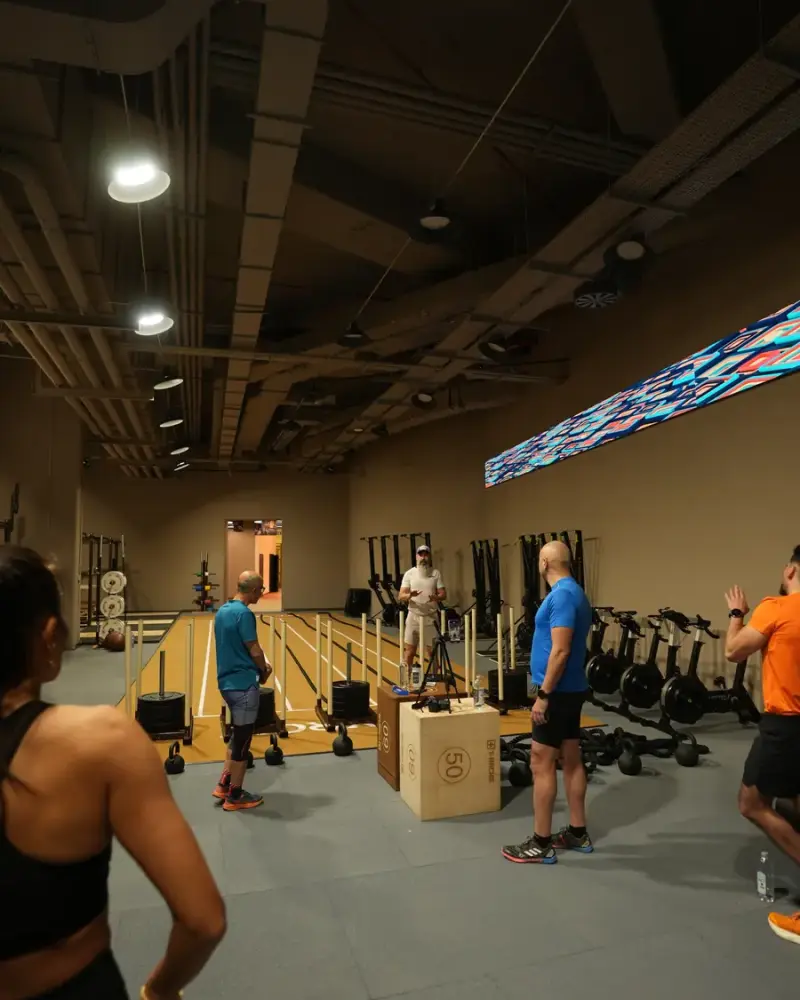
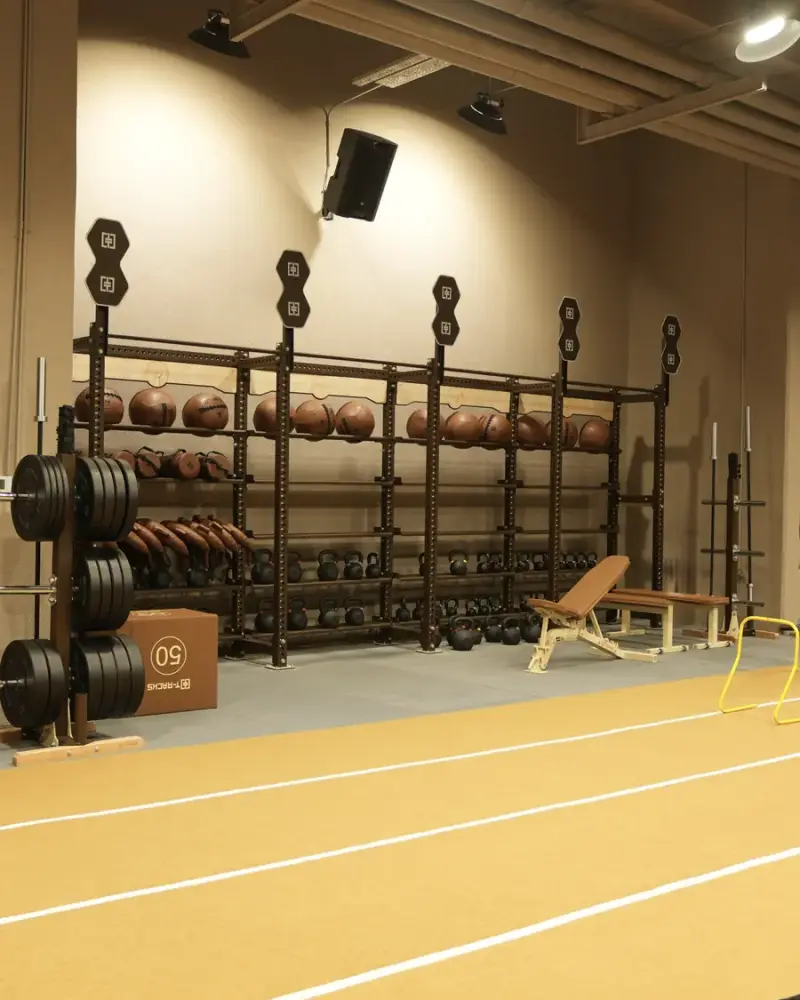
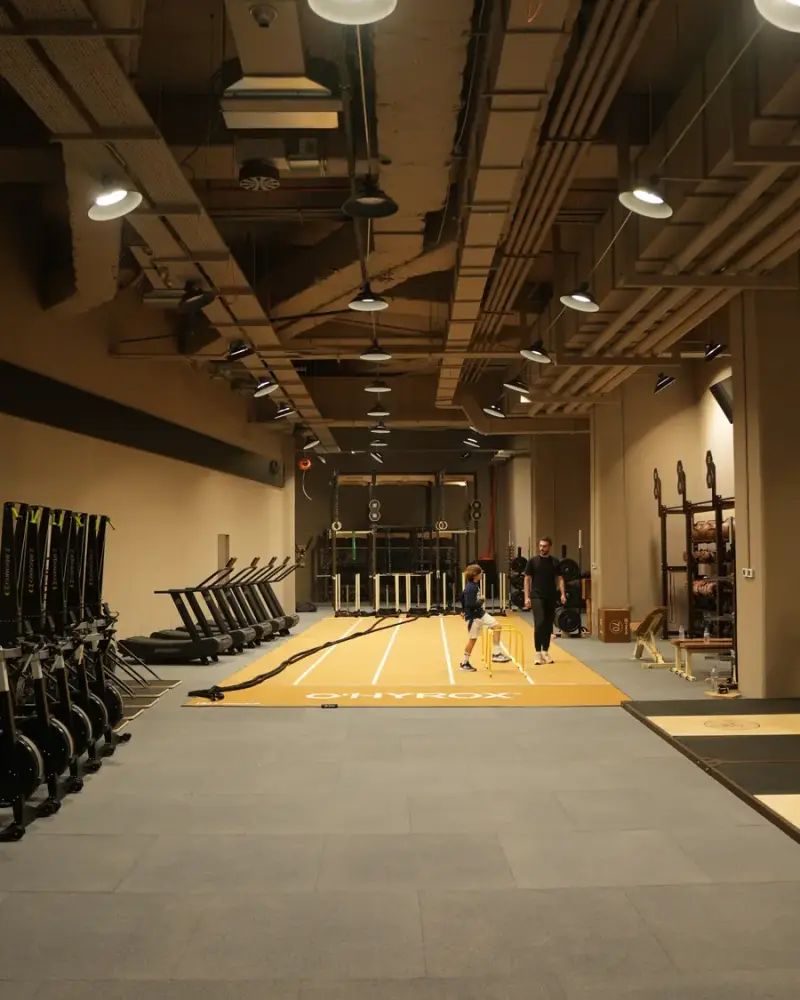
At Hybrid Sky, we walk new athletes through the equipment list in order of use in their first session; since sleds, ergometers, sandbags and wall balls are ready in the gym, you only need to bring apparel and shoes at the start. To see the space's inventory and what we use in which session, the classes page take a look.
Do I need to buy special equipment to start HYROX?
No. You can come to your first session with balanced running shoes, sweat-wicking apparel, long socks, water and a towel. Sleds, ergometers, sandbags and balls are ready in the gym.
Do I have to wear gloves?
Not required. The palms take a beating on the Sled Pull and Farmers Carry; a thin glove with a coated palm adds comfort. Thick gloves aren't recommended because they slip on the rope.
Should I buy new shoes for the race?
If you're buying, buy at least six weeks ahead and run 40-50 kilometers in them. Racing in untested shoes raises the risk of blisters and pain.
Do I need knee sleeves?
Not mandatory, but many athletes use a thin neoprene knee sleeve because it protects the knee from impact and friction during Sandbag Lunges. It shouldn't be used to suppress pain.
A stronger version of you.
Just one step away.
24 hours from your first message to your first session. Let's build your program together — reach out on whichever channel suits you.
Weekdays 06:00 - 23:00