The most effective breathing technique for recovering between stations is to slow your breathing with long, controlled exhales in the first 30–60 seconds after leaving the station, then shift to rhythmic breathing tied to your running stride (for example, in for 3 steps, out for 2). The goal isn't to hold your breath or force it through your nose, but to turn panicked gasping into a steady, deep rhythm. Practiced in training, this skill gains you a few seconds and far more control at every transition in the race.
Why is breathing a separate skill in HYROX?
In HYROX, your body constantly switches between two different demands. Stations like the Sled Push or Wall Balls require brief, high force output, and most athletes unknowingly hold their breath or breathe shallowly while doing them. The 1 km run that follows is a rhythmic, aerobic effort. For athletes with poor breath control, the transition between these two modes makes the first 200–300 meters of the run heavier than it needs to be.
You can't fully control your breathing rate consciously; CO2 buildup and effort level largely set your respiration automatically. But you can influence the depth and rhythm of your breathing and the length of your exhale. Fast, shallow breathing leaves a significant portion of the air in your lungs unexchanged; deeper, steadier breathing provides more efficient gas exchange for the same effort. Controlled exhaling also reduces the mental sense of “panic.”
So breathing technique isn't a miracle; it's a skill that prevents small losses. A few seconds and a bit less stress at each of the eight transitions add up to a noticeable total by the end of the race.
Leaving the station: the first-60-seconds protocol
The moment you leave a station and enter the Roxzone is the most valuable time to get your breathing back. The sequence below becomes automatic when practiced repeatedly in training.
- Stand tall and open your chest. Putting your hands on your knees and bending forward feels comfortable for the first few seconds, but it restricts diaphragm movement. Straighten your torso as you walk and let your shoulders drop back.
- Lengthen your exhale. For the first 4–6 breaths, try to make your exhale about twice as long as your inhale. Exhaling through your mouth with lightly pursed lips makes this easier.
- Breathe into your belly. Focus on feeling your lower ribs and belly expand rather than your upper chest.
- Start by walking, then ease into running. A brisk walk or a light, short-stride jog in the first meters of the Roxzone gives your breathing time to settle.
- Tie the rhythm to your stride. Once you start running, match your breathing to your step count and run the first 200 meters at that rhythm.
We cover other ways to save time in the transition area in our Roxzone guide; the breathing protocol fits easily into that plan.
Rhythmic breathing patterns while running
Rhythmic breathing means tying your inhales and exhales to a set number of steps. This method regulates your breathing and distracts you from fatigue by giving your mind something to count. Which pattern you use depends on your effort level.
| Pattern (in : out) | When | Feel |
|---|---|---|
| 3 : 3 | Easy run, warm-up | Comfortable, conversational |
| 3 : 2 | Race pace, post-station run | Controlled but effortful |
| 2 : 2 | Threshold pace and above | Hard, short sentences |
| 2 : 1 | Final kilometers, sprint | Very hard, short duration |
One advantage of odd-numbered patterns like 3:2 is that the exhale lands on a different foot each time. Some runners feel this spreads the load on the torso more evenly. It's not a hard rule; what matters is that the rhythm calms you and is sustainable. We cover breathing while running more broadly in our how-to-breathe-while-running article.
Station-specific breathing tips
Each station has a different movement structure, so you need to tie your breathing to the rhythm of the movement.
SkiErg and Row
Exhale on the pull, inhale on the recovery. On the SkiErg, exhaling as the arms come down is a common pattern; on the rower, exhaling at the end of the drive. At high stroke rates you can take one breath per stroke; at low stroke rates, a two-stage breath.
Sled Push and Sled Pull
Briefly holding your breath on heavy pushes (to increase intra-abdominal pressure) can come naturally, but keeping it up for more than a few steps tires you quickly. Take a short, forceful exhale every 2–3 steps. On the Sled Pull, exhale on each pull and inhale while gathering the rope back.
Burpee Broad Jump
Exhale on the way down, inhale on the way up. Rhythm is crucial here; holding your breath to gain speed turns into a serious wall in the second half of the 80 meters.
Farmers Carry and Sandbag Lunges
On carries, while maintaining core tension, your breathing should spread more into the lower chest and sides. On lunges, inhale on the way down and exhale on the way up. Holding your breath for too long can cause unnecessary dizziness, especially on lunges.
Wall Ball
Inhale as you descend into the squat, exhale as you throw the ball. During short breaks between sets, 2–3 long exhales make it easier to start the next set. We cover this topic in wall ball breathing management and rep splitting article.
How your breathing changes over the race
Your breathing needs aren't the same at the start and the end of the race. During the first two runs and the SkiErg, your body is still fresh and most athletes start faster than they should out of excitement. If your breathing is still easy to control in this section, your pace is probably right; if you're struggling to hold a 3:2 rhythm, you need to slow down a bit. In the middle of the race, after the Burpee Broad Jump and Row, your breathing rhythm breaks down more often. At this point the goal is to regain your rhythm, not to be perfect.
The last three stations, the Farmers Carry, Sandbag Lunges, and Wall Balls, are where fatigue peaks. Here a 2:2 pattern is realistic for most athletes. Deliberately regulating your breathing on the last run before the Wall Balls lets you make your first set a long one. In short, your breathing plan doesn't stay fixed throughout the race; it changes along with your pace plan. Knowing this keeps you from panicking when your rhythm breaks down, and turns the feeling of “something's going wrong” into “here's the moment I expected.”
Noting in your training log after each simulation which station your breathing rhythm broke down after also helps you find your weak link. The station where your breathing struggles most is usually the one with the most room for technical or conditioning improvement.
Nasal breathing, box breathing, and other methods
Nasal breathing and various breathing exercises have been widely discussed in recent years. In the context of HYROX, they need to be put in the right place.
- Nasal breathing: a useful tool for controlling aerobic pace on easy runs and during warm-ups. If you can't breathe comfortably through your nose, you're probably above your easy zone. At race pace, however, the nose alone doesn't provide enough airflow; mouth and nose are used together.
- Box breathing (4-4-4-4): can be used in the waiting area before a race or at the end of training to calm the nervous system. It isn't used during effort.
- Long-exhale exercises: breathing for 3–5 minutes after training with exhales longer than inhales gives a sense of shifting into recovery faster, and many athletes find it helpful.
None of these methods replaces aerobic capacity. The best “breathing training” is still regular endurance work; techniques help you use the capacity you have more efficiently.
Practicing breath control in training
Breathing technique isn't something to remember on race day; it's a habit that needs to become automatic in training. You can add the following drills to one or two sessions a week.
- Transition repeats: 6–8 rounds of 250 m SkiErg or 15 Wall Balls, followed by a 400 m run. Apply the protocol above in the first 60 seconds of each run.
- Rhythm run: during a 20–30-minute easy run, try 3:3, 3:2, and 2:2 patterns in 5-minute blocks and note which suits which pace.
- Recovery measurement: record how much your heart rate drops in 1 minute after a hard interval. That drop becoming more pronounced over the weeks shows that both your fitness and your breath control are improving.
- Applying it in simulations: in half or full simulations, treat every transition as a “breathing rep.”
These drills are most beneficial when done alongside compromised running sessions that combine stations and running.
When should you be careful?
Shortness of breath during exercise is normal, but some symptoms can't be explained by normal fatigue. If you experience chest pressure or pain, wheezing, breathlessness out of proportion to the effort, dizziness, or palpitations, stop training. If these symptoms recur or persist, see a doctor. If you have asthma or a similar diagnosis, plan your breathing strategy with your doctor.
Breathing and transition work at Hybrid
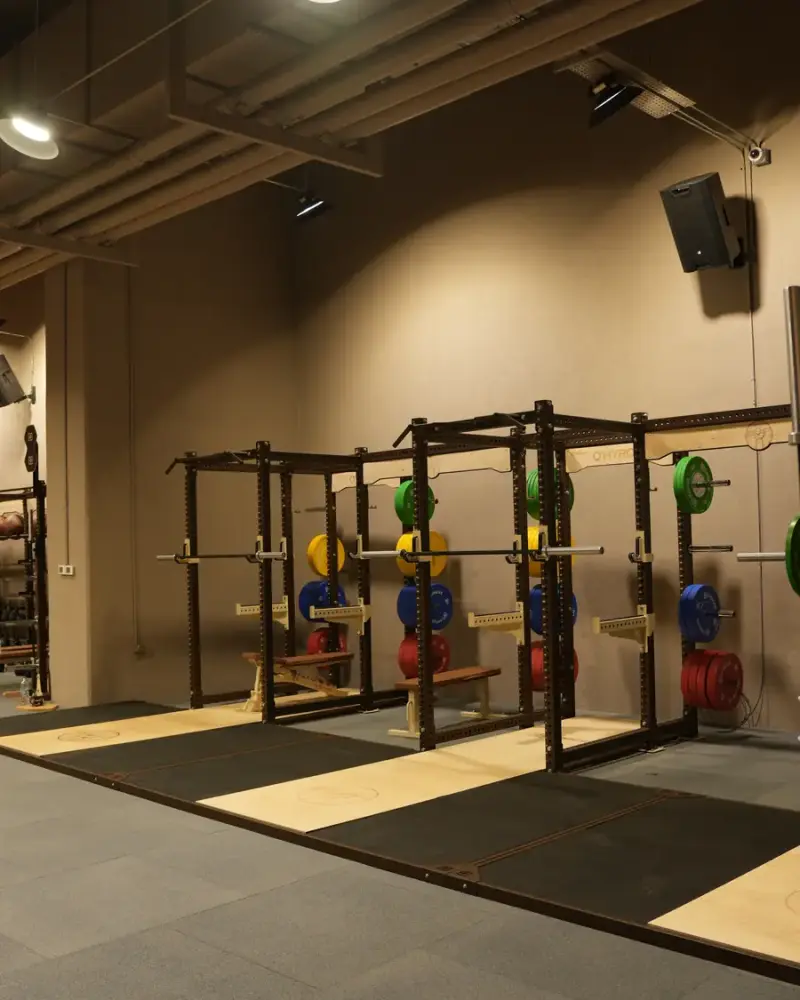
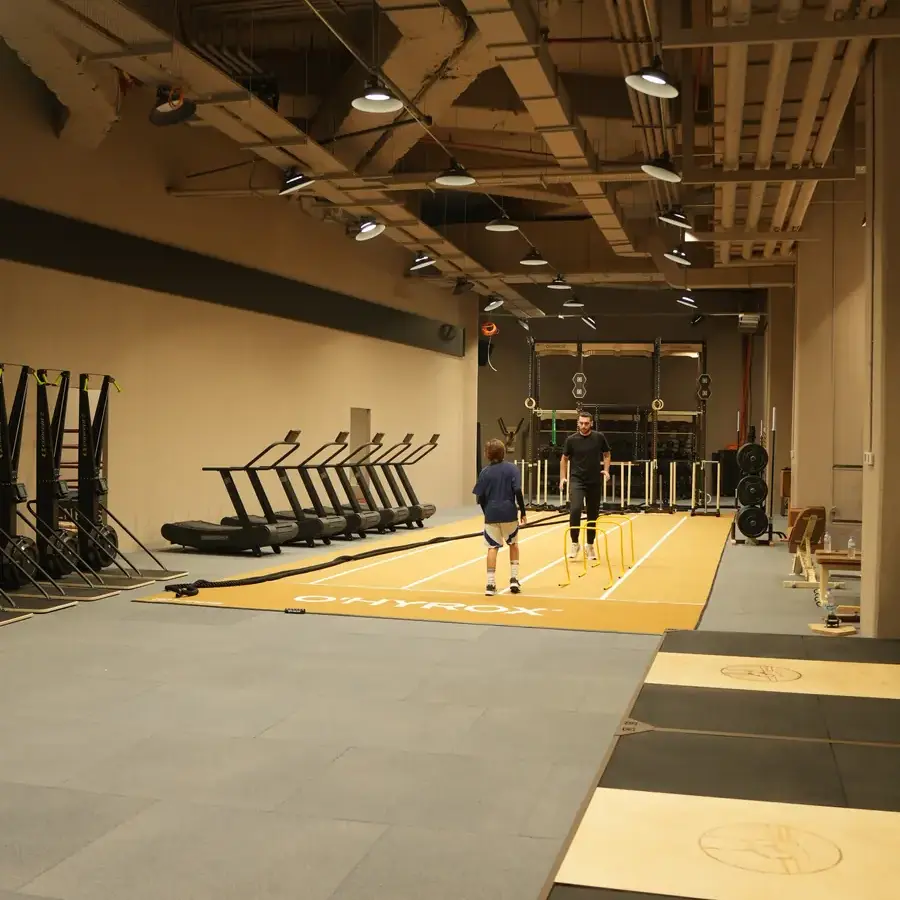
In Hybrid's training space at the O’Wellness Sky complex in Sarıyer, station and run transitions are a natural part of classes. Especially in the HYROX simulation class , because you repeat transitions in a structure close to race conditions, you can try the breathing protocol under real fatigue. During technique coaching, our coaches also watch for habits like breath-holding, bending forward, and rushed exits.
Breathing is a free performance tool in HYROX. It needs no equipment, just repetition. In today's session, try just one thing: lengthen your exhale for the first four breaths after leaving a station and note the difference.
How can I recover my breathing faster after a station?
Straighten your torso, lengthen your exhale for the first few breaths, and ease into running with short steps. This sequence becomes automatic as you repeat it in training.
Should I breathe through my nose or mouth when running?
Nasal breathing can be used at an easy pace. At race pace, mouth and nose are used together, because the nose alone doesn't provide enough airflow.
Is it OK to hold my breath during the Sled Push?
Briefly holding your breath on a heavy push is natural, but it shouldn't last more than a few steps. Take a short, forceful exhale every 2–3 steps.
When is shortness of breath in training a concern?
If you have chest pain, wheezing, dizziness, or breathlessness out of proportion to the effort, stop training. If the symptoms persist, see a doctor.
A stronger version of you.
Just one step away.
24 hours from your first message to your first session. Let's build your program together — reach out on whichever channel suits you.
Weekdays 06:00 - 23:00