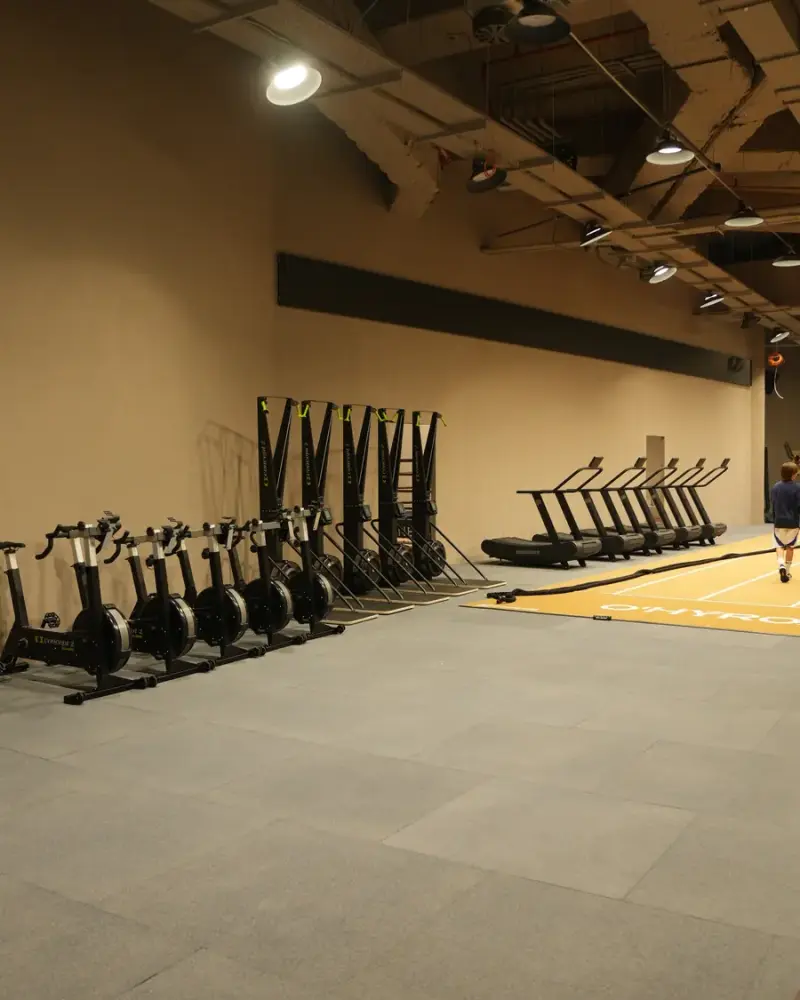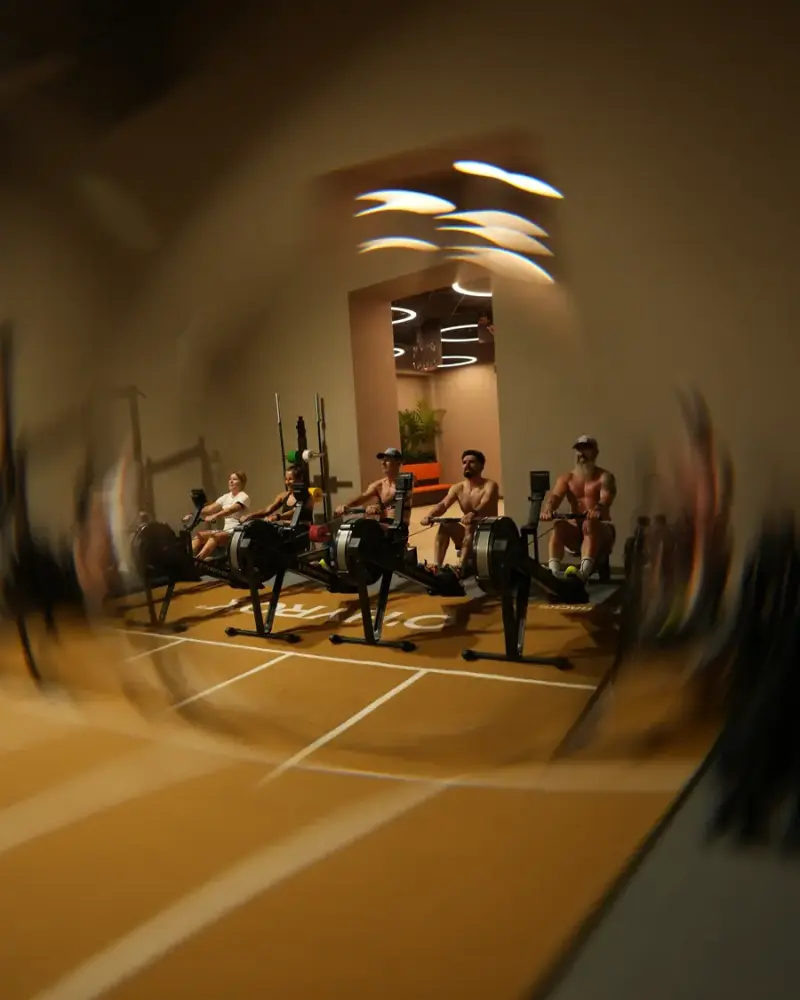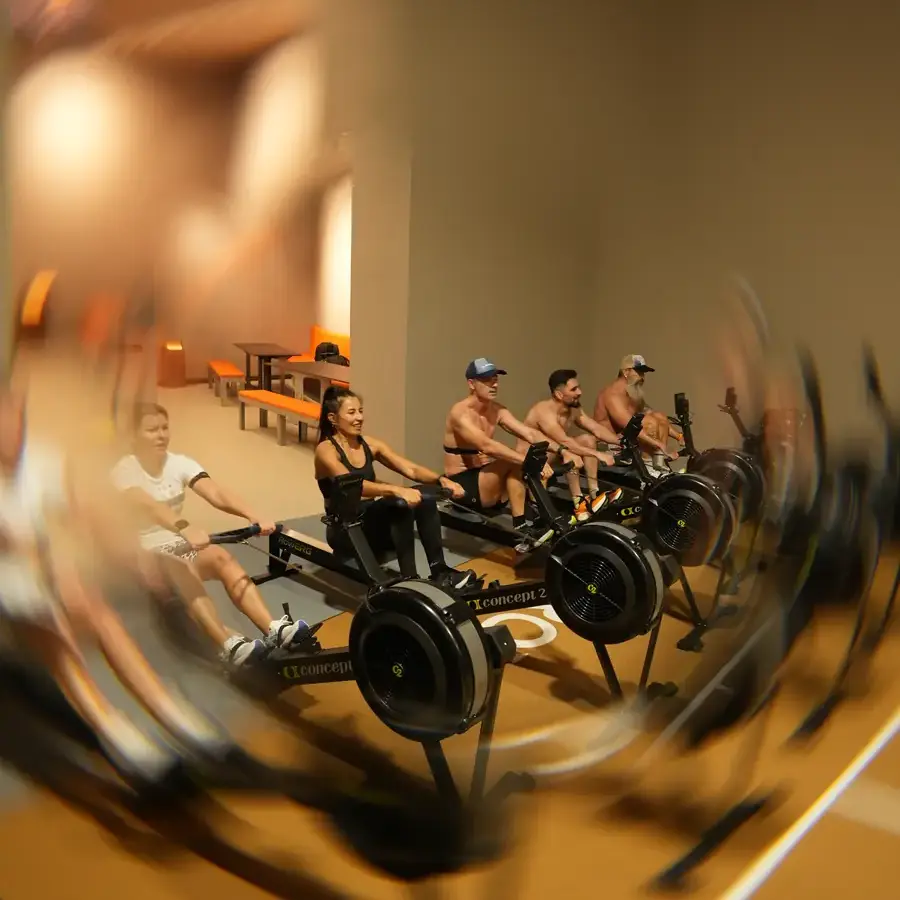
The rower and SkiErg are two tools that largely deliver the aerobic stimulus of running while almost entirely eliminating the impact load on the feet, calves and Achilles. For a HYROX athlete their value is twofold: they help build weekly aerobic volume without increasing injury risk, and they show up directly as two of the race's stations. The practical answer: an ergometer can replace roughly 20-35 percent of your running volume, but more than that sets back performance, because running-specific mechanical durability is only gained by running.
What's the advantage of an ergometer over running?
The first advantage is the absence of impact load. In running, with every step a force several times your body weight is transmitted up from the soles of your feet; on the rower and SkiErg there's no such load. That's why an athlete with a knee, Achilles or foot problem can keep training for weeks without losing aerobic capacity. For the same reason, for athletes with a higher body weight, the ergometer is a far more sustainable starting tool than running.
The second advantage is control. The screen shows pace, power, stroke rate and distance at every moment. This lets you measure intensity instead of guessing it. When running outside, wind, gradient, surface and traffic muddy the data; on an ergometer you can repeat the same protocol exactly for weeks and see your progress clearly.
The third advantage is coverage. The rower works the legs, hips and back together; the SkiErg loads the upper body and core. So the ergometer works, aerobically, the muscle groups that running doesn't cover. Since upper-body endurance is decisive in the first ten minutes of a HYROX race, this coverage isn't wasted.
What can't it replace?
The ergometer's limit is mechanical. The way running loads the tissues in the calves, Achilles tendon, soles of the feet and hips is unique and is only gained by running. It's a common experience to train on ergometers for weeks and then, on returning to running, find that your breathing is fine but your legs aren't ready; your heart rate is within the right zone but your calves lock up at kilometer 6.
The second limit is running economy. The ability to use less energy at the same speed depends on repeating the running movement; the ergometer doesn't develop this skill. You can find the detailed discussion in our running economy article . Because of these two limits, the practical rule is clear: keep at least two real running sessions a week, and add the ergometer on top of these or use it to replace your third or fourth run.
Substitution ratios: how much can be swapped?
| Situation | Running sessions | Ergometer sessions | Note |
|---|---|---|---|
| Trouble-free preparation | 3-4 | 1-2 | Ergometer as additional volume |
| Higher body weight | 2-3 | 2-3 | Impact load is limited |
| Calf/Achilles sensitivity | 2 | 3 | Continue if pain-free |
| Return-to-running phase | 2-3 | 2 | Volume gradually shifts to running |
| Winter, high air pollution day | Depends | +1 | Indoor alternative |
There's no precise conversion like “this many meters of rowing equals this many kilometers of running”; different sources give different ratios, and an athlete's rowing efficiency changes the ratio markedly. A more reliable approach is to think in terms of time and intensity: 40 minutes spent in the same heart rate zone produces a similar aerobic stimulus whatever the tool. How to find that zone in the Zone 2 training article in more detail.
The HYROX-specific gain: two stations are already ergometers
The first station in the race is the 1000-meter SkiErg, and the fifth station is the 1000-meter Row. So in HYROX, ergometer work isn't a substitute but directly race-specific training. Combined, the two stations take most athletes between 8 and 10 minutes; technical efficiency can easily make a 60-90 second difference in that time.
The more important point is that the fatigue these two stations create carries over into the next run. A 1000-meter row pulled with poor technique wipes out your legs and slows the following kilometer by 20-30 seconds. For technical details, see rowing technique and SkiErg technique articles; for damper and stroke rate settings, in a separate article too.
Four ready-made ergometer protocols
- Aerobic base. 30-45 minutes of continuous rowing, heart rate in the aerobic zone, stroke rate 20-22 per minute. An intensity at which you can hold a conversation. 1-2 times a week.
- Threshold blocks. 4 × 6 minutes of rowing, 2 minutes easy between. Pace roughly 8-12 seconds slower than your best 2000-meter pace. Builds threshold capacity.
- Race-specific reps. 5 × 1000 meters of rowing, 3 minutes between. Pull each rep at race pace; if your pace doesn't drop in the last two reps, the 1000 meters won't be a problem in the race.
- Mixed transition session. 4 rounds: 1000 m SkiErg + 1 km run, no rest. This session works both your ergometer capacity and your transition skills, and mimics the first quarter of the race exactly.
The fourth protocol is especially valuable because managing your heart rate and breathing in the transition between the ergometer and running is a skill in itself. We covered the background of this skill in detail in our compromised running article .
When choosing protocols, keep your goal in mind. If you want to finish the 1000 meters as fast as possible in the race, the third protocol is the priority; if you want to build overall fitness, the first and second protocols give a higher return. For most athletes, a reasonable distribution over four weeks is two base sessions, one threshold session and one race-specific session.
The most common technique mistakes
- Sequencing error on the rower. The correct sequence is legs-body-arms. Starting with the arms reduces power and tires the back.
- Stroke rate too high. Pulling above 30 strokes per minute is generally a loss of efficiency; holding the same pace at 24-26 strokes with a stronger pull is more economical.
- Maxing out the damper. A high damper doesn't mean better training; for most athletes a medium setting is both faster and less tiring.
- Using only the arms on the SkiErg. Power comes from the hips; without trunk flexion and leg contribution, the shoulders tire early and shoulder load increases. We covered managing this load in our article on shoulder injuries.
- Pulling hard without warming up. Because it's low-impact, the ergometer makes warming up seem unnecessary; yet for the back and shoulders, warming up is at least as important as for running.
What data should you look at on an ergometer?
There are lots of numbers on the screen, but only three change decisions. The first is time per 500 meters, that is, pace. This value is the most honest indicator of fatigue: if your pace drops at the same effort, it tells you recovery wasn't complete that day. The second is distance per stroke. Producing the same pace with fewer strokes shows increased efficiency; it's the most concrete evidence that your technique is improving. The third is stroke rate, that is, the number of pulls per minute. If your stroke rate rises while your pace stays the same, it shows that hurry, not strength, has increased.
Reading these three data points together takes the guesswork out of erg sessions. For example, an athlete who can hold a 2:10 pace at 24 strokes per minute comes out of the race noticeably less fatigued than one holding the same pace at 30, because they did the same work with fewer contractions. If you also want to add heart rate data, a chest strap gives more consistent results; the comparison in the running watch and heart rate strap article too.
The minimum dataset to log: session type, total distance, average pace, average stroke rate and perceived exertion. Five lines are enough, and looking back weeks later, they clearly show which protocol paid off. Which data actually help in our training log article .
How does it fit into your weekly program?
Because ergometer sessions can be used at both high and low intensity, they hold a flexible place in your program. The two most common placements are: first, 15-20 minutes of easy rowing added right after a strength session, which builds aerobic volume and speeds recovery. Second, a 40-45 minute base session on a separate day, which is the most efficient option for athletes who don't want to increase their running volume.
High-intensity ergometer sessions draw from the same budget as running intervals. So if you plan two high-intensity sessions a week, one can be rowing and the other running; doing both as running and adding hard rowing on top disrupts recovery. To see the weekly flow and session types, our class schedule and our classes page take a look.
In the winter months, the ergometer has an added benefit: it lets you maintain aerobic volume without disrupting your plan, whatever the weather. In Istanbul, during cold and rainy weeks, substituting indoor rowing for an outdoor run instead of canceling it is the most practical way to stay consistent throughout the season. The same logic applies to days when air pollution is high; we covered both topics separately in our articles on running in the cold and air pollution.
Ergometers during injury
With a running-related complaint, the ergometer is the most practical way to maintain fitness. The basic criterion is being able to train pain-free: if there's no pain during the movement, the complaint doesn't increase the next day, and range of motion isn't restricted, you can continue on the ergometer. Rowing requires caution with back problems, because lumbar flexion can increase during the pull; in that case the SkiErg is generally better tolerated.
It should be noted that this is not medical advice. If pain persists, bothers you at night or sharpens with a specific movement, see a physician or physiotherapist first; the ergometer is not a diagnostic tool. You can find the gradual structure of the return process in our return protocol article.
Can rowing replace running?
As an aerobic stimulus, largely yes; mechanically, no. Because rowing doesn't prepare your calves, Achilles and soles of your feet for the impact of running, you should keep at least two runs a week.
How many meters of rowing equal one kilometer of running?
There's no precise conversion. It's more accurate to think in terms of time and intensity: 4-5 minutes spent in the same heart rate zone produces a similar aerobic load.
SkiErg or rower: which matters more for HYROX?
Both are part of the race. The SkiErg demands upper-body endurance and breath management, the rower leg-dominant power; both should be in your weekly program.
Can I use an ergometer when injured?
In most cases you can use one if you can train pain-free and the complaint doesn't increase the next day. If pain persists, see a physician first.
A stronger version of you.
Just one step away.
24 hours from your first message to your first session. Let's build your program together — reach out on whichever channel suits you.
Weekdays 06:00 - 23:00