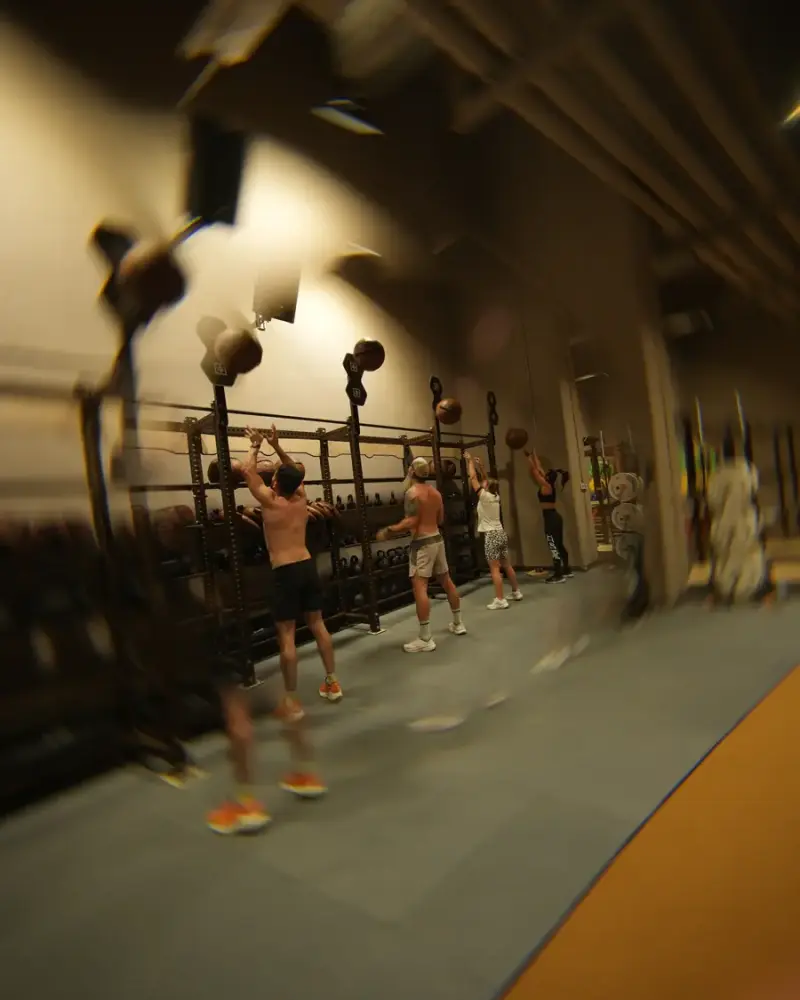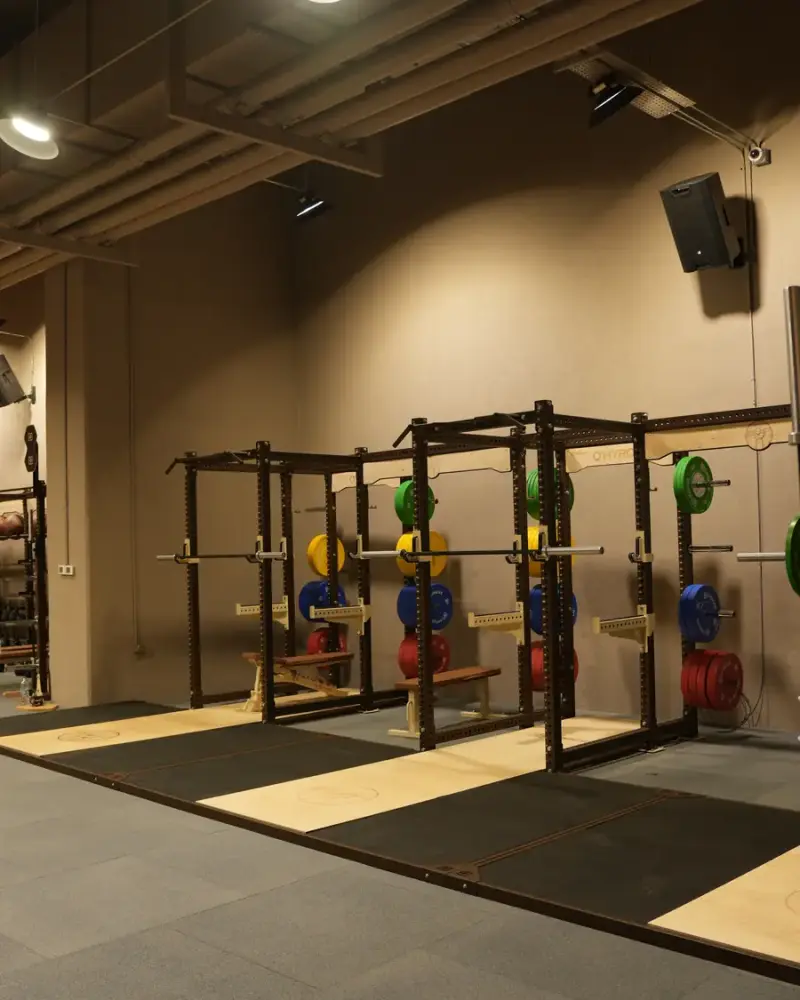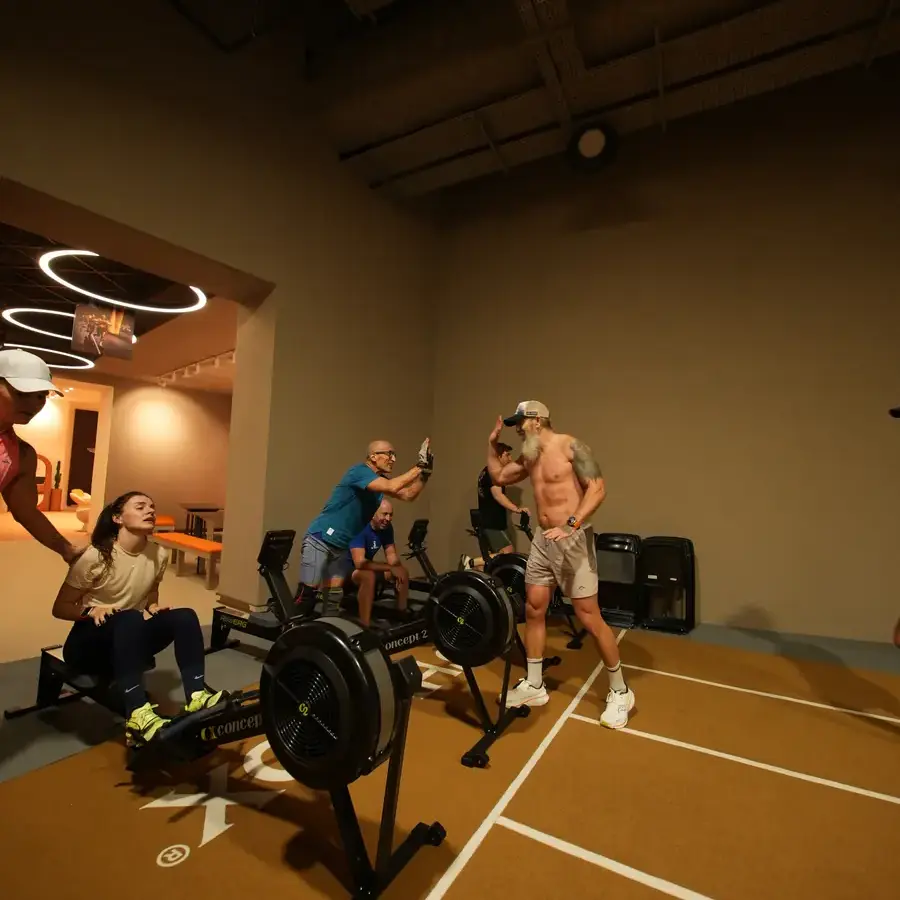
A cool-down is the process of bringing the body back to a resting state in a controlled way after the last high-intensity set of a workout. Its practical benefits are clear: heart rate and breathing come down gradually, blood doesn't pool in the legs and cause dizziness, grip and shoulder muscles release, and the nervous system comes out of its aroused state. It isn't a miracle that erases muscle soreness; it's an 8-12 minute investment that lets you go into the next day's session cleaner.
What a cool-down actually does, and doesn't do
Let's describe simply what's happening in your body at the end of a session. Your heart rate is high, your breathing deep and fast, your blood vessels dilated, and the blood volume in your muscles many times above normal. This state is good during training; once the work is done, it becomes unnecessary. A cool-down spreads this transition over five to ten minutes.
There are a lot of myths here, so let's draw the line upfront. What a cool-down reliably does is smooth the circulatory and nervous system transition. When you finish a 1000-meter row or the last Wall Ball set and suddenly sit down, your heart is still pumping high volume but your leg muscles have stopped pushing blood back up. Dizziness, nausea, and that “leaning against the wall” feeling are largely this.
What a cool-down doesn't do is the magic process described as “flushing” lactate. Lactate returns to normal on its own within about 20-40 minutes after high intensity ends; light movement speeds this up somewhat but doesn't eliminate delayed onset muscle soreness (DOMS). The mechanics and management of DOMS are a separate topic; details in the DOMS article in more detail.
Why a HYROX session needs its own cool-down
There's also this: HYROX sessions are usually long. In a 60-90 minute mixed session, fluid loss, a drop in blood sugar, and nervous system fatigue all come together. After a session like that, spending ten minutes moving in a controlled way instead of rushing to the locker room noticeably changes even the quality of that night's sleep. We covered the link between sleep and performance with numbers in the sleep and performance article.
Unlike a standard strength session, HYROX training taxes three separate areas in the same session: legs (sled, lunges, Wall Balls), grip and forearms (Farmers Carry, Sled Pull), and shoulders and upper back (SkiErg, Wall Balls). That's why the generic “walk for five minutes” prescription falls short.
Neglecting grip in particular costs you dearly. The forearm muscles stiffen after high-volume carries and compromise the next day's pulling work. That's why our post-session routine has a separate item for the forearms and wrists. How grip is developed through training grip strength exercises article.
12-minute post-session protocol
The sequence below is designed to be done right after a HYROX session. Order matters: movement, breathing, then stretching.
- 0:00-3:00 — Low-intensity movement. Walk at 5-6 km/h on the treadmill, very light pulls on the SkiErg, or 18 strokes/min on the ergometer. The goal is to bring heart rate down to about 55-60 percent of max.
- 3:00-5:00 — Breathing work. Lie on your back, knees bent. Breathe in through the nose for 4 seconds, out through the mouth for 6 seconds. About 12 rounds. This is the fastest tool for switching the nervous system into rest mode; for details, see the breathing techniques guide.
- 5:00-7:00 — Hips and hip flexors. Half-kneeling hip flexor stretch, 40 seconds per side. This is the area that shortens most after Sandbag Lunges and the Sled Push.
- 7:00-8:30 — Calves and Achilles. Straight-leg calf stretch against a wall for 30 seconds, then bent-knee for 30 seconds (per side). Don't skip this item in weeks with high calf load; the Achilles and calf problems article details the risks.
- 8:30-10:00 — Shoulders and chest. Doorway chest stretch for 30 seconds, then 10 wall slides. Valuable for the shoulders after SkiErg and Wall Balls.
- 10:00-11:00 — Forearms and hands. Place your fingers on the floor with palms facing down and shift your weight forward, 30 seconds. Then the opposite direction for 30 seconds. Slowly open and close your fingers 20 times.
- 11:00-12:00 — Log it. Write the session down in a notebook or app: which station, what load, what RPE, what hurt. This one minute is the data that drives program decisions three months later.
Cool-down length by intensity
Not every session deserves the same cool-down. A rough rule: the harder the session ended, the longer the movement portion.
| Session type | Movement portion | Stretching | Total |
|---|---|---|---|
| Zone 2 run, 45-60 min | 3 min walk | 4 min | 7 min |
| Strength session (squat/deadlift-dominant) | 3 min bike | 6 min | 9 min |
| Intervals: 6 × 800 m | 6 min easy jog + walk | 5 min | 11 min |
| Half HYROX simulation | 6 min mixed | 6 min | 12 min |
| Full HYROX simulation | 8 min walk + ergometer | 7 min | 15 min |
This table doesn't apply on race day. The first thing after the finish is to walk and take in fluids; stretching and foam rolling come hours later. You'll find the plan for the first three days after a race in the post-race recovery article.
Is static stretching harmful? A matter of timing
One more distinction is useful: the purpose of stretching isn't to prevent injury but to maintain range of motion. In HYROX, the cost of lost range of motion is concrete. When the hip flexors shorten, lunge depth drops and the rear knee doesn't touch the ground, creating no-rep risk. When the ankle locks up, you can't hold your torso angle on the Sled Push. If shoulder flexion falls short, the ball doesn't stay up in Wall Balls. So the stretches in the cool-down aren't cosmetic; they're a technical investment.
The long-circulating claim that “stretching prevents injury” and the claim that “stretching reduces strength” have both been taken out of context. The reasonable position we have is this: long static stretches over 60 seconds can temporarily affect maximal strength work done immediately after. So two minutes of hamstring stretching before a heavy squat set makes no sense. But after the session ends, 20-30 second stretches are entirely appropriate and help maintain range of motion.
The practical distinction is clear: dynamic prep before the session, static stretching after. For the full warm-up protocol, see the 12-minute warm-up routine, and to improve range of motion long term, the mobility routine.
Foam roller, compression, ice: which belong in the cool-down?
None of these tools replace a cool-down; they're all optional add-ons.
- Foam roller. It gives a short-term feeling of relief and temporarily increases range of motion. 45-60 seconds per area is enough; rolling for ten minutes adds no extra benefit. Details: foam rolling and myofascial release.
- Compression socks. They may reduce the feeling of leg fatigue. Their net contribution to performance is unclear, but they do no harm.
- Cold water / ice bath. Be careful here: regular cold exposure right after an intense strength session can somewhat blunt muscle adaptation. It makes sense during race week or between hard days, not as a routine after every session. The evidence picture cold water therapy in our article.
- Sauna. A separate tool for heat adaptation, not a cool-down. If you're using it right after the same session, watch your fluid loss.
Nutrition and fluids: the hidden half of the cool-down
Sweat rate varies a lot by person and gym conditions; in Istanbul in summer, the fluid lost in the same session can be twice what you'd lose in winter. Rather than guessing, it's easy to measure: weigh yourself right before and right after the session. The difference is a rough but useful indicator of the fluid you lost in that session. Details of the method are in the hydration and sweat rate article.
A post-session routine isn't just stretching. Within 60 minutes after a long, sweaty HYROX session, these should be in place:
- Fluids. Each kilogram of bodyweight lost corresponds to about 1 liter of fluid. In a heavy-sweating session, take in 500-750 ml of water, with added electrolytes if sweating is very high.
- Protein. The 25-40 gram range is enough for most athletes. The “anabolic window” doesn't slam shut, but there's no benefit to delaying either. We covered the topic in the post-workout nutrition article.
- Carbohydrate. A priority if there's a second session the same day; for someone doing a single session, the daily total matters more.
The mental side of closing out a session
This is the most neglected item on the coaching side. Burying your head in your phone right after a hard simulation means losing what you learned in that session. A simple two-minute wrap-up is enough: what went well today, what you'll change next time in the same session, at which station your pace slipped. As these notes accumulate, you find your weak link with data, not guesswork; how it's done station analysis we showed step by step in the article.
Also a warning: sharp pain that doesn't go away during the cool-down, especially in the knee, lower back, or Achilles, shouldn't be brushed off as something that “will open up with stretching.” With pain that lasts several days or disrupts your walking, the right move is to stop training and see a doctor.
How a session closes at Hybrid Sky
In short, the cool-down is the easiest item in the program to do but the most often skipped. Three minutes of movement, two minutes of breathing, five minutes of stretching, and one minute of logging. Eleven minutes. In return, you get a cleaner next day, preserved range of motion, and data that steers your program. If you'd like to see how we work at the club up close, concept page take a look.
At the club, the last 10 minutes of every session are written as part of the program; the coach doesn't leave the cool-down as something done “if there's time.” In group classes, this section is run collectively; in personal training, it's personalized to that day's load. To see the weekly flow, the class schedule take a look.
Does cooling down prevent muscle soreness?
No, not directly. Its clear benefits are bringing heart rate and breathing down in a controlled way, preventing dizziness, and switching the nervous system into rest mode.
Should you do static stretching in the cool-down?
Yes. 20-30 second static stretches at the end of a session are fine; what to avoid is long static stretching right before a heavy strength set.
How many minutes should a cool-down last?
8-12 minutes is enough for most sessions. After long sessions like a full HYROX simulation, extending it to 15 minutes is reasonable.
If there's no time, which part of the cool-down should stay?
The first 3 minutes of low-intensity movement and the 2 minutes of breathing work. You can leave the stretches for later in the day.
A stronger version of you.
Just one step away.
24 hours from your first message to your first session. Let's build your program together — reach out on whichever channel suits you.
Weekdays 06:00 - 23:00