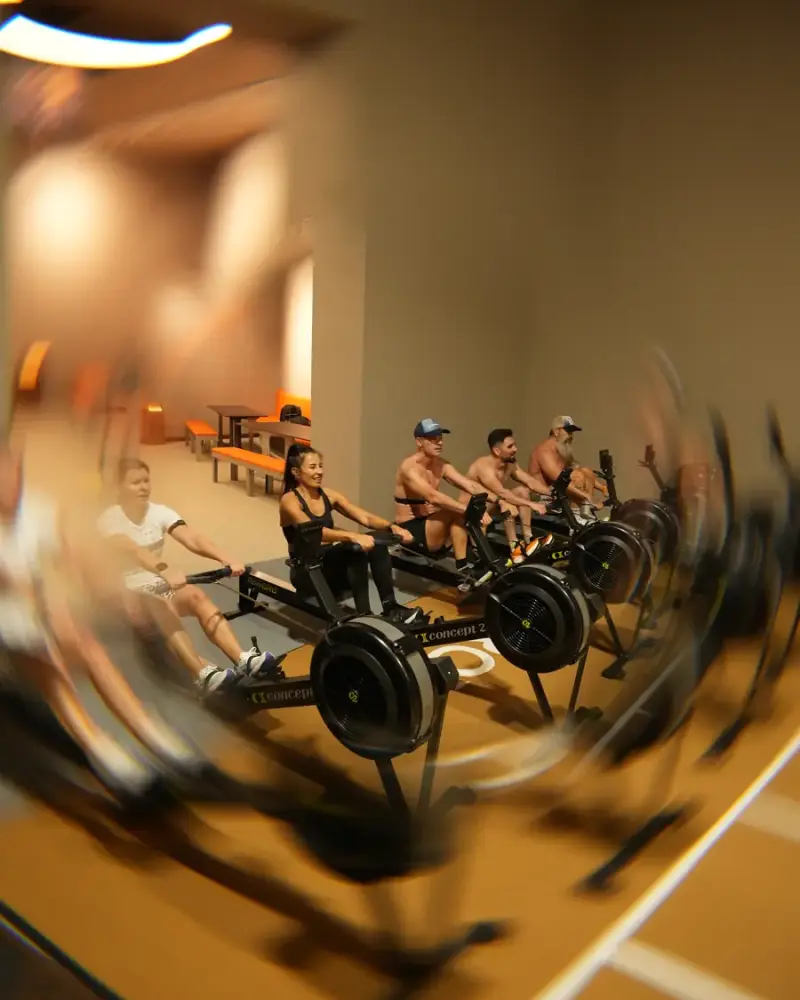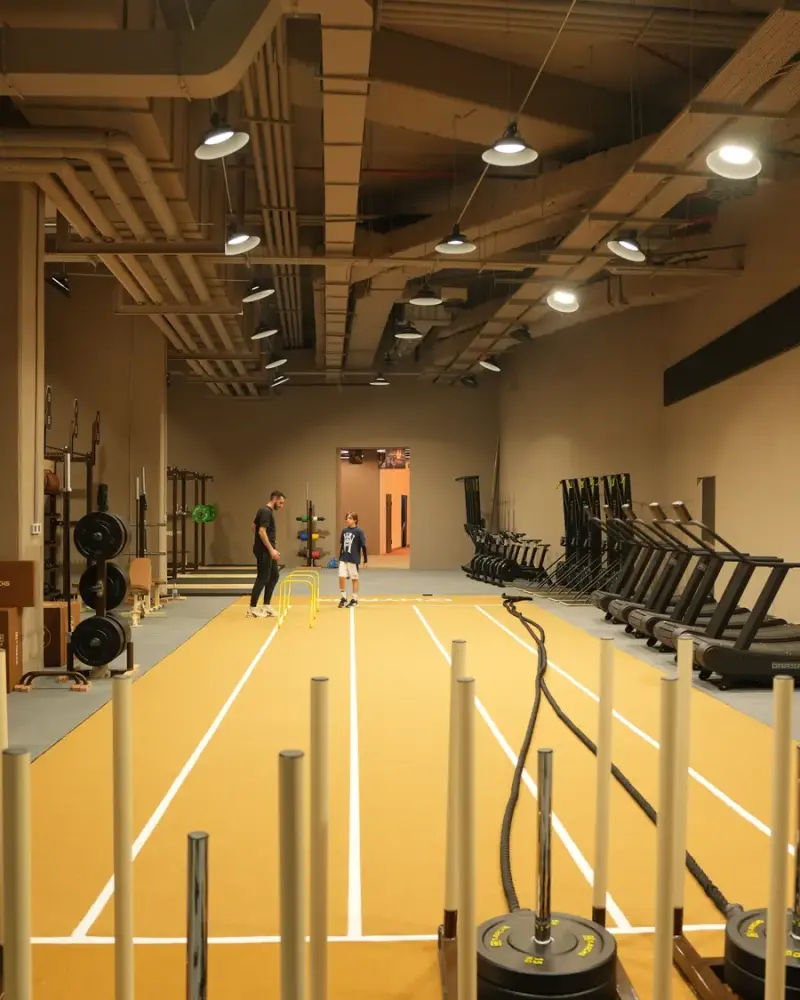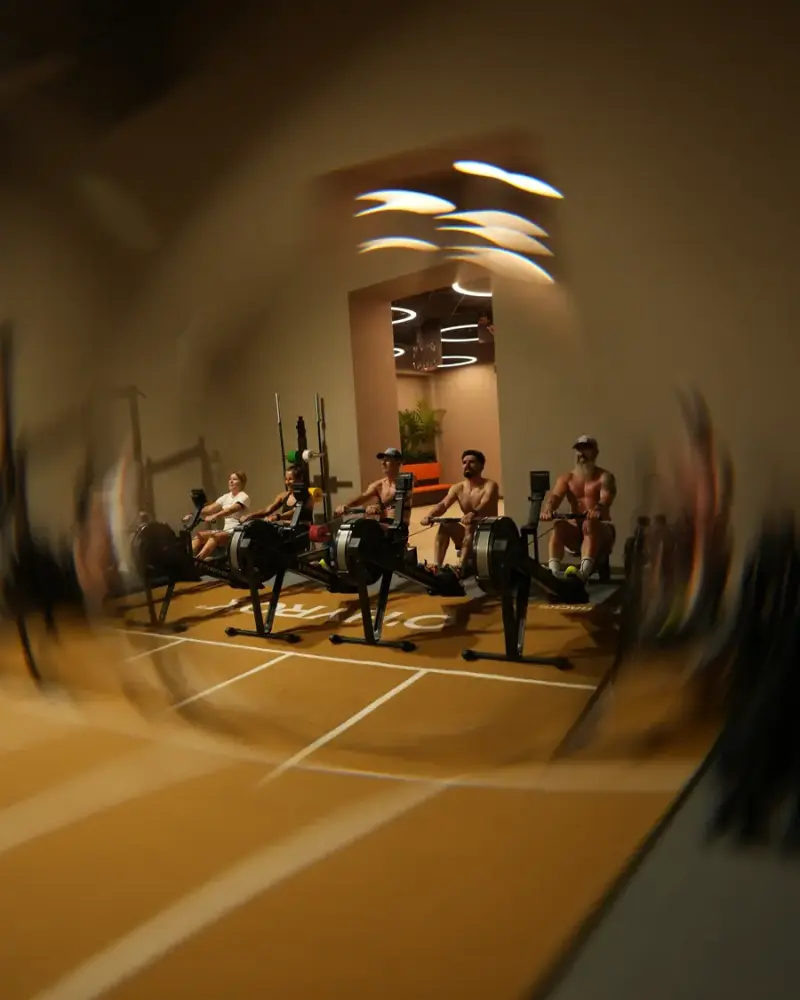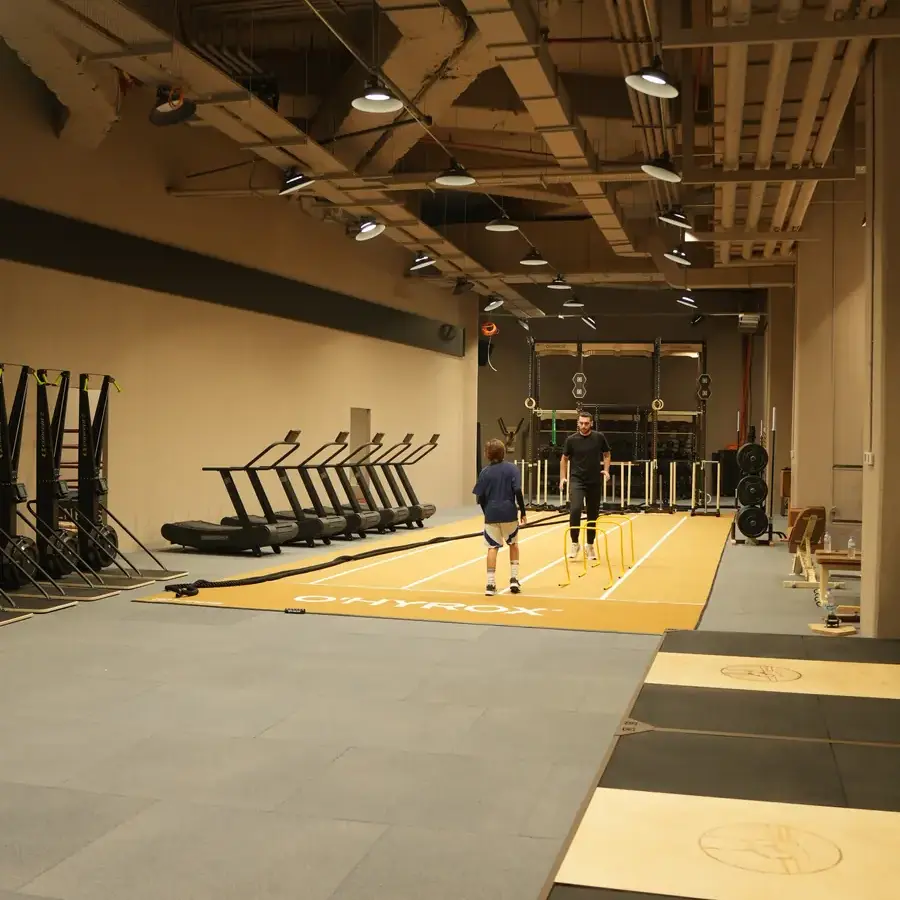
Salon ve yarış ekipmanı farkı, ilk HYROX deneyiminden sonra en sık dile getirilen şaşkınlıklardan biridir. Haftalarca aynı sled’i, aynı zeminde, aynı ağırlıkla iten bir sporcu yarış alanında bambaşka bir hisle karşılaşabilir. Ergometrelerin tepkisi, halatın kalınlığı, wall ball topunun yüzeyi ya da zeminin tutuşu, salonda alışılan koşullardan farklı olabilir. Bu farklar çoğu zaman küçük görünür ama yarışın ortasında beklenmedik bir yorgunluk ya da tempo kaybı olarak ortaya çıkar.
In this article we look at where the differences come from, which stations they are most pronounced at, how to prepare for the gap in training and how to keep your race plan flexible. The aim is not to eliminate race-day surprises completely but to be ready for them.
Where the differences come from
At the sled stations the most decisive factor is friction. The structure and cleanliness of the floor the sled is pushed and pulled on, and even the ambient temperature, can change how heavy the same weight feels. If the gym floor differs from the race floor, the same load can demand a completely different effort. This also applies between races; the same station can feel different at two different venues.
On the ergometers, the machine's settings, maintenance condition and how it is set up for the user can create differences. If the damper setting, handle height or position of the foot straps differs from what you are used to, finding a rhythm in the first meters can be harder. It is also worth remembering that the displayed values can vary slightly from machine to machine.
Environmental conditions affect the feel too. The temperature, humidity, lighting and noise of the venue are quite different from a calm training environment in the gym. Crowds and excitement can keep heart rate higher than usual at the start of the race. That can contribute to the equipment feeling heavier.
Which stations show the biggest differences?
Looking at athletes' experiences, the difference is felt more often at some stations. Knowing them helps you decide where to focus in training.
- Sled push: Zemin sürtünmesi farkı en çok burada hissedilir; aynı ağırlık daha hafif ya da daha ağır gelebilir.
- Sled pull: Halatın kalınlığı ve yüzeyi ile zemin sürtünmesi birleşerek kavrama ve ritmi etkileyebilir.
- SkiErg ve rowing: Makine ayarları ve tutacak hissi, ilk dakikalarda tempoyu bulmayı zorlaştırabilir.
- Wall ball: Topun ağırlık dağılımı, yüzeyi ve hedefin görünümü alışkanlıklarınızdan farklı olabilir.
- Farmers carry ve sandbag: Tutacak çapı, çantanın dolgunluğu ve yükün dağılımı kavrama ile duruşu etkileyebilir.
Not all these differences appear at every race. Some athletes find race equipment more comfortable than what they use in the gym. What matters is accepting the possibility of a difference in either direction and developing a flexible mental approach accordingly.
The sled stations need particular attention, because here the difference has both a physical and a mental effect. A sled heavier than expected can make the athlete panic and push the pace unnecessarily. In that case keeping the stepping rhythm and focusing on body position limits the loss.
Preparing for the gap in training
The most effective way to prepare for the gap is variety. When possible, pushing sleds on different floors, working with different weights and doing ergometer sessions on different machines develops the body's capacity to adapt to changing conditions. An athlete who always works with the same equipment adapts very well to that equipment but is more easily thrown by different equipment.
In sled work, it can be useful to work sometimes a little above race weight and sometimes below it. Heavier sessions prepare you if you meet a sled heavier than expected in the race. Lighter sessions let you work on speed and rhythm. This variety gets you used to a wide range of feel rather than a single feel.
On the ergometers, you need to practice adapting to the machine quickly. Making a habit of adjusting the settings yourself before the session, strapping in quickly and finding the rhythm in the first few strokes saves time in the race. Athletes training at Hybrid Sky can also develop this adaptability by rotating between different machines.
Building a flexible race plan
A very rigid race plan becomes fragile in the face of equipment differences. Setting a range for each station instead of a single target time helps you adapt rather than panic in unexpected conditions. For example, thinking through a fast and a slow scenario for the sled push leaves you prepared whichever you encounter in the race.
Including perceived effort in the plan matters too. Setting pace by how hard it feels rather than by times keeps you from overreaching at a station that feels heavier than expected because of an equipment difference. If you lose time at a station, sticking to your plan rather than trying to make it up on the next run usually gives a better result.
If you get a chance to see the equipment before the race, make use of it. Observing the equipment in the warm-up area or to the extent the organizers allow contributes to mental preparation. However, trying something new or working on the equipment for a long time before the race can waste your energy unnecessarily.
Adding uncertainty to simulations
Simulations are often done under ideal conditions where everything is under control: the stations are ready, the weights are known and the order is planned in advance. Race day, however, involves uncertainty. That is why it can be useful to add controlled uncertainty to simulations from time to time. For example, letting a training partner set the sled weight without telling you in advance, or changing the station order at the last minute, trains your response to unexpected conditions. That way the athlete learns to stay calm even when the plan falls apart.
The goal of this kind of work is not to make things hard for the athlete but to develop flexibility as a skill. A short review after a session with uncertainty reveals which situations affect you most. Is it the weight difference, the change in order, or the machine's different response? The answers to these questions clarify where to focus in the final weeks of race preparation.
Mental approach
The strongest tool against equipment differences is mental flexibility. Remembering that everyone races on the same equipment keeps you from seeing the situation as a personal disadvantage. A sled heavier than expected is equally heavy for every athlete in that wave. This perspective turns your focus to the elements you can control: technique, breathing and rhythm.
Noting your observations about the equipment after the race provides valuable information for your next preparation. Knowing at which station you felt the difference most and how you reacted shows which areas of your training program need more variety.
Frequently Asked Questions
Why did the race sled feel heavier than the one in the gym?
The feel of the sled depends largely on floor friction. If the structure of the race floor differs from the gym's, the same weight can feel heavier. The excitement of the setting and a high heart rate can also amplify this feeling.
Is it necessary to train at different gyms?
It is not essential. Working with different weights, different floor sections and different machines in the same gym also provides variety. What matters is not becoming too used to a single condition. For example, sometimes pushing the sled on a different section of the gym floor or changing the ergometer settings now and then creates small but effective variety.
Can I try the equipment before the race?
That depends on the organizers' practices. At some events similar equipment may be available in the warm-up area. Following the pre-race briefings is the best way to learn what is possible. Even without a chance to try it, observing the equipment from a distance helps you prepare mentally.