Sports massage, cupping and kinesio tape are all bestsellers in the recovery market, but their levels of evidence differ greatly. The short answer: there's reasonable evidence that massage reduces perceived muscle soreness and tension, cupping's effect works largely through temporary blood flow and expectation, and kinesio tape hasn't been shown to mechanically “support” muscle beyond changing pain perception. None of them significantly changes how fast muscle damage heals. All three feel good, and none of them replaces sleep, nutrition and smart load management.
Sports massage: what it does and doesn't do
Massage's most consistently measured effect is reducing perceived muscle soreness in the 24-72 hour window after training. That's not to be underestimated: having less sore legs after eight stations and 8 kilometers of running lets you go into the next day's session with better technique. The mechanism works mainly through the nervous system; pressure and rhythm raise the pain threshold, increase parasympathetic activation and lower muscle tone.
What massage doesn't do is also clear: it doesn't “flush” lactic acid from the muscles (lactate is already cleared within an hour after training), doesn't remove toxins and doesn't transform fat tissue. Evidence that it speeds up force production is weak. A long, deep massage right before a race can temporarily reduce muscle-tendon stiffness and slightly diminish explosive performance; that's why it's safer to schedule deep massage at least 48 hours before a race.
| Timing | Massage type | Duration | Expected benefit |
|---|---|---|---|
| During an intense block, on a rest day | Deep tissue / sports massage | 45-60 min | Reduced tension and soreness, better sleep quality |
| 3-7 days before a race | Moderate sports massage | 30-45 min | Recovery, ease of movement |
| Within 48 hours of a race | Light, superficial, short | 15-20 min | Relaxation; no deep pressure |
| First 24 hours after a race | Very light, drainage-style | 20-30 min | Reduced perceived soreness |
The general framework for the first three days after a race post-race recovery we laid out in the article; massage is an optional item in that plan, not a requirement.
Cupping: what do the purple circles tell you?
Cupping draws superficial tissue upward by applying negative pressure to the skin. The purple-red circles left behind are the result of temporary leakage from capillaries; they indicate how strongly the pressure was applied, not that “toxins were released.” A darker color doesn't mean a greater effect.
The research picture we have is mixed. Some studies have reported short-term improvements in muscle soreness and range of motion, while others found no difference from a placebo treatment. Most studies have small samples, and because blinding is difficult, the expectation effect is high. Honest interpretation: it's a tool with low potential for harm and modest, individually variable potential for benefit. If it makes you feel better, there's no harm in using it; there's no basis for putting it at the center of your performance plan.
There are things to watch out for. It's not appropriate for people on blood thinners, over skin lesions, eczema or open wounds, over areas with advanced varicose veins, or during pregnancy. It makes sense to avoid prolonged sun exposure and not to use a massage gun on the area until 24 hours have passed since cupping. The treatment should be done by a qualified practitioner.
Kinesio tape: pain perception or mechanical support?
The most debated aspect of colored tapes since the 2000s is the claim that they “support” muscle. The pulling force an elastic tape can generate is tiny compared to the forces acting on a joint, so the claim of mechanical stabilization hasn't been proven. The theses that the tape “improves lymphatic drainage” or “lifts the fascia” aren't supported by reliable imaging data either.
So why do some athletes feel better with tape? The most plausible explanation is tactile feedback and pain modulation. The constant stimulus on the skin can reduce how intensely the pain signal is perceived and gives the athlete awareness of how they're using that area. In other words, tape is a pain management and awareness tool; it isn't a brace.
Practical takeaway: tape does not make it okay to do wall balls on an injured shoulder. The comparison below clarifies where each of the three stands.
| Method | Strength of evidence | Most realistic benefit | Misconception |
|---|---|---|---|
| Sports massage | Moderate | Reduced perceived pain and tension, sleep | Lactate clearance, faster recovery |
| Cupping therapy | Weak to mixed | Short-term relief, easier movement | Toxin removal, lasting tissue change |
| Kinesio tape | Weak (limited support for pain perception) | Reduced pain perception, tactile feedback | Mechanical joint support, injury protection |
| Sleep + adequate calories | Strong | The real driver of adaptation | — |
The last row of the table is there on purpose. The combined effect of the three passive tools is small next to the sleep and performance relationship. Your recovery budget should go there first.
The HYROX athlete's real load map
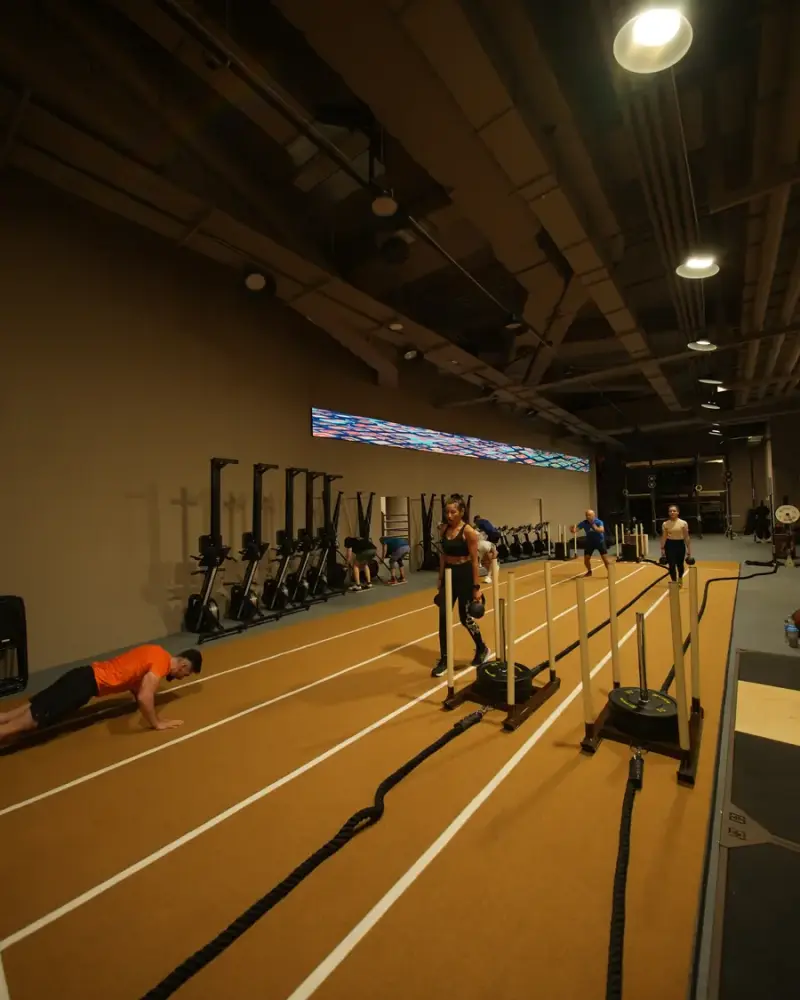
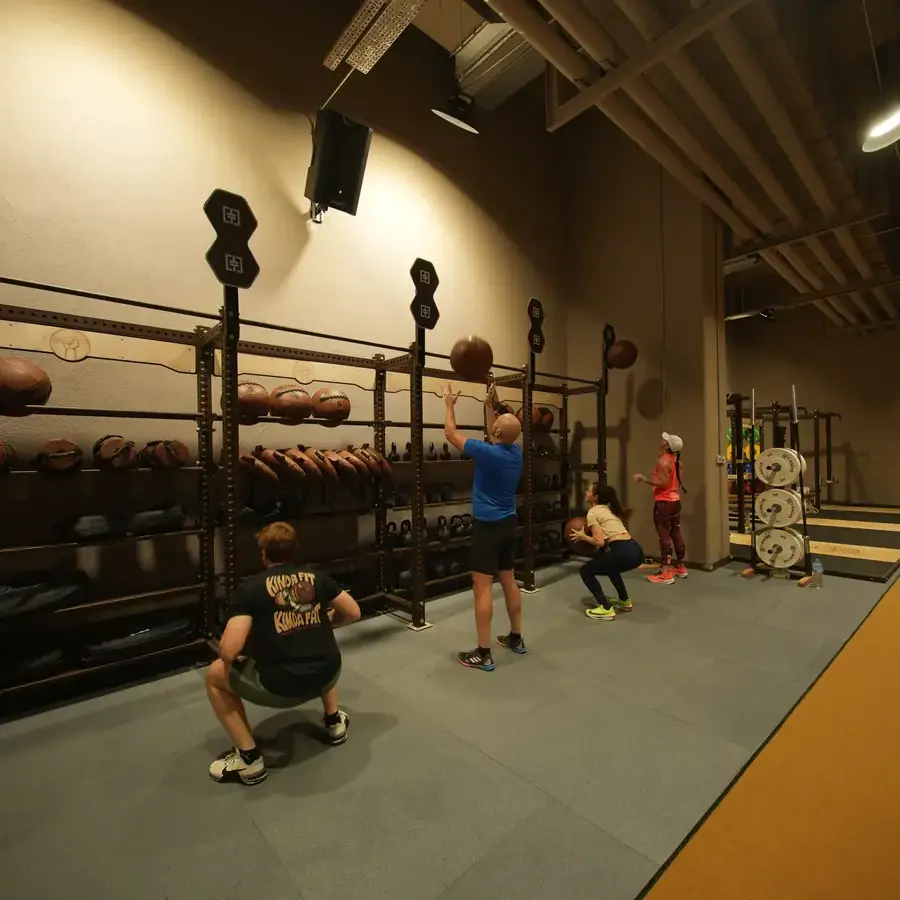
Because the format is fixed, you can also predict which tissues take a constant load: the 1000-meter SkiErg and 100 wall balls tax the shoulder girdle, the 50-meter sled push and 50-meter sled pull the hips and calves, the 200-meter farmers carry your grip and upper back, the 100-meter sandbag lunges your quads and single-leg control, and the 8 kilometers of running your Achilles and calves. Passive tools should be placed according to this map, not at random.
- After a heavy sled week: a 45-minute massage focused on the hips and calves, on a rest day.
- Heavy SkiErg and wall ball week: thoracic spine and upper back work; if you use tape, use it on the shoulder alongside technique correction. We explained how we manage shoulder load in our article on preventing shoulder injuries.
- High running volume week: calves and soles of the feet; no direct deep pressure on the Achilles, work around it instead. For details, see Achilles tendon and calf problems.
- After a simulation: only light work in the first 24 hours; deep massage waits 48 hours. You can find simulation planning in our HYROX simulation article.
- Taper week: don't try anything new. If you've never had a massage before, getting your first one the day before the race carries more risk than reward.
Budget and time: how much to spend on what?
For most amateur athletes, a weekly massage is both expensive and unnecessary. A more sensible routine is a professional session once or twice a month at the end of hard blocks, with self-treatment on the remaining days. Foam rolling and myofascial release The 3-5 minute routine we describe in that article, done consistently, produces more total effect than a monthly massage, because here frequency matters more than intensity.
In terms of your time budget, the order of priority is: sleep duration and consistency, adequate daily protein and calories, smart distribution of weekly load, low-intensity movement and walking, and last, passive tools like massage, cupping and taping. How we plan load distribution training volume and intensity you can see in the article.
Which symptoms mean you should drop these tools and see a specialist?
Massage, cupping and tape are symptom-management tools; they don't diagnose anything and they don't fix an underlying problem. This article doesn't diagnose either. If any of the following applies, stop and see a physician or physiotherapist:
- Pain lasting more than 10 days that doesn't ease with rest
- Numbness, tingling, loss of strength, or pain radiating into the leg or arm
- Waking up at night from pain, pain that increases at rest
- Marked swelling, warmth, or a joint that locks or gives way
- Sudden, sharp pain following an injury
- General symptoms such as fever, fatigue or unexplained weight loss
Masking pain with tape or cupping and carrying on training is one of the most common mistakes we see. Pain is information; silencing it doesn't make it go away. Pulling back the load, reviewing your technique and getting assessed if needed is always the faster route.
Bottom line: in the right place, with the right expectations
All three methods have their place, but none of them replaces training. Massage has the strongest rationale and is a sensible investment once or twice a month at the end of hard blocks. Cupping is a low-risk option whose benefit varies from person to person. Kinesio tape is not a brace; it's an aid that influences pain perception and awareness. Think of all three as items that come after sleep, nutrition and load management. At Hybrid Sky, we decide together which of these tools to use, in which week and on which area, based on your training load; you can read on the concept page how we work, or for an assessment you can message us.
Does sports massage clear lactic acid?
No. Lactate typically clears on its own within an hour after training. The measurable benefit of massage is a reduction in perceived muscle soreness and tension.
Should I get a massage the day before a race?
It's safer to skip deep massage; it can temporarily reduce muscle-tendon stiffness. If you want, a light, superficial 15-20 minute session is enough.
What do the purple marks from cupping mean?
It's temporary capillary leakage that reflects the strength of the negative pressure applied. A darker color doesn't mean a bigger benefit.
Does kinesio tape let me train with an injured shoulder?
It doesn't. Tape provides no mechanical support; it only affects pain perception and tactile awareness. If the pain persists, reduce the load and see a physiotherapist.
A stronger version of you.
Just one step away.
24 hours from your first message to your first session. Let's build your program together — reach out on whichever channel suits you.
Weekdays 06:00 - 23:00