Asking yourself the right questions before starting HYROX is the first step of a safe and sustainable journey. This format, which combines running with strength stations, demands both endurance and power from the body, so it pays to clarify a few points before saying “I start tomorrow.” In the first conversations we have with new members at Hybrid Sky we put similar questions on the table. The seven questions below give you a framework to honestly assess your own situation.
Is my health suitable for intense exercise?
If you have not exercised for a long time, have a known heart, blood pressure, respiratory or joint issue, or are starting an intense programme above the age of 35 to 40, talking to your doctor first is wise. The aim is not to put you off but to define safe limits together. If you have symptoms such as chest pain, shortness of breath or unexplained dizziness, an evaluation is essential before training.
How many days can I realistically set aside each week?
A plan you can keep up three days a week is worth far more than one written for five days and dropped in the second week. Count work, family and commuting time first, then place training in fixed blocks in your calendar. In Istanbul traffic, the time before and after a session also needs to be accounted for.
What is my goal and by when?
“Getting fit” and “finishing my first race” call for different plans. Choosing a race date makes the plan concrete; counting backwards lets you set the preparation weeks. If you want a time goal, starting with a finishing goal and improving the time at the next race is often the healthier route.
What is my running and strength background?
Can you run thirty minutes continuously at an easy pace? Do you have weightlifting experience? The answers to these two questions decide which side the plan should emphasise. With a running background you spend more time on strength and carrying work; with a strength background, more time on the aerobic base.
- Running: can I comfortably go 30 minutes at an easy pace?
- Strength: can I perform squats, deadlifts, pushes and pulls with good technique?
- Mobility: am I comfortable in deep squat and overhead positions?
Do I give recovery enough attention?
Your sleep pattern, nutrition and stress level directly shape the effect of training. Sleeping five hours and then going into high-intensity morning sessions makes even the best programme inefficient. Improving sleep and meal routine first often brings more benefit than changing the training programme.
Will I train alone or with support?
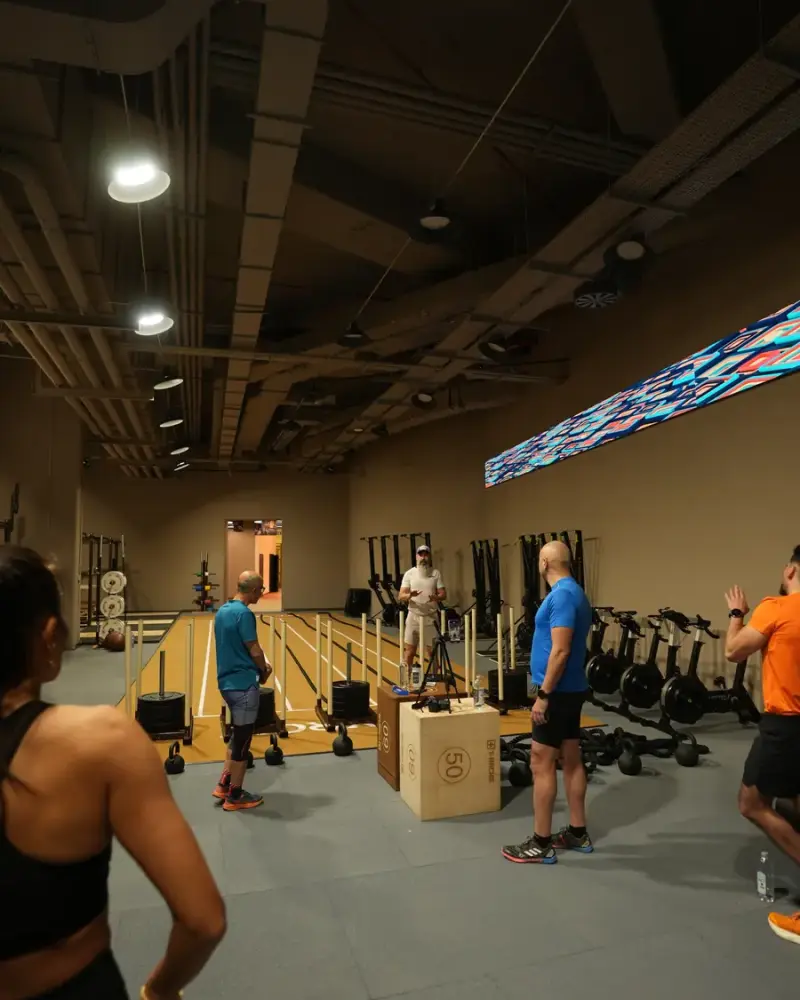
A coached group setting makes a big difference for technical feedback, load selection and motivation. At Hybrid Sky sessions run under a coach’s supervision, which supports movement quality and consistency, especially for beginners. Choosing an environment that suits your own pace is the most important investment in the first months.
Where should I start?
Equipment, shoes and environment
The right shoe protects you from unnecessary load in the first weeks. A model that stays stable both in running and at stations, neither too soft nor too hard, is a good place to start for most beginners. Do not rush for race clothing; first find training clothes that breathe and do not chafe. A water bottle, a small towel and a training notebook also build habits from day one.
Small starts for nutrition and sleep
When starting a new programme there is no need to overhaul your nutrition from scratch. Three small steps are enough at first: not going to training too hungry, eating a balanced meal with protein and carbohydrates after the session, and drinking enough water through the day. For sleep, a fixed bedtime alone makes a visible difference.
Do not put a “be perfect” obligation on yourself for the first four weeks. The goal is to get used to the programme and the techniques. At the end of week four, ask yourself: do I look forward to training, or does it feel like a burden? The answer will guide you on what to change in your plan.
Arranging sessions around your work and life rhythm
If you work or live near Skyland Istanbul, fitting training into the working day may be easier; if you come from further away, travel time needs to be counted from the start. Those who train early in the morning are usually less affected by the day’s surprises, while those who come in the evening get a chance to shed the day’s stress. You can find out which suits you by trying each for a few weeks.
What matters is that the arrangement you choose is sustainable. Rather than trying to do everything perfectly in the first month, turning attendance on the same days and times into a habit gives far better results. Include your family and work plans in the process too; a supportive circle is the invisible building block of consistency.
Setting expectations correctly
Many people expect a big change in the first two months. In reality the first months are when the body quietly adapts: breathing recovers faster, movements become smoother, next-day soreness decreases. Noticing these small signs keeps motivation alive before visible changes arrive.
If you are thinking of a race, instead of blowing the goal up in your head, split it into small steps: first perform all stations with good technique, then complete the run without stopping, then combine the two. This order is both safe and motivating.
Turning the questions into a plan
Write the answers to the seven questions on a sheet of paper and add a one-sentence decision next to them: “Three days a week, Tuesday-Thursday-Saturday, first race goal in six months.” A written decision is far more binding than a vague intention in your head. Bringing this sheet to your first coach meeting also helps the plan take shape quickly.
Remember that no question has a “wrong answer.” If your time is limited you start with short sessions; if your background is weak you extend the timeline; if you have health doubts you consult a professional first. What matters is making the start a conscious one.
Involving your family and circle
A new training routine also affects the calendar of those close to you. Talking with family in advance about early-morning or late-evening sessions reduces friction. Inviting your partner, a friend or a colleague to try it with you is both fun and binding. Training within a community is one of the strongest tools for consistency in the first months.
Once you have answered the preparation questions, come to the first session with a clear intention about yourself. The coach will help you turn that intention into a plan; all you need to do is be honest.
Let us tie the article to the next step: your honest answers to the questions determine how many days, at what intensity and in what order training will proceed. Instead of trying to look more ready than you are, sharing your present situation clearly makes the coach’s job easier and protects you from unnecessary risks.
If the answers to these questions are not yet clear, that is fine; the point is to clarify them. When you are ready, you can come to Hybrid Sky in Skyland Istanbul, talk through your goal with our coaches and decide together on the right first step.