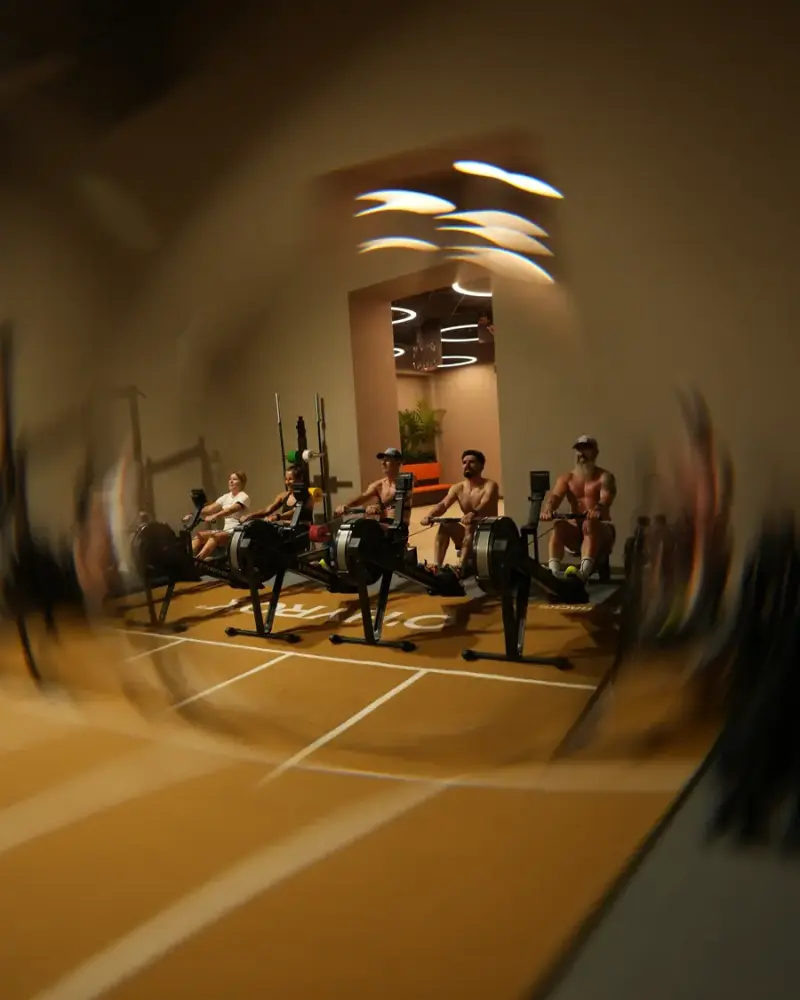
HYROX hakem ekibi, her sporcunun aynı standartlarda yarışmasını sağlayan görünmez bir yapıdır. İstasyonlarda hareketlerin kurallara uygun yapılıp yapılmadığını izler, tekrarları sayar ve gerektiğinde uyarır. Çoğu sporcu hakemi yalnızca bir no-rep kararı aldığında fark eder; oysa hakemle kurulan sakin ve açık bir iletişim, yarışın akışını doğrudan etkileyebilir. Gergin bir anda verilen yanlış tepki, saniyeleri ve odağı kaybettirebilir.
In this article we cover the judge's role, preparations you can make before the race, how to react when you receive a warning, how to rehearse this in training and why respectful conduct during the race matters. For details on the rules, always go to the latest official rulebook for your specific event.
Understanding the judge's role
The judge is not your opponent but the guarantee of the race. Their job is to ensure that the set movement standards are applied the same way for everyone. That means the effort of every athlete, including you, is judged fairly. Seeing the judge from this angle keeps you from perceiving a warning during the race as a personal attack.
Judges usually communicate with short verbal cues and hand signals. Because the venue is noisy, these signals are often more decisive than words. A judge making eye contact with you, indicating that a rep did not count or asking you to correct a movement is a quick, clear message.
The judge's decision is made in the moment and is generally not open to debate at that time. This is necessary to keep the race flowing. Even if you disagree with a decision, losing time by arguing hurts your result. Raising your questions or objections after the race through the channels set out in the rules is the better approach.
Preparation before the race
The best preparation for communicating with judges is knowing the movement standards well in advance. Knowing how each movement is counted, how the target in wall balls, knee contact in lunges or foot position in the burpee broad jump is assessed lets you understand what the judge is looking for. That knowledge helps you quickly spot what went wrong when you receive a warning.
- Kural kitapçığını okuyun: Katıldığınız etkinliğin güncel hareket standartlarını yarıştan haftalar önce gözden geçirin.
- Brifinge katılın: Yarış öncesi yapılan bilgilendirme toplantıları ya da duyurular, son değişiklikleri öğrenmenin iyi bir yoludur.
- İşaretleri tanıyın: Hakemlerin kullandığı yaygın el işaretlerini ve sözlü uyarıları önceden öğrenmeye çalışın.
- Video kaydı inceleyin: Kendi hareketlerinizi kaydedip standartlarla karşılaştırmak, olası zayıf noktaları önceden gösterir.
- Koçunuzla konuşun: Deneyimli bir koç, hangi hareketlerde sıkça uyarı alındığını ve nasıl önleneceğini paylaşabilir.
This preparation helps you feel more secure during the race. An athlete who knows what is expected sees the judge's supervision not as a source of pressure but as an ordinary race condition.
A short greeting with a judge before the race or making eye contact as you enter a station also eases communication. This small gesture lets you confirm that the judge has noticed you and is ready to watch what you do at the station. Especially in crowded waves, when several athletes enter a station at the same time, making sure the judge is attending to you reduces possible confusion in rep counting. Listening to the judge's count throughout the station and comparing it with your own when needed also prevents a loss of focus.
Some athletes prefer to leave rep counting entirely to the judge, while others keep their own count as well. Both approaches can work; what matters is deciding in advance which one you will use and trying it in simulations. When there is a difference between your count and the judge's, going with the judge's count instead of arguing keeps the race flowing.
How to react when you get a warning
The first step when you receive a warning is to accept the situation and turn your attention to correcting it. Responding to the judge's signal with brief eye contact or a nod shows you have received the message. Then focusing on repeating the movement to standard keeps the loss to a minimum.
As fatigue increases, movement quality drops and the chance of receiving a warning rises. So when you get a no-rep, slowing the pace a little and doing a few reps with more control is more productive than collecting new warnings one after another. Fast but invalid reps cost more time than slow but valid ones.
Managing your emotional reaction is part of this process too. Getting angry after a warning disrupts your breathing rhythm and scatters your focus. Instead, setting a short inner phrase, for example saying a calm sentence to yourself, helps you regain control. Choosing this phrase in training beforehand makes it an automatic response in the race.
Rehearsing it in training
Communicating with judges is also a skill and can be developed in training. Having a training partner or coach take on the judge's role in simulations creates a realistic rehearsal environment. That person watches the movement standards, counts reps and warns when necessary. This way you experience what receiving a warning feels like and how you will react before the race.
Another benefit of these rehearsals is that they reveal which of your movements break down when tired. The person in the judge's role can observe, for example, how squat depth in wall balls or knee contact in lunges changes with fatigue. This feedback shows which movements you need to focus on more in your training program.
Athletes who take part in in-club simulations at Hybrid Sky also get the chance to get used to race conditions through this kind of judging practice. While it is not possible to replicate the atmosphere of a real race exactly, working in an environment where standards are monitored reduces surprises on race day.
Why respectful conduct matters
Judges do work that demands intense attention for long hours. Assessing the movements of athletes coming one after another in a noisy, crowded environment is not easy. Respecting this effort is a fundamental part of race culture. A brief thank you or a nod after the race makes the experience more positive for both the judge and you.
Respectful conduct also contributes to your own performance. An athlete who clashes with a judge spends their energy and focus on something outside the race. A calm, cooperative attitude keeps your attention on the race and makes it easier to stay in control at difficult moments.
If you genuinely believe you need to challenge a decision, doing so after the race, through the channels set by the organizers and in a calm tone, is the right approach. This protects both your rights and those of other athletes.
Communication in doubles and relay
In the doubles and relay categories, communication with the judge intertwines with communication within the team. Which athlete did which reps, how the handovers happened and who is at the station are things the judge watches. Rehearsing these handovers with your teammate in advance makes the judge's job easier and reduces possible confusion.
Deciding within the team who will communicate with the judge is useful too. Rather than both athletes reacting at once when a warning comes, one acknowledging the situation briefly while the other focuses on the work preserves the rhythm.
Frequently Asked Questions
Can I challenge the judge's decision during the race?
Arguing during the race usually costs time and does not change the decision. If you have an objection, using the channels set out in your event's rules after the race is the better approach.
What should I do when I get a no-rep?
Briefly show that you got the message, collect your breath and focus on doing the next rep to standard. Slowing the pace a little if needed is more productive than collecting more warnings in a row.
Where can I learn the judges' signals?
The rulebook published by the organizers and pre-race briefings are the most reliable sources. An experienced coach or athletes who have raced before can also share practical information.