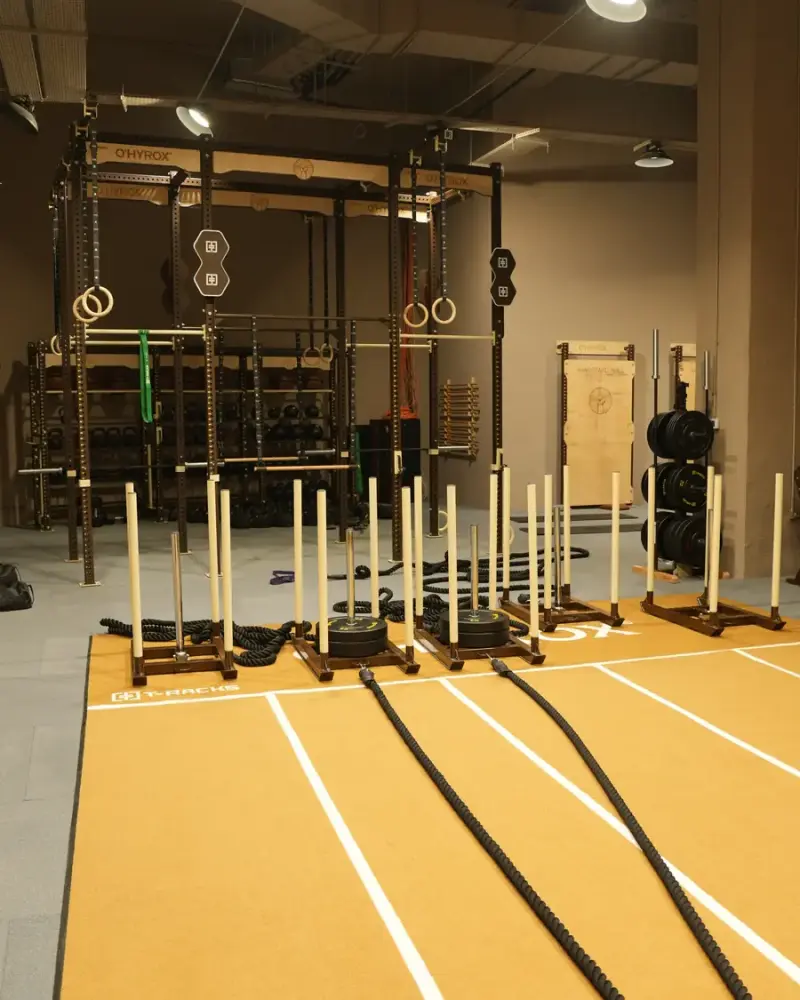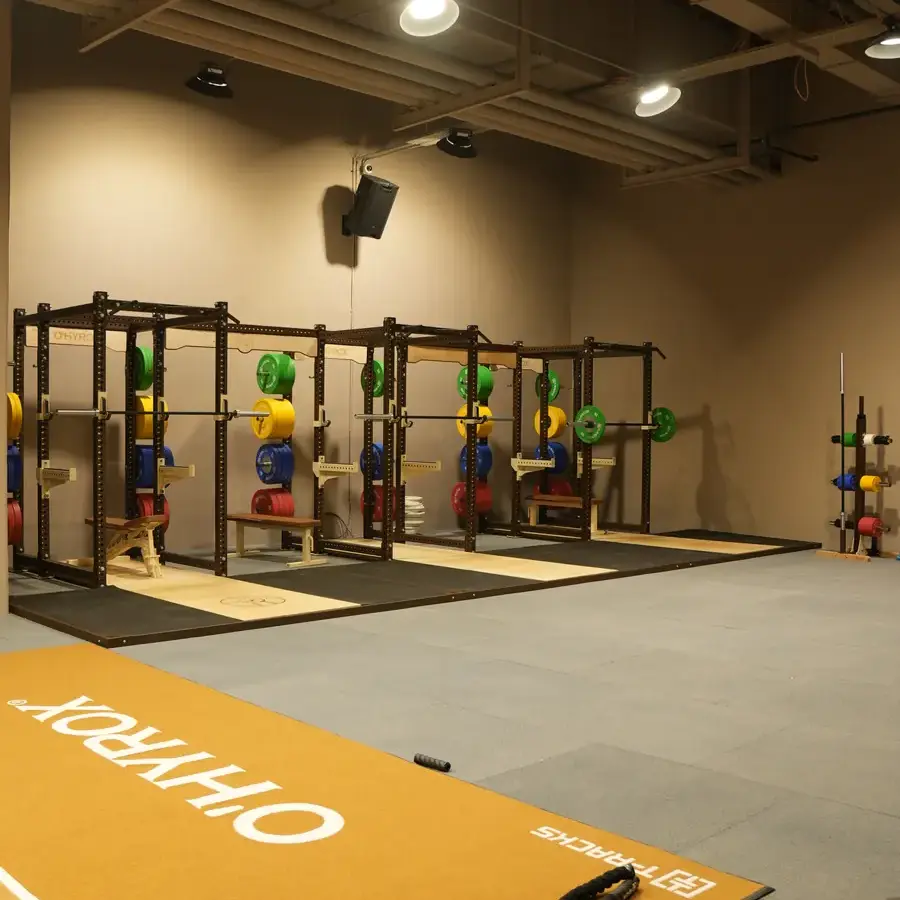
A Saturday simulation and Sunday recovery pairing on a Sarıyer weekend is the most effective way for a HYROX athlete with a busy workweek to fit race rehearsal and quality rest into the same 48 hours. On Saturday, you rehearse the race format partly or fully with a rested mind; Sunday is spent on active recovery, nutrition and preparing for the week. In this article, we explain how to set up this pairing, the types of simulation, Saturday's hour-by-hour flow and the Sunday recovery protocol.
Why a Saturday simulation and a Sunday recovery?
The pace of work or school during the week makes long, high-intensity sessions difficult. An evening simulation starts with work fatigue and can also disrupt sleep. Saturday morning, on the other hand, offers the chance to train with a body rested from a night's sleep, without time pressure. Plus, HYROX races generally start during the day; a Saturday morning rehearsal is closer to the race-day rhythm.
Sunday is the natural recovery day after this hard session. It gives your body and mind a chance to rest before returning to work or school on Monday. You don't need to do this pairing with a full simulation every week; as we'll explain below, the simulation dose changes from week to week. But the rhythm of a long Saturday session and Sunday recovery makes the weekend a fixed part of the training plan. The general logic of weekend-heavy programs HYROX program for the weekend warrior we discussed in our article.
Types of simulation: not every Saturday is a full rehearsal
A full HYROX simulation creates a load close to the race itself, and recovery can take several days. That's why Saturday sessions need to be planned as simulations at different doses.
| Type | Content | Frequency | Goal |
|---|---|---|---|
| Half simulation (first half) | 4 × (1 km run + stations 1-4) | Every 3-4 weeks | Opening pace, SkiErg and sled management |
| Half simulation (second half) | Pre-fatigue + 4 × (1 km run + stations 5-8) | Every 3-4 weeks | Lunges and Wall Balls while fatigued |
| Split simulation | 8 rounds, stations at half volume, short breaks between rounds | Every 2-3 weeks | Format familiarity, transitions |
| Full simulation | The full race format | 1-2 times before the race | Pacing test, equipment and fueling rehearsal |
| Run + station circuit | 4-6 rounds, varying stations | Other Saturdays | Compromised running development |
The details of setting up a simulation how to do a HYROX simulation you can find in our article. To do these rehearsals in a structured way at the club, HYROX Simulation class and periodic in-club simulation events are good options.
Friday evening: the first step of the simulation
A good Saturday simulation starts on Friday evening. A hard session on Friday lowers Saturday's performance, so Friday should be either a rest day or a very light mobility day. Getting enough carbohydrate at dinner fills your energy stores for the next morning. Alcohol and staying up very late noticeably lower simulation quality.
Get your gear ready on Friday evening too: shoes, clothes, water, a gel or small snack if you use one, and a watch to record your times. This preparation is also a rehearsal for race-day morning. We explained how to spend the night before a race in our night-before-the-race article.
Saturday hour by hour: the simulation day flow
The flow below is a sample timeline for a simulation starting in the morning. You can shift the times to fit your own routine; what matters is the logic of the intervals.
- Wake-up and breakfast (2-2.5 hours before the session): Rehearse your race-morning breakfast. Choose a carb-heavy, low-fat, easily digested meal.
- Fluid intake: Drink water regularly but not excessively from breakfast until the session.
- Arrival at the gym (30-40 min before the session): Set up your equipment, get to know the stations, visualize the order.
- Warm-up (15-20 min): Easy running and erg, dynamic mobility, light reps of the stations, and two or three short accelerations.
- Simulation: Do the format you planned. Record each run and station time separately; having a friend or coach take notes makes it easier.
- Cooldown (10 min): Easy walking or pedaling, followed by breathing work and light stretching.
- Recovery meal (within 1-2 hours after the session): A meal containing protein and carbohydrate, plenty of fluids.
For the content and timing of race-morning breakfast, race-morning breakfast take a look at our guide.
Evaluating simulation data
The real value of a simulation lies in the analysis afterward. Once the session is over and the fatigue has eased a bit, look at your records and ask these questions:
- How big is the time difference between the first and last run? A large gap shows you went out too fast.
- Which station took longer than expected? That's the focus of the next block.
- How much time did you lose in transitions? Roxzone efficiency affects total time surprisingly.
- Did your fueling and fluid strategy work? Did you have stomach trouble or an energy drop?
These answers shape your weekday program. For example, if your Wall Ball time is long, Wall Ball endurance work is added to weekday sessions for the next two weeks. The method of station analysis finding your weak link we explained in our article.
Mental preparation and working with a partner on simulation day
A Saturday simulation isn't just a physical rehearsal; it's also a chance to work on the mental side of racing. In the middle of a long format, especially around the fifth and sixth stations, many people start thinking “why am I doing this?” Experiencing that moment in a simulation and developing strategies to cope with it gives you a big advantage on race day.
A simple method is to break the race into small pieces. Instead of thinking about the total time or the number of stations left, focus only on the run or station you're in. On the Wall Balls, instead of thinking about 100 reps, you count sets of 10. This “chunking” technique becomes automatic as you repeat it in simulations. Mental strategies at length mental toughness we explained in our article.
Doing the simulation with a partner is also valuable. A partner can record times, note when your technique breaks down and encourage you when you're struggling. If you're preparing for the Doubles format, doing Saturday simulations with your partner is the best way to rehearse the division of labor and transitions. Taking turns is another option: one does the simulation while the other observes and takes notes, then you switch roles.
The Sunday recovery protocol
Rather than being completely sedentary, Sunday should include low-intensity movement and deliberate recovery practices. The protocol below structures the day after a Saturday simulation.
| Time | Practice | Duration | Note |
|---|---|---|---|
| Morning | Wake up at your usual time, breakfast with protein | – | Don't shift your sleep schedule too much |
| Late morning | Easy walk or very light cycling | 30-60 min | Conversational pace, low heart rate |
| Midday | Mobility and light stretching | 15-20 min | Hips, calves, back, shoulders |
| Afternoon | Optional sauna or warm shower | Short | Dose it based on how you feel |
| Evening | Planning the week, meal prep | 30 min | Put Monday's session on the calendar |
| Night | Early, regular bedtime | – | Start the new week rested |
We explained why active recovery works in our article on how to spend an active recovery day.
A Sunday walk in Sarıyer
Sarıyer has open spaces well suited to Sunday recovery. A calm walk along the Bosphorus shore or an easy nature walk in the northern forests does both your body and mind good. Keep in mind that these areas can be crowded on Sundays, and plan your walk for early morning or late afternoon. The pace of the walk must stay low; pushing yourself again on Sunday defeats the purpose of recovery.
Recovery within the complex
Alongside Hybrid, the O’Wellness Sky complex also offers amenities such as a spa (O’Spa Sky) and Pilates. A short stretching-focused session or a spa visit can be added to your Sunday recovery routine. The effects of these practices vary from person to person; if they make you feel better, include them in your routine. For current amenities and terms of use, you can get in touch with us.
Monday: starting the week right
After a Saturday simulation, you may still feel fatigue in your legs on Monday. This is normal. Planning Monday's session as light strength or technique work lets you start the week without piling heavy load on top of fatigue. Wait until Tuesday or Wednesday for hard intervals or heavy lower-body strength.
If you notice unusual fatigue, low mood or a clear rise in resting heart rate on Monday morning, it may be a sign that recovery isn't complete. In that case, it's smart to make Monday a full rest day and shift the week's program by one day.
The rhythm of a Saturday simulation and Sunday recovery on a Sarıyer weekend adds both structure and enjoyment to HYROX prep. With properly dosed simulations and a deliberate recovery day, every weekend brings you one step closer to the race. If you'd like to plan your simulation calendar together, just write to us.
Should I do a full simulation every Saturday?
No. A full simulation once or twice before the race is enough. It's more sustainable to use the other Saturdays for half simulations, split simulations or run + station circuits.
What should I do the day before a simulation?
Make Friday a rest or light mobility day, get enough carbohydrate in the evening, avoid staying up late and alcohol, and prepare your gear in advance.
Should I rest completely on Sunday?
Rather than staying completely still, low-intensity recovery practices such as easy walking, light mobility and regular sleep are recommended.
What should I do if I'm still tired on Monday?
Do a light technique session, or take the day off and shift the week's program by one day. Save hard intervals and heavy strength for Tuesday or Wednesday.
A stronger version of you.
Just one step away.
24 hours from your first message to your first session. Let's build your program together — reach out on whichever channel suits you.
Weekdays 06:00 - 23:00