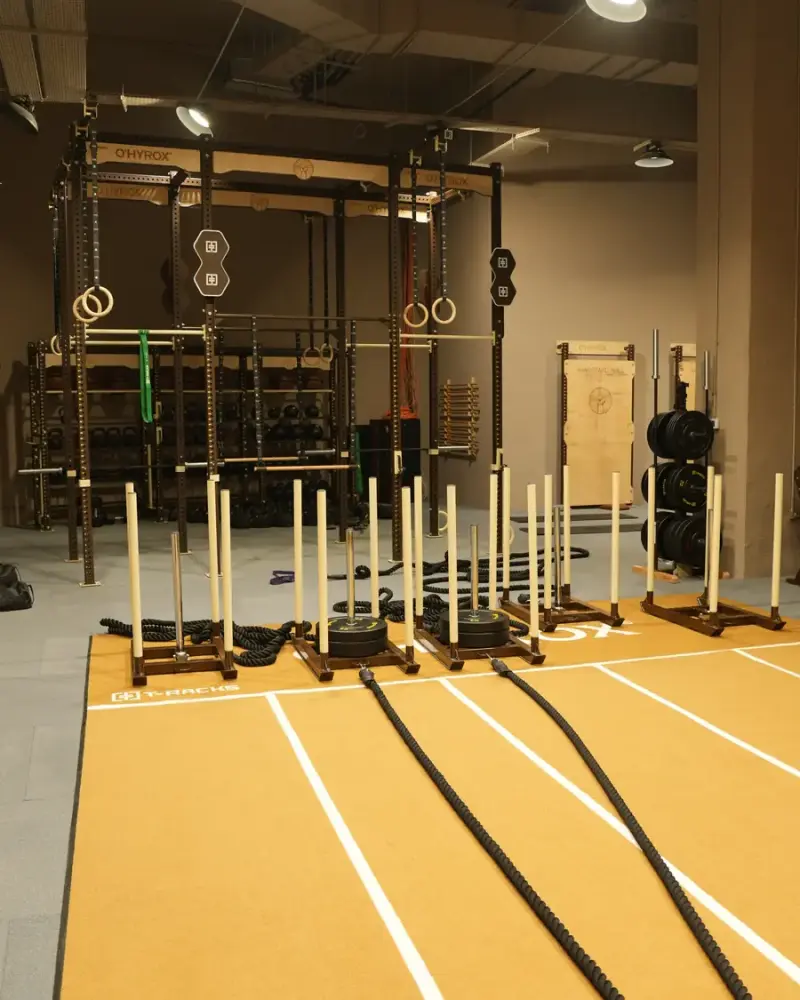
Evening training is the reality of most HYROX athletes who work in Sarıyer, Maslak and the surrounding area. Coming to a session after a day of meetings, emails and traffic is as much a mental task as a physical one. The good news is that, managed well, the evening hours can turn into very productive training. In the second half of the day body temperature is high, joints are more open and for many people strength and power performance peaks. In this article we have gathered the practices distilled from the experience of the athletes who come to Hybrid Sky after work: how to manage the day, when to eat what, and how to move from a desk mind to a training mind.
Saving the day’s energy for training
Preparation for the evening session actually starts in the morning. Drinking enough water through the day, eating a balanced lunch and not staying immobile at the desk for long determine evening energy. A short walk or stretch break every hour or two reduces both back and mental fatigue. Limiting caffeine in the afternoon protects both evening quality and night sleep.
The stress level during the day also affects training. After a very busy and tense day, choosing a technique-based or moderate-tempo session instead of a high-intensity one makes the decision smarter.
Meal timing and snack
A snack two or three hours before the evening session lets training go comfortably in terms of energy. A banana and yoghurt, a handful of nuts with fruit, or a light sandwich are options that work. Eating a full meal too close to the session can cause stomach discomfort; coming very hungry lowers performance. You can find the balance through your own trials.
Eating late after training is another common issue. A quick but balanced meal after the session supports recovery and does not split sleep through the night. A ready-prepared meal container is a great convenience here.
Mental transition: from work mode to training mode
Going straight from the desk into a heavy workout can be hard. Putting down your phone and work messages before leaving, playing music or a podcast you like on the way and taking a few deep breaths when you arrive at the gym make this transition easier. Use the warm-up as a transition ritual: in the first ten minutes the mind gradually moves away from the day’s stress.
In group training the energy of other people also helps this transition. Seeing other athletes arrive with the same fatigue makes you feel you are not alone and raises motivation.
- Aim for at least two litres of fluid during the day; have a glass of water before the session.
- Have a light snack 2 to 3 hours before training.
- Prepare your session bag in the morning; do not decide at the end of the work day.
- On very tired days shorten the duration, not the quality of the effort.
Adjusting intensity to the day
Not every evening session has to be at the same intensity. If sleep has been irregular, work stress is high or you feel a mild illness coming, turning the planned high-intensity session into a technique-focused one makes sense. Such flexibility protects consistency in the long term. With your coach you can set up in advance a simple system like “green, yellow, red day”: green day apply the plan, yellow day lower the intensity, red day do only light movement.
What matters is keeping the habit of “having done something” in every condition. Even five minutes of movement does not break the rhythm.
After training: the move to sleep
Moving to sleep after evening training can be hard for some athletes. High-intensity sessions raise body temperature and arousal. To ease this, do a five to ten minute cool-down at the end of the session, take a warm shower and reduce screens before bed. Avoid eating a heavy meal right before bed.
If evening sessions consistently disrupt your sleep, it may be necessary to move the session time earlier or lower the intensity. Sleep is the hidden partner of training and no supplement can replace it.
Practicalities from Sarıyer and around to Skyland
For athletes coming to Skyland from Maslak, Ayazağa, İstinye and the surrounding area, travel time can vary noticeably in the evening. Plan your departure time, the time on the road and the time needed for the warm-up. Arriving fifteen minutes early to a session lets you warm up without hurrying and prepare mentally.
A sample weekly arrangement for evening sessions
A sample arrangement for an employee who does three evening sessions a week might look like this: Monday a strength and technique-focused session, Wednesday a tempo and interval-focused run with a short station link, and Friday a longer mixed session. Leaving a day of rest between preserves recovery despite the stress of the work week. At the weekend, an optional long easy run or active rest can be done.
This is an example; in weeks when your workload is heavy it is no problem to make one of the sessions lighter or shorter. What matters is not to lose the weekly rhythm and not to go into the next session too tired.
Posture and mobility for desk workers
Sitting for long periods restricts the hips, shoulders and thoracic spine. Coming to an evening session with this restriction increases the importance of the warm-up. Movements that open the hip flexors, thoracic spine rotations and shoulder mobility must be included in the first minutes of the warm-up. Getting up every hour during the working day for a short walk or stretch contributes greatly to evening preparation.
Letting go of the day’s stress after an evening session is also a gain from training. Many athletes say that after a session following a busy work day they feel mentally fresher and ready for sleep. So seeing the evening workout not as a burden but as the best close of the day increases consistency.
The advantage of the evening group session
In the evening hours the gym is usually livelier. The presence of other athletes raises tempo and energy; especially on tired days group energy carries you along. Evening sessions under a coach’s supervision also reduce technical mistakes likely to be made with a tired mind, because the coach constantly guides you.
So choose to come even on evenings when you feel tired. Often you notice your energy returning in the first ten minutes of the warm-up.
Lastly, one should not rely on weekend make-up in evening training. Missing weekday sessions and piling them onto the weekend both tires the body and breaks rhythm. A healthier approach is to keep coming regularly even if you shorten the sessions in busy weeks. Consistency is more important than the strength of individual sessions, and over time this is what prepares you most for the race.
You can talk to the Hybrid Sky coaches about evening sessions and adapt your weekly plan to your work tempo. Let us find a rhythm together.