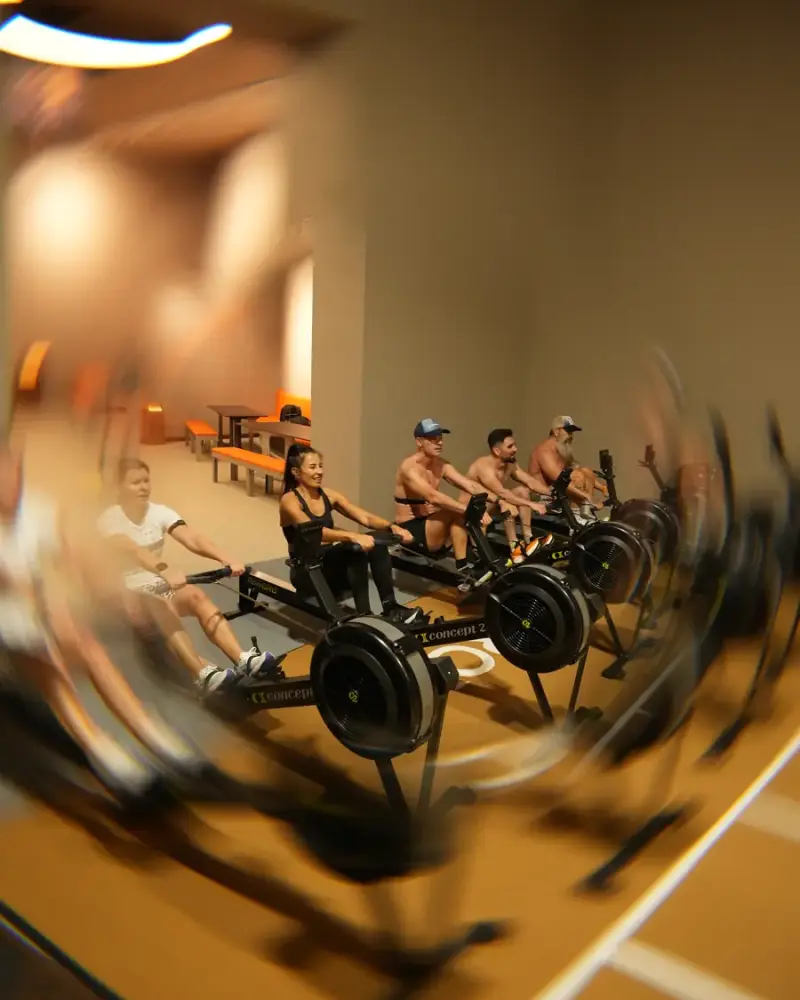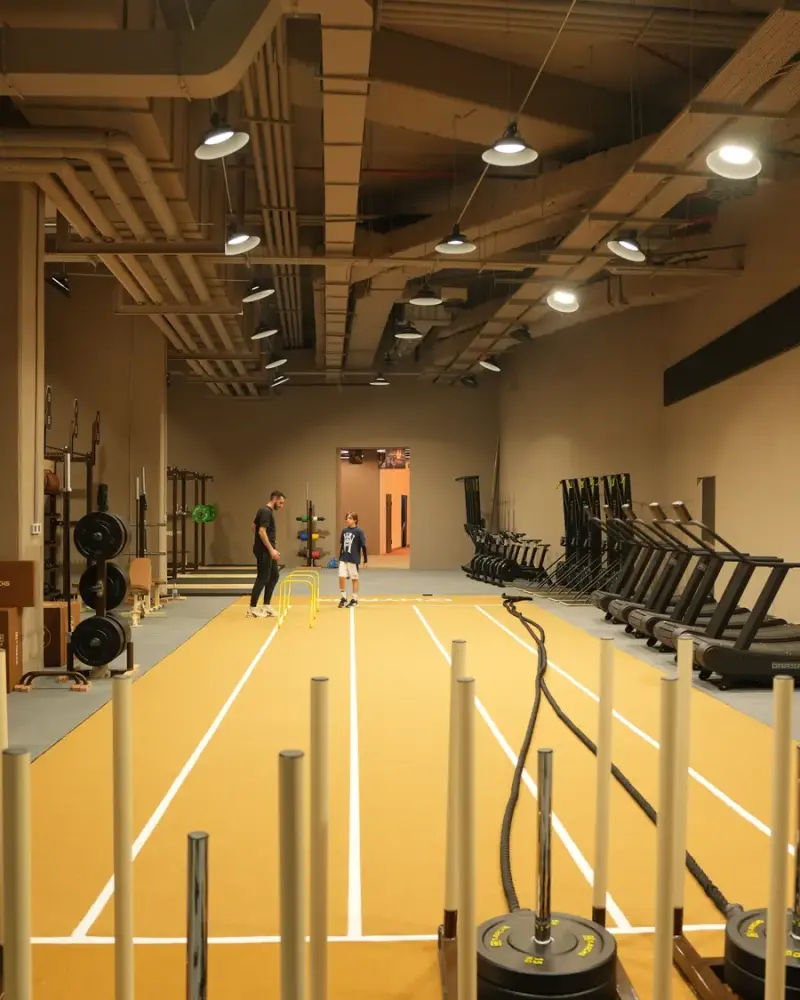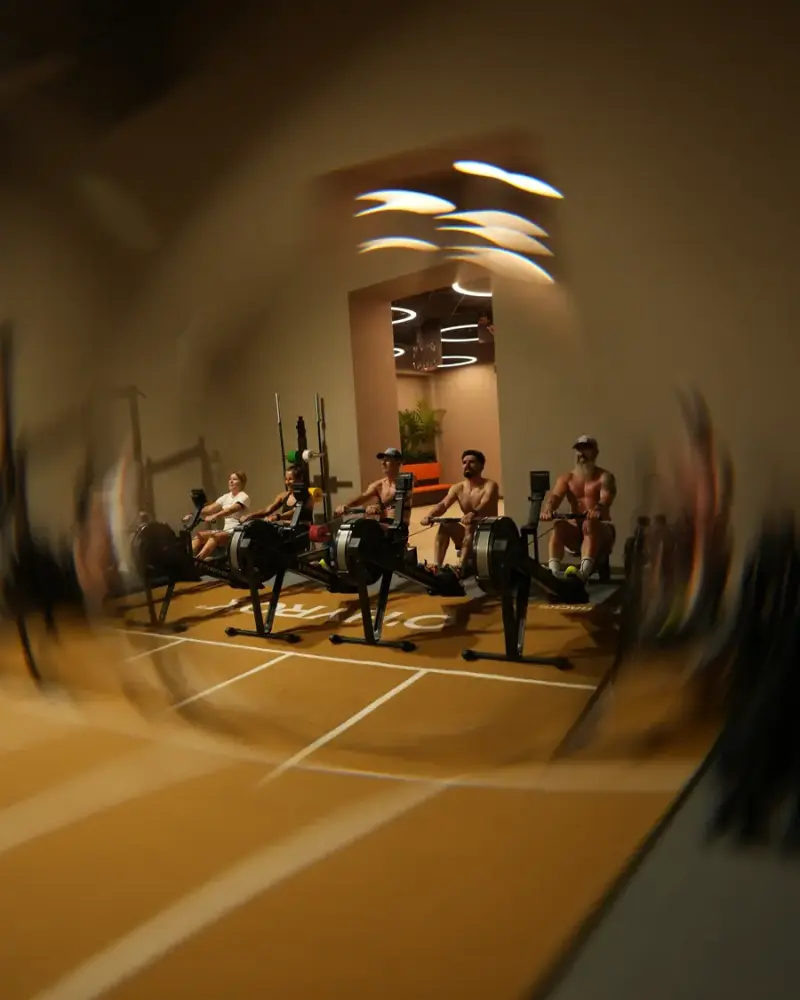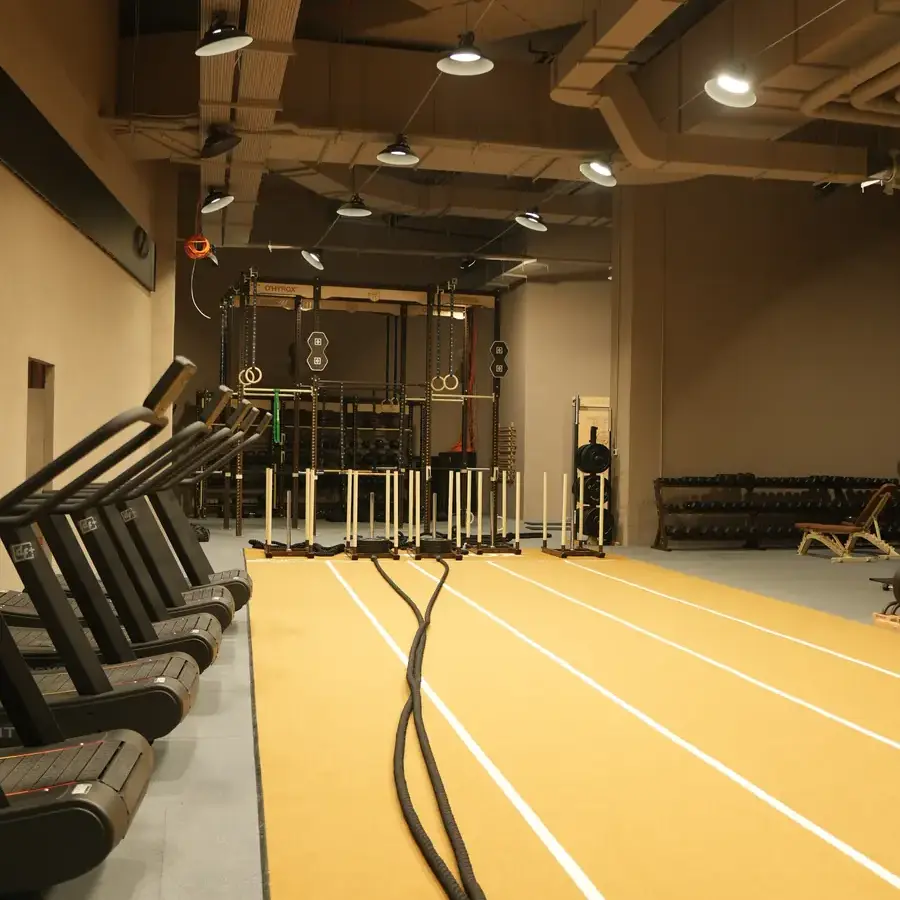
HYROX Doubles running is the most distinctive element separating the category from racing alone. Two athletes complete the same race together, mostly run the eight kilometers side by side and share the station work. This turns pace into a joint decision of two people. No one is alone, but no one is entirely free either. In this article we look at how two athletes of different capacity can run efficiently at the same speed. Because category rules can be updated from time to time, be sure to check the current rules published by the organization before the race.
Who sets the pace?
For most pairs, pace is set by the speed of whichever partner is struggling more that day. That is not a weakness but a fact: the joint speed of two people can only be the speed both can sustain. The stronger partner pushing the pace seems to save time in the short term, but tires the slower partner and reduces their contribution at the stations.
That is why advanced pairs make the pace decision in advance and rationally. At the start, both athletes' running test results are examined, and then a speed slightly lower than what the slower partner can sustain comfortably is chosen as race speed. This deliberate slowness keeps both athletes strong in the second half.
Running a joint test is very helpful for setting the pace. Run 5 kilometers together at a speed between easy and moderate effort and note each athlete's perceived effort and breathing at every kilometer. This data shows concretely who is comfortable at what speed and becomes an undisputed reference on race day. Do the test in mild weather, in shoes close to what you will race in.
Side by side or in a line?
Keeping spacing while running together is a strategy too. Running side by side makes communication easier but may make it hard to find room on a crowded course. Running in a line opens space, but lets the athlete behind find rhythm by watching the one in front. Most pairs alternate between these two arrangements according to the width of the course.
What matters is that the distance between the two athletes does not exceed a few meters. When the gap opens, the slower partner speeds up to catch up and the stronger one slows to wait; both lose energy. That is why it is useful for pairs to set a rule of not drifting apart on the run.
On crowded courses, running side by side is sometimes not possible; in that case decide in advance in what order the partners will run. Usually the slower partner is in front or beside and the stronger partner behind, opening the way when needed. This lets the slower partner find rhythm in their own style while the stronger one controls speed.
What can the stronger partner do?
The stronger runner can give physical and mental support to the slower partner. Practical methods are:
- Moving ahead against wind and crowd, protecting the partner and setting the rhythm.
- Sharing the breathing rhythm aloud or by signal; for example, three steps, one breath.
- Touching the slower partner's shoulder or giving a short verbal cue; physically pushing may cause problems under the rules, so use only the support the organization allows.
- In sections where the partner struggles, lowering the pace a second or two instead of transferring their own energy.
The stronger partner's job is not to speed up the slower one but to protect the pair's total efficiency.
The stronger partner trying to give too much support is also a trap. Constantly talking, directing or correcting makes it harder for the slower partner to find their own rhythm. Often a quiet presence is more useful than many words. So talk through the form of support beforehand: at which moments voice, at which silence, at which only a signal.
What can the slower partner do?
The slower runner often feels guilty and pushes too hard. This mistake spoils both members of the pair in the first half. A better approach is to share limits openly. Saying "my breathing rose, let's slow for half a minute" informs the stronger partner and produces a joint decision.
Another job of the slower partner is to use the areas where they are strong at the stations. Time lost on the run can be made up at a station by giving the partner more workload or splitting work cleverly. Which station belongs to whom is one of the main decisions that determines the pair's total time.
On a day when the slower partner struggles, they carry not only a physical but also an emotional load. Thinking that they are slowing down someone they care about lowers motivation. It helps for pairs to say openly to each other before the race: this race belongs to both of us, and weak moments are not a problem but part of the plan.
Synchronizing the first meters after a station
Between stations, a pair's rhythms break at the same time but do not recover at the same time. One partner may want to finish the station faster and head out to run while the other is still gathering breath. At these moments it matters to start the run together. Waiting for the partner by walking or running very lightly for a while after the station helps you set rhythm together in the first 300 meters.
This synchronization is, for most pairs, the hardest human factor of the race. Plan it in advance: a simple rule such as "when we finish, we run the first hundred meters slowly together" removes the need for discussion during the race.
These sessions do not need to be done constantly, but as the race approaches, a combination done together every two or three weeks strengthens synchronization. Have a short talk after sessions: where did rhythm break, was communication enough, who waited for whom? This feedback turns you into a far more harmonious pair on race day.
Running together in training
An important part of Doubles preparation is training together. Suggested session ideas:
- Matched-pace run: both athletes run 3-4 kilometers together at the slower one's pace. The aim is to find the same rhythm.
- Station-run combinations: do a station together and head out to run together to practice synchronization.
- Communication rehearsal: decide on simple signals and short sentences during the run.
If you train at O'Hybrid Sky in Sarıyer, plan these sessions with your coach. Before intense combination sessions, it is wise for both of you to get a physician's view on your health.
In conclusion, Doubles running is not the sum of two individual performances but a matter of communication and harmony. Setting the pace in advance, keeping spacing, talking through the form of support and planning post-station synchronization give both athletes the chance to finish the race strong.
Do your race-day warm-up together as well. A light run at the same rhythm brings your breathing and stride patterns closer and eases getting in sync on the first kilometer. Also, both athletes reviewing the pace, gear and communication plan one last time before the race removes uncertainty that can last minutes. For a safe race, both athletes should have had their health checked.
During the race, your partner's facial expression, footfall sound and breathing rhythm give you real-time data. Learn to read these signs in training; most pairs come to sense when the other is struggling without saying it aloud.
To improve running sync, some pairs swap the partners' positions in turns in training. Knowing how it feels to run in front and behind lets you adjust the order flexibly to the crowd in the race.
None of this work gives results in one go; consistency is worth more than brief brilliant sessions. Noting small improvements over the weeks and being patient forms the basis of your confidence on race day.
Frequently Asked Questions
My partner is much faster than me. What should we do?
Set the pace according to the slower partner; the faster partner can contribute by taking on more work at the stations or by giving rhythm support on the run.
Is separating on the run allowed under the rules?
Rules can vary by organization and category. Check the current race guide and make your plan according to these rules.
Does starting very slowly hurt total time?
Deliberate, slight slowness usually keeps both strong in the second half and gains time overall.