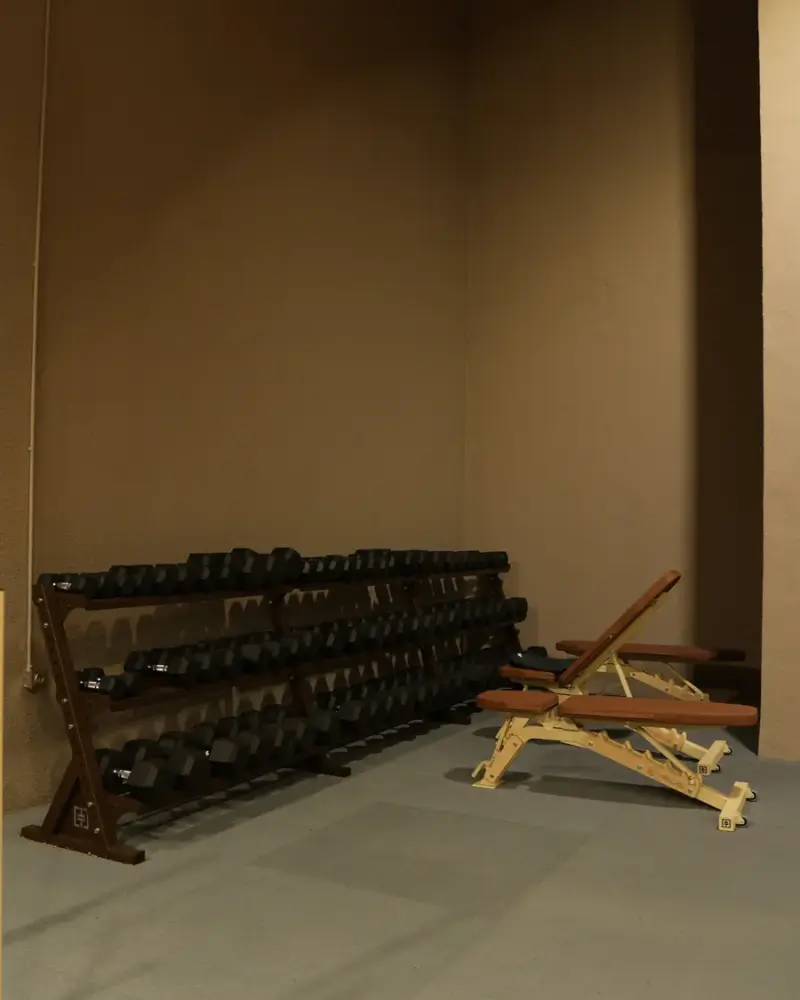
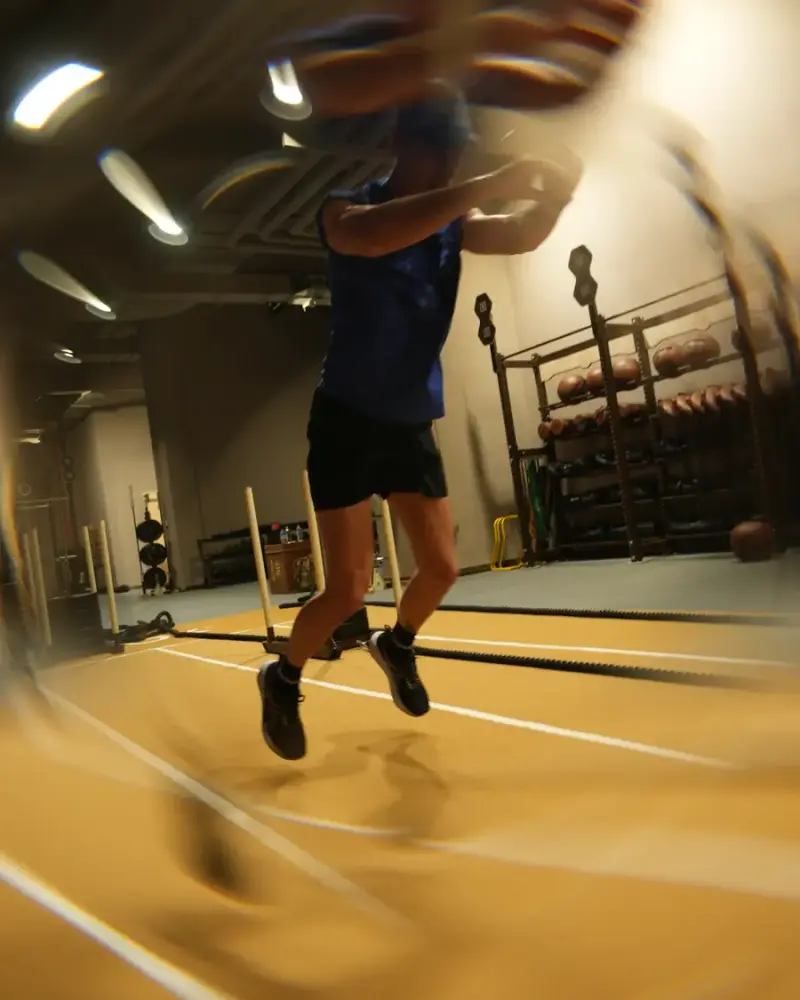
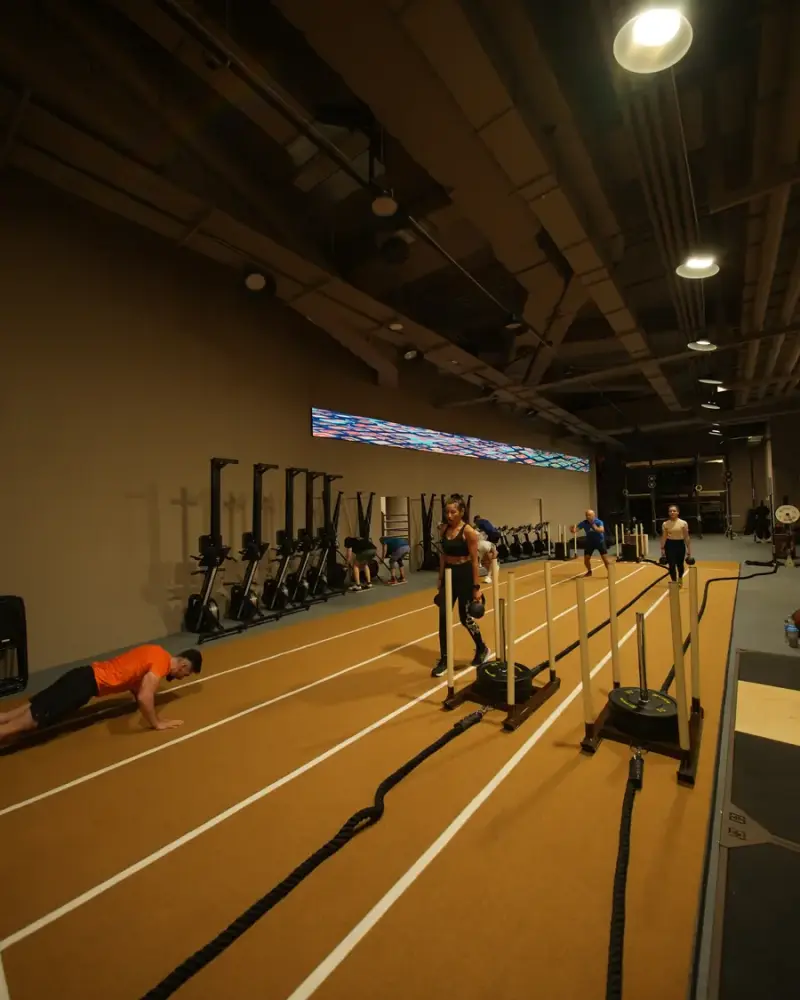
Fluid and electrolyte intake during the race, put simply, is one of the quietly decisive factors in HYROX performance. The course’s high heart rates and heavy sweating speed up fluid loss, especially in hot venues. But the HYROX format makes drinking hard: drinking from a cup while running costs time, and drinking during a station is nearly impossible. That’s why a good plan is as much about timing as it is about quantity.
At O’Hybrid Sky, at our space in Skyland İstanbul, we also track athletes’ fluid intake during simulation sessions. Most athletes say they drank nothing over the entire course and didn’t notice; then in the last quarter of the race they cramp or see a clear drop in performance.
Why Fluid Loss Is Different in HYROX
A marathon runner moves at a steady pace with regular water stations. In HYROX, heart rate fluctuates constantly, body temperature rises quickly between stations, and the indoor venue slows the evaporation of sweat. The result is more fluid lost in the same amount of time.
On top of that, the course layout prevents continuous drinking. This combination makes starting the race well hydrated more important than usual. You can’t fully replace losses on the course; the goal is to keep them within manageable limits.
Pre-Race Hydration
No matter how well you plan within the race, if you arrive at the start line dehydrated, your chances of making it up are slim. That’s why preparation starts 24 hours before the race.
- 24 hours before the race: Drink water steadily throughout the day. Pale urine is a good sign.
- With breakfast on race morning: 400-500 ml of water, optionally with electrolytes added.
- 2 hours before your start: 300-400 ml of fluid, in small sips.
- 30-60 minutes before your start: 150-200 ml, no more. Overdrinking in this window causes discomfort at the start.
- During the warm-up: A few sips of an electrolyte drink.
Not overdoing it matters too. Drinking too much before the start causes stomach discomfort and unnecessary bathroom trips. The goal is not to be dehydrated, not to fill your stomach.
Electrolytes: When You Need Them
Electrolytes replace the minerals lost in sweat, sodium first among them. For short exercise in a cool environment, plain water can be enough; but in an intense race lasting over an hour in a hot venue, sodium loss becomes meaningful.
The practical approach for HYROX is to add electrolytes to your fluids before and after the race. The water stations on the course usually have plain water, so it makes sense to cover electrolyte needs before and after.
Heavy Sweaters
Some athletes sweat noticeably more and have saltier sweat. If you see white salt marks on your clothes after training, you may be in this group. In that case, slightly increasing sodium intake before the race can help; but don’t overdo the amount, and test any such change in training first. If you have a specific health condition, the right approach is to consult a healthcare professional.
Drinking on the Course
On the HYROX course, water is usually available in the Roxzone. When drinking there, the goal isn’t to drink a lot but to wet your mouth and swallow a small amount. Two or three sips is a reasonable amount you can take without disrupting your heart rate.
In terms of timing, the best moments are the transitions after a hard station: especially after the sled push and sled pull, or after burpee broad jumps. Drinking before wall balls also works, because that station takes a long time and you won’t get a chance to drink in the middle of it.
- Good moments: The transition after the sled stations, the midpoint of the course, before wall balls.
- Bad moments: Right at the start of a run, during a station at high heart rate, in the last 500 meters.
- Amount: Two or three sips each time; drinking a lot from a cup in one go causes stomach discomfort.
- Method: Drinking while walking is more efficient than stopping to drink; but don’t try it while running fast enough to raise the risk of choking.
The Cramp Question
Cramps during a race are often blamed solely on electrolyte deficiency, but the causes are usually more complex: muscle fatigue, unfamiliar intensity, insufficient preparation, and fluid balance all play a role together. So taking electrolytes doesn’t solve every cramping problem.
For athletes who cramp, the most effective prevention is a race pace that matches their capacity and having rehearsed race intensity enough in training. If you experience frequent, severe cramps, have it assessed by a healthcare professional.
Post-Race Fluid Balance
The first 2-3 hours after the race are important for restoring fluid balance. Drinking at regular intervals is more effective than drinking a lot at once. An electrolyte drink or a salty meal helps replace the lost sodium.
A practical indicator is the color and amount of your first urine after the race. Dark, scant urine tells you to keep drinking. At our space in Sarıyer we recommend this simple check in post-race recovery conversations; it gives good guidance without complicated measurements.
Rehearsing in Training
Like your nutrition plan, your fluid plan should be tested in training. Apply your planned drinking points during simulation sessions and observe how your body responds. Some athletes tolerate fluids well while running, while others get stomach discomfort; you don’t want to find this out on race day.
Roughly measuring your sweat rate is also useful: weigh yourself before and after a simulation session and estimate your loss from the difference. This data helps you personalize your pre- and post-race fluid plan.
Venue Conditions and Temperature
Because HYROX races are held indoors, venue conditions noticeably affect fluid needs. In a crowded hall, temperature and humidity rise, sweat evaporates more slowly and lowering body temperature gets harder. The same athlete loses a completely different amount of fluid in a cool hall versus a hot one.
It's useful to quickly assess conditions when you arrive at the venue. If the hall is hotter than you expected, it makes sense to keep your pre-start fluid intake at the upper end of your plan and drink at one more point on the course than planned. The reverse also holds: taking in too much fluid in a cool hall just creates unnecessary heaviness in the stomach.
There are tools other than fluids for managing body temperature. Cooling your neck and wrists with a wet towel after the warm-up, removing unnecessary layers before the start and not warming up in the hottest part of the hall are simple but effective measures. We have athletes rehearse these details too in our preparation sessions at Skyland.
Keeping the Plan Simple
There’s no need to overcomplicate fluid and electrolyte management. Starting well hydrated, drinking small amounts at two or three points on the course, and drinking steadily after the race is a sufficient framework for most athletes.
At O’Hybrid Sky, we test this plan in simulation sessions with athletes preparing to race in Istanbul. Knowing your own sweat rate and drinking tolerance is one of the most useful pieces of information on race day, and a trial session can give you that data.