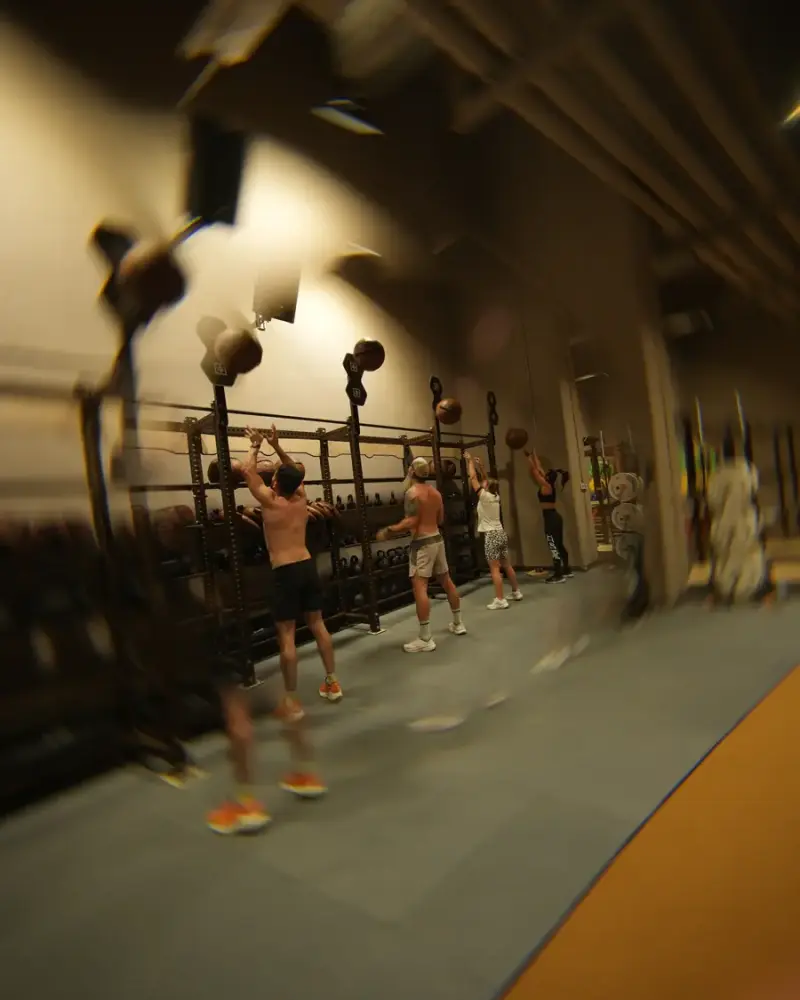
Wall ball techniqueis the key to managing the 100-rep station that awaits you at the very end of the HYROX course. Finishing 100 wall balls with a body that has run seven kilometers, pushed and pulled sleds, and done burpee broad jumps is less about pure strength and more about rhythm, breathing, and breaking up the reps. Most athletes who lose time at this station aren’t actually too weak; they just lift the ball at the wrong moment and breathe at the wrong moment.
At O’Hybrid Sky, we see the same pattern again and again in athletes training wall balls at our gym in Skyland İstanbul: the first 25 reps are very fast, the arms and shoulders start burning over the next 25, and after rep 60 the ball no longer reaches the wall. The solution is a set-splitting plan from the start and building your breathing rhythm into the movement itself.
The Basic Mechanics of the Wall Ball
The wall ball combines a squat and a press, but it shouldn’t be thought of as two separate movements. Hold the ball in front of your chest with your elbows close to your body. During the squat, support the ball’s weight with your torso, not your arms; when your elbows flare out, the front of your shoulder takes unnecessary load, and you’ll feel it badly after rep 40.
Be strict about depth. In the race, your hip crease is expected to drop below your knee; reps that don’t reach this depth don’t count, and the penalty reps come at the worst moment of the race. Always train to full depth so your body doesn’t slip into shortening the movement under fatigue.
Timing at the Drive
The most critical point is the transition between coming out of the bottom of the squat and throwing the ball. The momentum from your leg drive must transfer into the ball. If the ball is still at your chest as you open your hips and extend your knees, you’ll do the last part of the movement with just your shoulders. With the right timing, the ball leaves your hands as your legs are almost fully extended, and your arms only guide it.
Breaking Up 100 Reps: Practical Schemes
Trying 100 reps unbroken is the wrong strategy for almost every athlete. Planned set splitting both shortens your total time and keeps you from hitting the wall. These schemes work well at different levels:
- 25-25-25-25: For well-conditioned athletes. 8-10 seconds of rest between sets, resting the ball on your shoulder instead of putting it on the ground.
- 20-20-20-20-20: A safer split. Five equal blocks, easy to track mentally.
- Blocks of 10: For those preparing for their first HYROX. Ten reps, two breaths, keep going. Rests are short but frequent.
- Descending scheme (30-25-20-15-10): You finish the biggest block when your energy is highest, and the psychological load lightens toward the end.
- Negative split (15-20-25-40): For experienced athletes; those who know how to manage fatigue close out the last block on adrenaline.
Whichever scheme you choose, don’t decide on race day. Use a scheme you’ve tried at least three times in training. Indecision is the most expensive source of seconds spent in front of the wall.
Building Breathing Rhythm into the Movement
Holding your breath is the most common mistake in wall balls. A tired athlete reflexively holds their breath at the bottom of the squat, which makes it impossible to manage heart rate. The rhythm to aim for: exhale as you throw the ball, inhale as it comes down from the air, and keep going into the squat without holding your breath.
At first, it’s hard to hit this rhythm on every rep. A breathing cycle every two reps is an acceptable interim solution, but if you drop to one breath every four reps, your oxygen debt grows fast. Using a metronome or having a coach count out loud in training works very well for locking in the rhythm.
Catching Your Breath Between Sets
Putting the ball on the ground during a rest between sets wastes time. Rest the ball against your chest or shoulder and take three deep breaths standing tall. Bending forward compresses your diaphragm and lowers your breathing capacity. Resting with hands on knees is a common sight on the floor, but standing upright is more efficient for recovery.
Details That Break Down Under Fatigue
As you approach the 100th rep of the race, there are three points where form breaks down. The first is the ball not reaching the target height: this usually comes not from a weaker leg drive but from releasing the ball too early. The second is the heels lifting; in athletes with limited ankle mobility, the weight shifts to the toes as fatigue sets in. The third is locking the elbows when catching the ball, which creates a small shock load on every rep.
Checking these three details on video in training is the fastest way to learn. At our gym in Sarıyer, we ask athletes to film their wall ball sets from the side and compare the last 15 reps with the first 15; the difference usually turns out bigger than the athlete’s own estimate.
Prep Workouts
Training the station in isolation isn’t enough to develop wall ball capacity. In the race, this movement is done on tired legs, so training should also be done under fatigue. A few effective approaches:
- Post-run wall balls: A 1000-meter run followed by 50 reps. The closest simulation to race conditions.
- EMOM work: 12 reps every minute for 10 minutes. Teaches rhythm and the recovery window.
- Front squat strength: A heavy front squat session once a week strengthens the leg side of the wall ball.
- Push press rep capacity: High-rep sets at moderate weight for shoulder endurance.
- Ankle mobility: 3-4 minutes of dorsiflexion work before every session makes it easier to maintain depth.
Mental Approach
The number 100 is mentally heavy. That’s why experienced athletes don’t count down; they count blocks. Saying “it’s a four-block job” creates a much more manageable frame than saying “there are 100 reps.” Fix your eyes on the target point on the wall and don’t follow the speed of the athlete next to you. Wall balls are the station on the course where the most speed is lost to panic.
When you reach the last block, knowing how many reps are left gives you motivation; so wait until rep 70 to stop counting sets and switch to thinking “how many are left.” If you start earlier, the psychological load spreads across the whole set.
Shoe and Equipment Details
Shoe choice is a small detail that affects wall ball performance. Running shoes with thick, soft soles cause energy loss during the squat; a firmer, flatter shoe provides stability at depth. Since HYROX requires running eight kilometers and doing wall balls in the same shoes, it's a balancing act; most athletes settle on a medium-firm model with a low heel-to-toe drop.
Another point about the ball itself is the catching surface. Balls used in races may have a different texture from what you're used to in training. If possible, training with different balls shortens the adjustment period in the first reps on race day. The ball slipping when your palms get sweaty is a common problem; rather than spending an extra second wiping your hands on your clothes between sets, it's more efficient to work that motion into the catch.
Supports like knee sleeves and wrist wraps are a personal preference, but you need to get used to them in training rather than trying them for the first time on race day. All your equipment, just like your split scheme, should be tested in advance.
Where to Start in Training
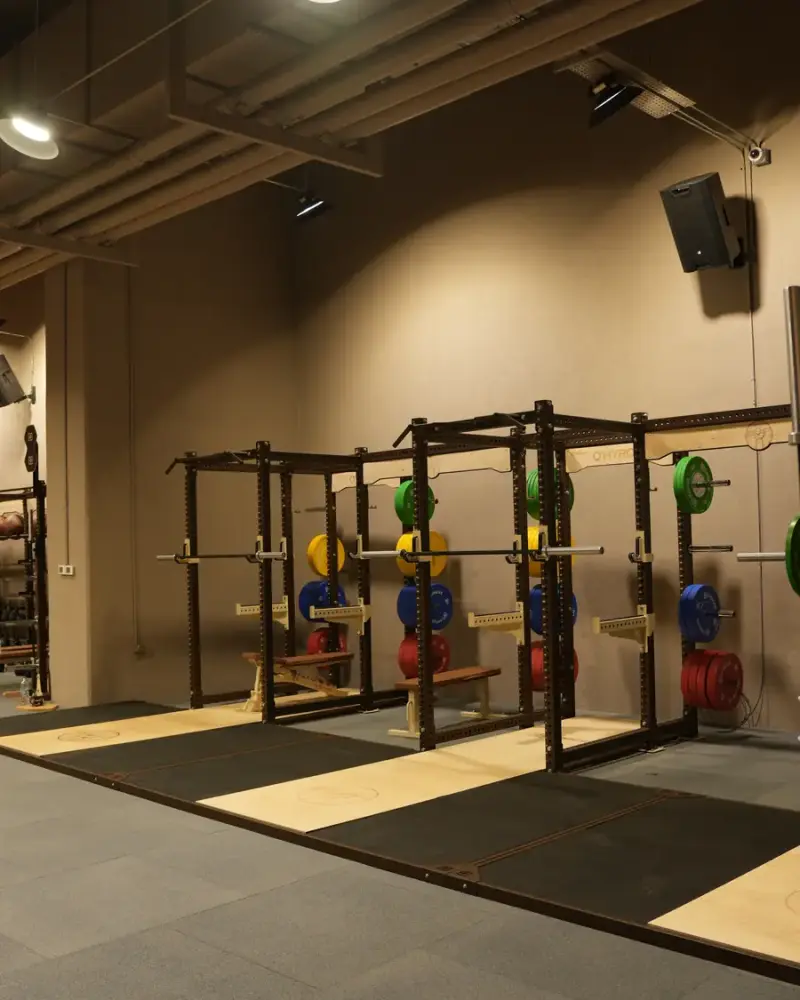
It’s possible to learn wall ball technique on your own from videos, but an outside eye speeds up the process on details like depth and timing. If you’re preparing for HYROX on Istanbul’s European side, you can join our group sessions where we train station technique under fatigue. At our space in Skyland, we work with standard-height targets and race weights, so nothing comes as a surprise on race day.
Don’t expect to solve 100 reps in a single session. Eight weeks of planned work is a realistic time frame to lock in your set-splitting scheme and make your breathing rhythm automatic. Start with a trial session to see where you stand; the rest is repetition and patience.