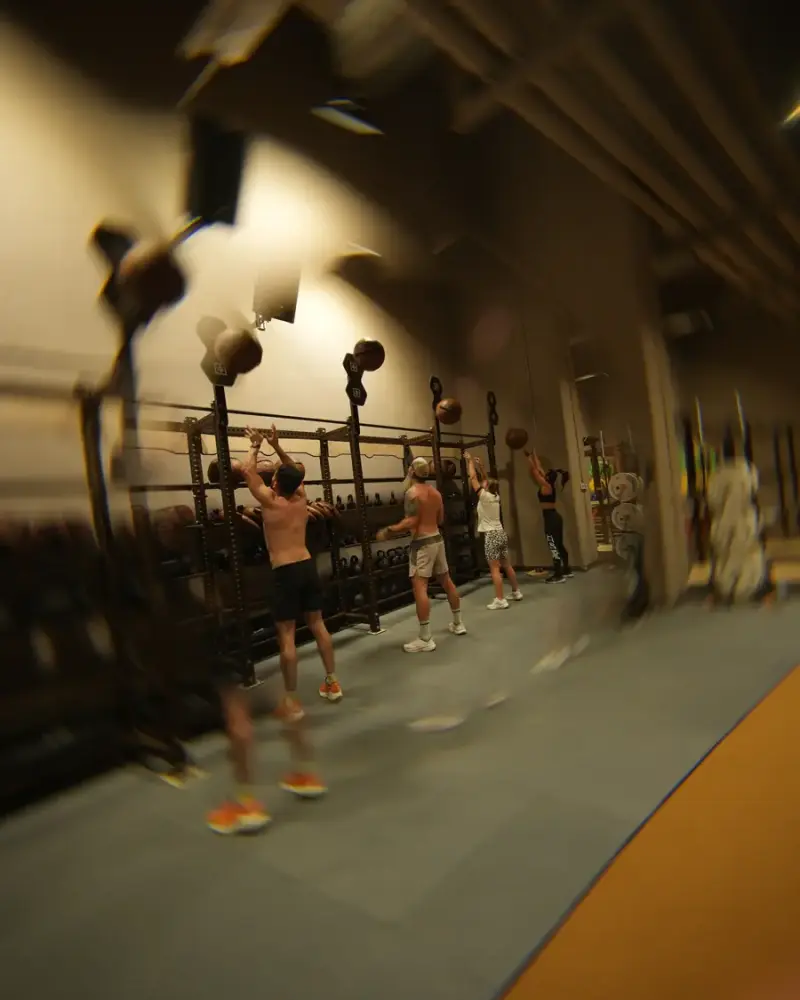
The wall ball no-rep problem is one of the factors that quietly erodes time at the final station of the race. This hundred-rep section is done after the whole race, with tired legs and a high heart rate. At this stage, a rep that does not count costs not just one rep of time but also another recovery moment. In this article we explain how an advanced athlete manages the target point, ball path and squat depth.
Three typical causes of an uncounted rep
With fatigue, technique breaks down in three places, and each produces a different reason for a no-rep:
- Insufficient squat depth; tired legs start the rise too early.
- A ball that hits below the target line; the arms contribute too little and the hips are not completed.
- Not catching the ball at the right point on the wall, or the ball dropping to the floor; the eyes pick up the ball late.
Race rules and target height vary by category. Checking current measurements and counting criteria in the organization's guide is far safer than training on guesses.
Because the wall ball station comes at the very end of the race, mental fatigue is as decisive as physical fatigue. Entering the last station, many athletes see the finish and relax; that relaxing breaks technique. The hundred reps should be treated not like a short training set but like a race of their own. Running through the ball weight, target height and your own plan once more in your head before starting helps you keep quality from the first reps.
Fix the target point in your mind
Many athletes throw the ball not at the target line but at a general region of the target area. When tired, this general region slowly drifts downward. To prevent that, fix your gaze on a specific point past the line, such as a hand's width above it. This helps you subconsciously carry the ball above the line.
At the race venue, target markers are usually clear. Looking at where the marker is during warm-up makes it easier to decide your gaze point. In training, placing a tape mark on the wall and working to the same point supports muscle memory.
One of the most important factors affecting the path is foot position. Standing too close to the wall sends the ball forward rather than up, while standing too far draws a very long path. For most athletes, about an arm's length from the wall is a good starting point, but this depends on personal measurements. Find the ideal distance with a few trials in warm-up and keep the same distance throughout the race. Small shifts in foot position noticeably affect rep quality under fatigue.
Ball path: too high or too low?
As it crosses the target line, the ball should be rising or near its peak. A ball thrown too high loses time and energy, because it stays in the air longer and becomes harder to catch. A ball thrown too low does not reach the line.
The ideal path is for the ball to peak a short moment before crossing the line and, after hitting the wall, drop right in front of your torso. This makes catching easier and gives a smooth transition into the next squat. If the ball falls toward your face or to the side, the arms and hips are working out of sync.
When catching the ball, keeping the elbows slightly bent and close to the torso softens the impact. Opening the hands wide and bringing the ball to the chest gives a position ready for the next squat; catching hard tires the wrist and forearm. Match your breathing to the reps: inhaling while squatting and exhaling while rising keeps rhythm. In the short breaks between sets, two or three deep breaths are possible. If you feel dizziness, chest pain or unusual shortness of breath, stop and consult your physician.
Squat depth: rule and rhythm
During the squat, the hips are expected to go below knee level. Under fatigue this depth shrinks and the athlete drifts into a shallow squat without noticing. Advanced athletes use two methods to notice: giving a depth reference with a box or tape mark in training, and deliberately counting and checking depth in every set during the race.
Squatting quickly and in a controlled way, then rising explosively with the legs and hips, lets you move the ball more with the legs than with the arms. Use the arms only as much as needed; shoulder fatigue is one of the main limiters at this station.
When catching the ball, keeping the elbows slightly bent and close to the torso softens the impact. Opening the hands wide and bringing the ball to the chest gives a position that is ready for the next squat. Catching the ball hard tires the wrist and forearm.
Match your breathing to the reps. For example, inhale while squatting and exhale while rising to keep rhythm. In the short breaks between sets, two or three deep breaths can be used to recover. If you feel dizziness, chest pain or unusual shortness of breath, stop and consult your physician.
When splitting the sets, determine the number for yourself. Some athletes prefer sets of twenty, others sets of fifteen; what matters is that the plan has been tried in training before the race. Trying a new splitting scheme on race day is risky, because your rhythm may not adapt to a new plan. Keep your plan simple and decide in advance when you will first put the ball down.
Set plan and recovering after a no-rep
Splitting the hundred reps into short sets instead of doing them in one go reduces uncounted reps for most athletes. What matters most here is your reaction when you get a no-rep. Getting angry and speeding up ruins the next rep too. The right reaction is a short breath, finding the target point again and slowing the rhythm slightly for one rep.
When you receive a warning from the judge, analyze right away why it was given: depth or height? Do the next two reps focusing on that point. Making this a habit noticeably reduces the number of reps you lose during a race.
Shoulder health is critical for long-term success at this station. Athletes who do wall ball reps in high volume can experience accumulation in the shoulder. So raise volume gradually in the weeks near the race, and in the final week before the race reduce volume to keep the shoulders fresh. Shoulder mobility work in warm-up also helps you feel comfortable on race day.
Verifying it in training
The most reliable way to lower the no-rep rate is to apply counting standards in training close to the race:
- Work sets with the target line and depth reference; have a training partner call out uncounted reps.
- Tired-leg session: do 30-40 reps after a run and lunge block, and note the uncounted rep rate.
- Interval video: take a short recording every five minutes and watch squat depth.
If you train at O'Hybrid Sky in Sarıyer, plan these sessions with your coach and raise shoulder and knee load gradually. If you have lasting pain in the shoulder or knee, consult your physician.
In short, lowering the number of no-reps does not require learning a new skill; it requires keeping the technique you already know even when tired. The way to do it is a clear target point, a consistent foot position, counted depth and a calm reaction. These four small habits will not save you minutes at the end of a hundred reps, but they will save meaningful seconds and let you finish the race in a more controlled way.
In the wall ball area, focus on your own rhythm so you are not affected by other athletes' voices and the noise of balls hitting the wall. Noise can disrupt a tired mind's count; so pairing the count with rhythm acts as a shield against outside influences.
Frequently Asked Questions
Is throwing the ball very high a safe solution?
Throwing extremely high to avoid missing the target costs more time and energy. A path that peaks just above the target line is more efficient.
How can I keep my squat depth?
Use a reference marker in training and count depth internally during the race. Depth tends to shrink under fatigue, so conscious checking is needed.
What should I do when I get a no-rep?
Take a short breath, analyze the cause and slow the rhythm for one rep. Speeding up in anger multiplies the problem.