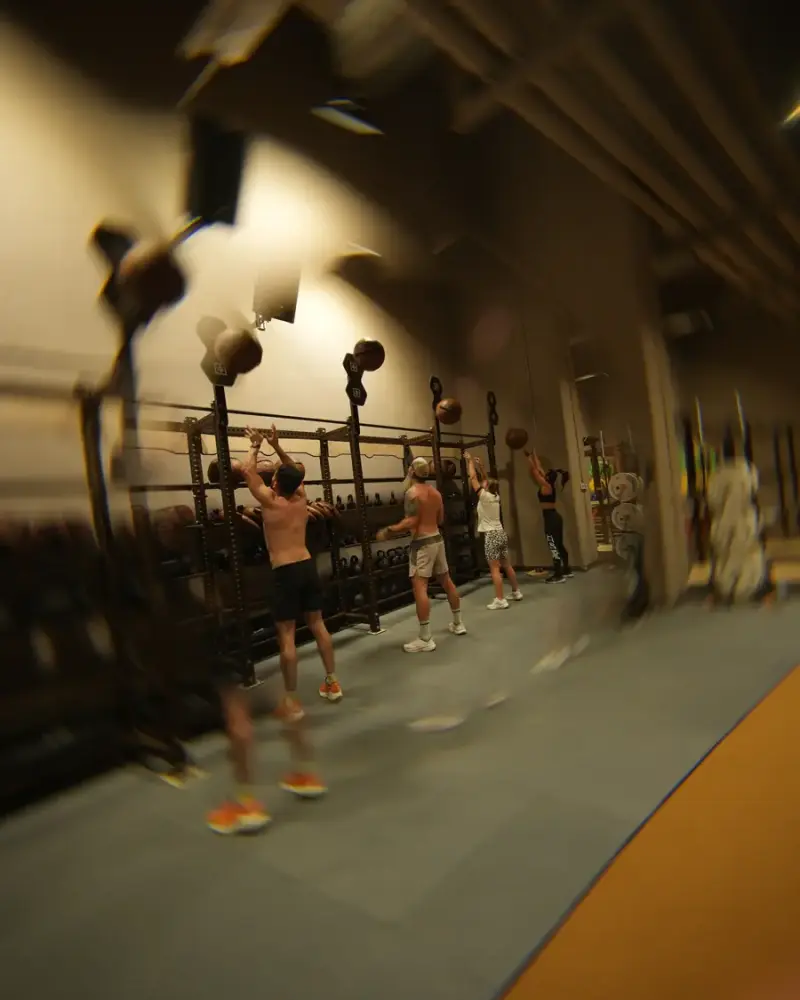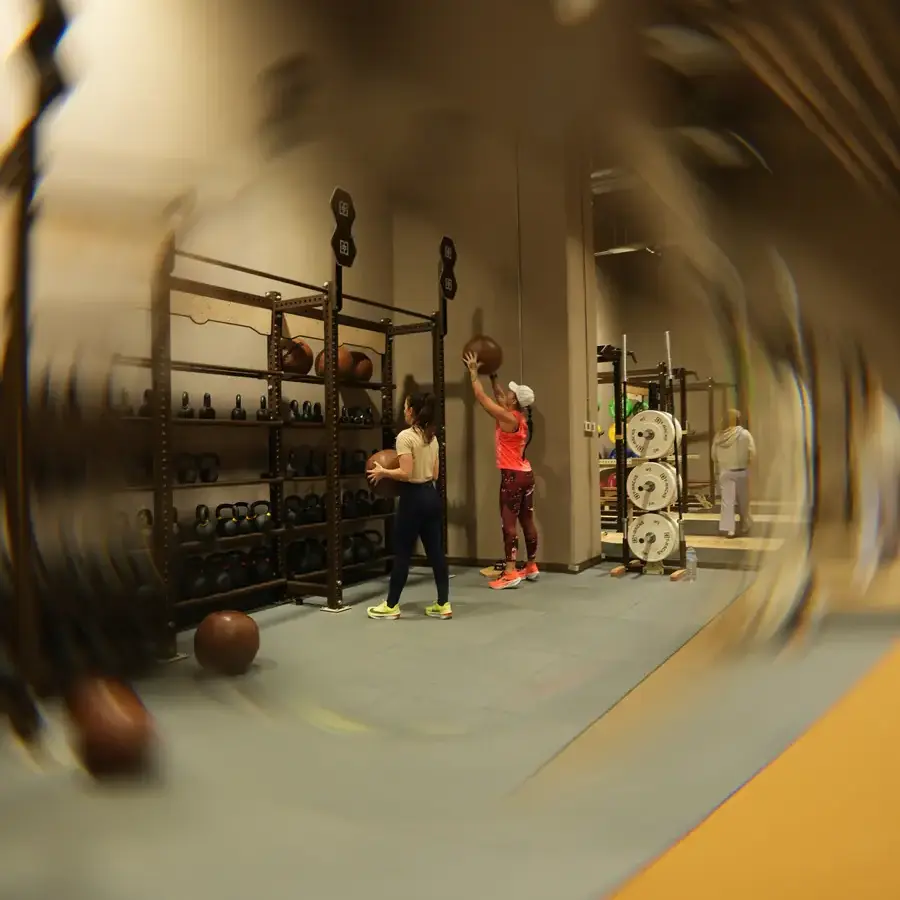
Shoulder stability is one of the capacities that HYROX athletes often overlook but that helps most throughout the race. Pulling on the ski erg, gripping the strap in the sled pull, carrying weight in the farmers carry and throwing the ball overhead in wall balls all tire the shoulder girdle and upper back in different ways. Weakness in this region can set the stage for both performance loss and shoulder pain. At Hybrid Sky we often recommend a short, regular shoulder stability routine to our athletes. In this article you will find a simple-equipment programme that can be done in fifteen minutes and the logic behind it.
How is the shoulder girdle loaded in the race?
The shoulder joint is one of the most mobile joints in the body; this mobility requires the small and large muscles around it to provide stability. The rotator cuff and muscles that control the shoulder blade such as the lower trapezius and serratus keep the humeral head balanced in its socket during arm movement. When they tire, the shoulder rolls forward and up, the neck tenses and force production drops. The neck tension you feel when throwing the ball on the hundredth wall ball rep is often a sign of this.
Upper back endurance is also critical. The mobility of the thoracic spine and the endurance of the back muscles share the load placed on the shoulder in overhead movements. For this reason the programme should focus not only on the shoulder joint but also on the upper back and chest region.
Warm-up: 3 minutes
Start the routine with light movement. Drawing big circles with the arms, raising and lowering the shoulders towards the ears and the cat-camel movement that opens the thoracic spine increase blood flow and prepare the joints. Then wake up the muscles with a light pulling movement using an elastic band. The aim at this stage is not to get tired but to feel the quality of movement.
Skipping the warm-up and going straight to heavy work can create unnecessary tension in the shoulder region, especially in cold morning sessions.
Main routine: 8 minutes, four movements
The four movements below target the different tasks of the shoulder girdle. Do each movement in two rounds, at a controlled tempo and with light resistance. Twelve to fifteen reps per round with short rest between is enough. Work until you feel mild fatigue; if you feel burning or sharp pain, stop.
- Band face pull: works the rear shoulder and mid-back and draws the shoulder blades back.
- Band external rotation: strengthens the external rotators of the rotator cuff, elbow kept close to the body.
- Wall Y-T-W raise: targets the lower trapezius and serratus, done with light weight or bodyweight only.
- Single-arm suitcase carry: mimics the farmers carry, keeping the torso upright to prevent the shoulder dropping.
Mobility and finish: 4 minutes
End the routine with light stretches that open the chest cage and the front of the shoulder. A doorway chest stretch, child’s pose with arms extended, and wall slides with arms overhead are good examples. Hold each position for twenty to thirty seconds and keep your breath calm.
Mobility and stability are not opposites. It is hard to set up a stable overhead position without enough range at the shoulder, and range without stability is uncontrolled. Developing both together is the most balanced approach.
Placing it in the weekly plan
You can do this routine two or three times a week, as a warm-up before heavy upper-body or wall ball sessions or as a finishing routine after training. In intense race-simulation weeks the routine should be shortened but not dropped altogether. Maintaining consistency is worth far more than a single long routine.
If there is long-standing shoulder pain, numbness, loss of strength in the arm or pain that wakes you at night, do not try to solve it with exercise on your own; see an orthopaedic or physical therapy specialist. This article is for general information and does not replace personal treatment.
Technique tips
While working keep the shoulders away from the ears, leave the neck long and do not hold your breath. Do every rep slowly; as speed increases, momentum rather than the stability muscles starts to work. Starting with a light band and raising resistance over time guarantees quality movement.
The logic behind the routine
The basic principle in stability work is low load and high control. Muscles such as the rotator cuff and lower trapezius work best not under heavy loads but in long, low-intensity contractions. Using heavy loads lets big muscles take over and small stabilisers get skipped. For this reason band work and bodyweight movements are preferred in this routine.
Regularity is also important. A short routine two or three times a week produces far more adaptation than one long session a month. The muscles and the nervous system are structures that respond best to repeated small stimuli.
Common mistakes
The first mistake is doing it too fast; as speed increases the movement turns into a momentum job. The second mistake is choosing too high a resistance; in that case the shoulders rise and the neck muscles come into play. The third mistake is working only the forward-facing movements and neglecting the rear shoulder and back. Many athletes give weight to movements such as the bench press and push-up and upset shoulder balance; this shows up in the pulling stations in the race.
The solution is to add at least one pulling movement for every pushing movement. This simple rule is the easiest way to protect shoulder health in the long term.
Before or after the session?
Doing the routine as a warm-up activates the shoulders and makes the movement more controlled. Doing it after training adds flexibility without placing extra load on a tired area. For most athletes the best is to mix the two: a short activation before the session and mobility after it. In morning sessions the shoulders may feel stiffer; in that case extend the warm-up.
After the movements you should feel gentle warmth and ease of movement in your shoulders. If there is pain, burning or a feeling of weakness, review the load or movement selection.
If you apply the routine regularly for three months, you may notice the shoulders tiring less in stations with heavy overhead and pulling demands such as wall ball and ski erg. This difference often becomes clear in the second half of the race, because posture that breaks down with fatigue is the main cause of performance loss. A small but regular investment provides great confidence in the long term.
While applying the routine, it is useful to check your shoulder position in front of a mirror or with a short phone video. Observe that the shoulders do not rise towards the ears, that the shoulder blades move in a controlled way and that the torso stands balanced. Small corrections markedly increase the effect of the same movement.
Post-routine check: monitor what you feel
When you finish the routine you should expect a mild feeling of having worked in the shoulder region, not pain. A slight muscle sensation the next day is normal; a sharp pain or numbness in the arm is not. After a few weeks you may notice the shoulders tiring less in overhead movements and pulls.
To track progress you can use a simple measure: note at which rep shoulder fatigue starts while completing a hundred-rep wall ball set. This measure will advance over time.
You can show the routine to the Hybrid Sky coaches in Skyland to get feedback and ask for adaptations suited to your own shoulder mobility.