Training the sled push and sled pull back to back is one of the least discussed but most differentiating topics in HYROX preparation. In the race these two stations come one after the other: first the push, in which you use the legs and hips intensely, then right away the pull, in which grip, back and arms come into play. An athlete who does each well separately may meet unexpected fatigue when they are consecutive. At Hybrid Sky we often train these two stations together because it is the best way to imitate the rhythm of the race. In this article we explain the logic of consecutive work, sample set structures and points to watch.
Why train them consecutively?
The sled push tires the legs, especially the quadriceps and hip muscles, and raises heart rate markedly. The sled pull that follows immediately demands the back, biceps and grip muscles, yet breathing has not recovered. In this transition the athlete has to change position while also grabbing the rope or strap and finding a steady rhythm. Training them separately does not reflect the difficulty brought by this transition. Consecutive sessions give a stimulus closer to the race, both physically and mentally.
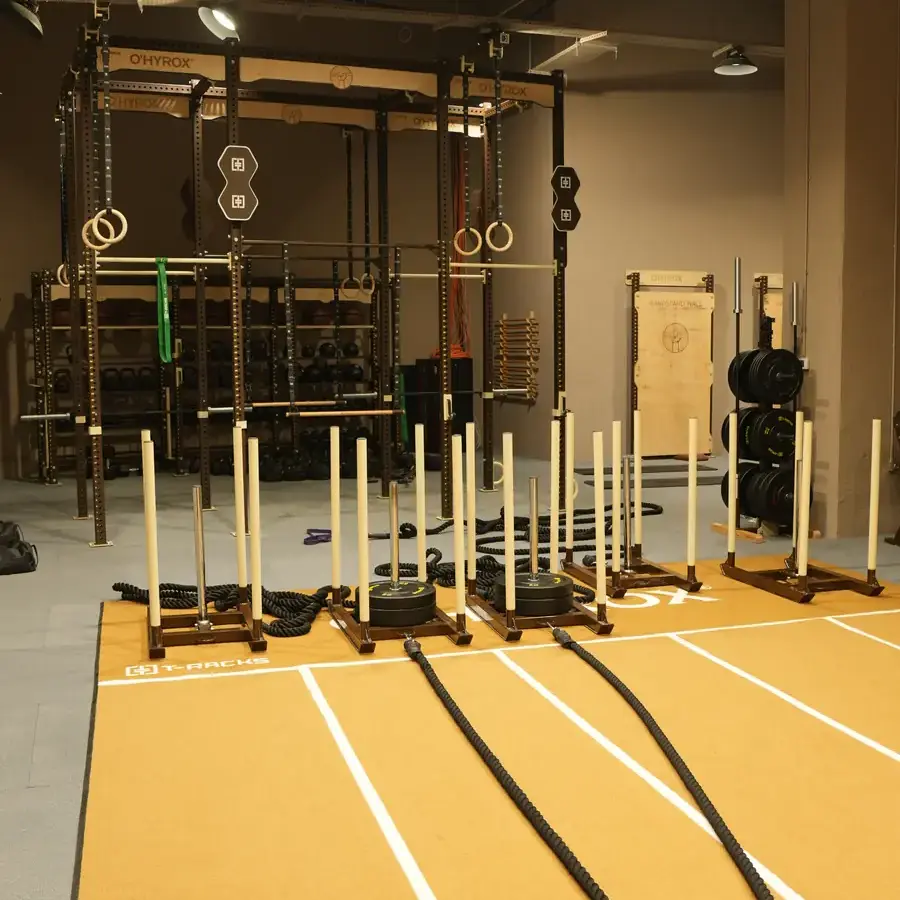
The floor and friction factor also come into play here. It is normal for the same sled to feel different on different surfaces, so trying more than one load and surface condition in training is useful.
Technique: the transition from push to pull
Instead of squatting down immediately to grab the strap or rope as soon as you finish the push, plan a controlled transition of a few seconds. Manage breath with a deep inhale, shake out and relax your hands, then begin the grip from a solid position. In the pull, keeping the torso slightly back and the hips low, using the arms only as connectors and taking power from the legs and back, reduces shoulder fatigue.
Our coaches watch the athlete’s hands, foot position and torso angle. Small corrections can provide a noticeable energy saving at the same load.
Sample set structures
The templates below are general examples that can be adjusted to your level. Set the loads with your coach and stay under race load in the first weeks.
- Technique block: 4 rounds, each with 12.5 metres of push and 12.5 metres of pull, light load, 90 seconds rest between rounds
- Endurance block: 6 rounds, medium load, 60 seconds between rounds with a quick breath check in each round
- Race simulation block: ski erg followed by push and pull, then a 1 km tempo run, single round
Recovery and load management
Sled work is heavy in terms of muscle damage; especially for beginners, noticeable tightness in the legs and back should be expected the next day. So plan consecutive sled sessions once or at most twice a week and leave at least two days between them. A light walk, stretching and enough protein after the session help recovery. If there is a specific pain, especially a sharp sensation in the knee, lower back or shoulder, stop the session and consult a professional.
Raising the load by small percentages from week to week reduces injury risk. An approach of “same load this week, better technique” instead of “heavier this week” is often more effective.
What to do close to the race
As the race approaches it makes sense to reduce sled volume while keeping quality. In the last two weeks short but sharp repetitions remind you of race tempo, while heavy and long sessions create fatigue. Doing one full session at race load increases confidence, but this should be planned at least ten days before the race.
Breath and pace in consecutive work
During the push breath tends to be held, because the torso is kept rigid and force is produced. But holding the breath for long raises heart rate unnecessarily and makes recovery harder when moving into the pull. Make a habit of controlled rhythmic breathing in the last metres of the push; then take two deep breaths before the pull to calm the system.
A balance is also needed in pace. An athlete who starts the push too fast enters the pull already tired. Choosing a more sustainable pace and finishing the push with a steady rhythm often gives a better total time. Scoring the effort you felt each time on a scale of one to ten and noting it helps you understand which pace suits you.
Common mistakes
The most common mistake is holding the torso too upright in the push and trying to take force from the arms alone. This is both inefficient and loads the shoulders and wrists. Another mistake is the hands constantly releasing and regripping the strap during the pull; this breaks rhythm and loses time. A third mistake is trying to increase load while the feet slip; shoe sole and floor grip must always be checked.
It is hard to notice these mistakes yourself. Taking a short video with your phone or getting feedback from the coach reveals details you do not see.
Supporting exercises
There are a few supporting exercises for consecutive sled performance: single-leg work such as heavy walking lunges and step-ups builds pushing power, while exercises such as inverted rows, lat pulldowns and dead hangs develop pulling power and grip. Place these movements on a separate day in the weekly plan from sled sessions so that recovery load does not accumulate.
You do not need to make every movement race-specific; basic strength often makes the biggest difference. However, in the last few weeks the proportion of specific work should be increased.
Adapting with small equipment at home and in the gym
A sled may not be available everywhere. If your gym has no sled, alternatives such as pushing a heavy plate on a towel or pulling a weighted sled with a resistance band can be used. They do not give the full race feel but are enough to work on push posture and pull rhythm. Working with the real race equipment at Hybrid Sky gives that feeling most accurately.
Consecutive sled work develops with patience. Within a few months both your times and your transition quality improve markedly, as long as you raise the load step by step and do not compromise on technique.
Finally, if you are going to run after a consecutive sled session, it is normal for your legs to feel “wooden.” This situation, which we call compromised running, is the race itself; experiencing this feeling in a controlled way in training keeps you from panicking in the race.
In short, train the sled push and pull pair not just as load but as a whole of transition, breath and rhythm. This perspective is the difference that relaxes you most on race day.
If you would like a preparation plan specific to race load with the Hybrid Sky coaches in Skyland, we can evaluate your level together and build a sled programme that suits you.