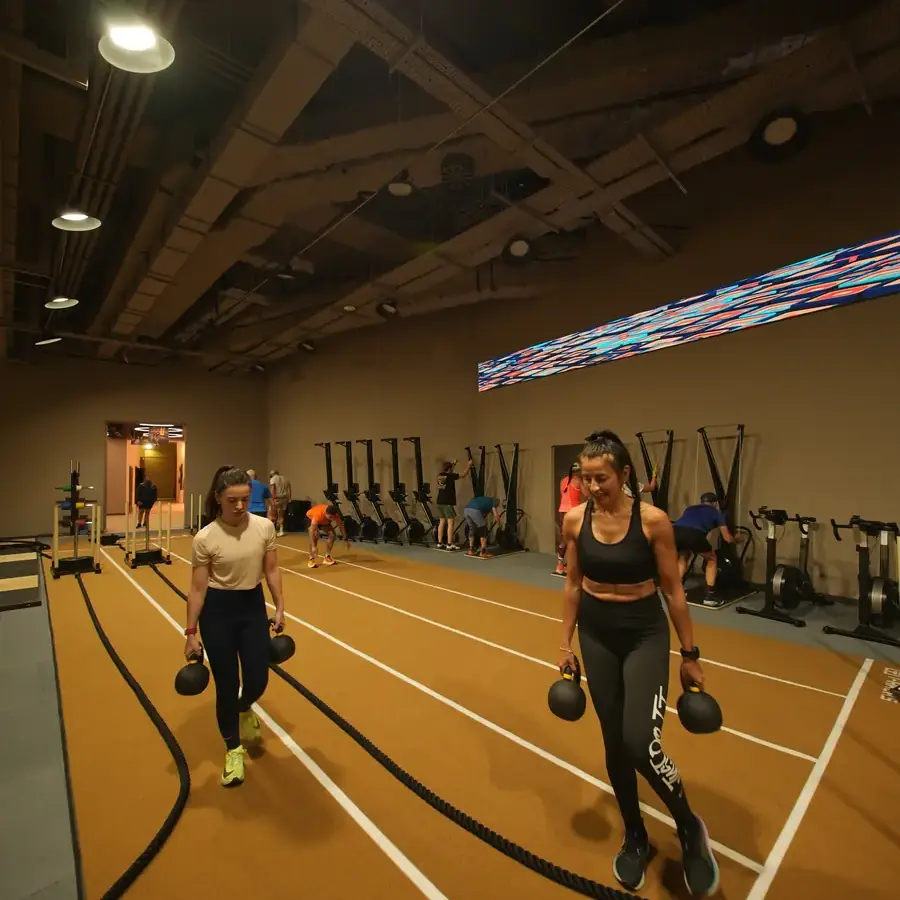
Farmers carry after rowing is the transition in the middle of a HYROX race where grip strength is truly tested. As soon as the 1,000-meter row, the fifth of the eight stations, ends and the sixth run is done, you must walk 200 meters with two heavy kettlebells in your hands. Because the grip, forearms and back work continuously during rowing, the hands are already somewhat tired at this point. In this article we look at this transition from an advanced perspective.
What does rowing leave in the arms?
Rowing is not as much a leg job as many people think; a good stroke starts with the legs, continues through the trunk and ends with the arms. But as fatigue sets in, technique deteriorates and the arms come in earlier. In that case the handle is gripped tightly, forearm muscles contract needlessly, and your hands arrive at the farmers carry more tired.
For this reason advanced athletes watch three things in rowing: carrying the handle loosely in the fingers, bringing the arms in only at the end of the stroke, and choosing the machine's drag setting according to their own strength. Squeezing the handle does not add force, it only tires the forearm.
The run has an effect as well. The sixth run gives a short break between rowing and the farmers carry. You can use this gap to recover your hands: opening and closing the fingers while running and shaking the arms loosely makes a small but real difference for the next station.
The relationship between rowing and the farmers carry is not limited to muscle fatigue; breathing plays a part as well. Picking up the kettlebells while breathing is still high at the end of rowing makes it harder to stabilize the trunk. So in the last thirty seconds of the sixth run, try to slow your breathing deliberately. Inhaling through the nose and exhaling long through the mouth lowers heart rate a little and lets you enter the station more calmly. This small adjustment also reduces trembling in the hands.
Ways to protect grip while rowing
The following habits help you have more energy left in the hands when rowing ends:
- Place the handle on the first joints of the fingers rather than deep in the palm; let the thumb only accompany.
- Deliberately relax the hands during the recovery phase of the stroke; add a squeeze-and-release rhythm to each stroke.
- Keep the wrists neutral; if the wrist bends, the forearm works harder.
- In the last 200 meters, protect technical quality rather than adding power; broken technique tires the arms quickly.
This list is not a formula but a checklist. In each session, pick one item and work on it.
When your rowing technique breaks down, the arms begin pulling the handle earlier. A practical way to notice this is a short internal check every 250 meters: are the shoulders up, are the wrists bending, has the grip tightened? Answering these three questions quickly and correcting can prevent the forearm from running out over the whole row. In the race this check takes no seconds, but it extends the life of your grip.
The first ten meters of the farmers carry
When picking the kettlebells up from the floor, keeping the back flat and lifting with the legs both protects the lower back and eases the grip. Stand with the elbows unlocked and the shoulders down and back. The kettlebells should be carried close to the body, not hitting the legs but not stuck to the torso either.
Taking short, quick steps right away can be tempting; starting the walk at a high tempo tests the grip from the very beginning. A better approach is to take the first five or six meters in a controlled way and raise step frequency once the hands and shoulders have settled. Do not hold your breath; breathe in a regular, short rhythm along with the steps.
The weight of the farmers carry changes by category. So although working with a weight equal to race load in training is ideal, it may not always be possible. Walking a longer distance with a lighter load also builds grip endurance. What matters is to increase load and distance deliberately and avoid sudden jumps that raise injury risk.
The decision to put them down: when and how?
The most critical question in the farmers carry is when to set the kettlebells down. Do not think that putting them down is always a mistake; according to the race rules, completing the distance is what matters, and dropping them uncontrolled costs more than setting them down deliberately.
Experienced athletes usually make a plan for this section in advance. For example, they walk the first 100 meters without a break and are ready to take one short break in the second half depending on the endurance of their hands. This break lasts about three or four seconds; opening and closing the hands and picking up again is enough. If the break is planned, it happens before the grip fully collapses and usually spends less time than an uncontrolled drop.
Try this plan in training with different loads. Knowing at which distance your forearm starts to burn moves the race-day decision from instinct to data.
Walking rhythm and posture
In the farmers carry, speed is determined by step frequency more than step length. Very long steps swing the kettlebells, and a swinging load strains the grip more. Short, regular steps keep the load stable. The trunk should be upright with the gaze ahead; leaning forward pulls the shoulders down and increases the load on the hand.
Try not to slow down at the turning point. Turning without putting the kettlebells down removes the need to pick them up again. To keep the load from swinging during the turn, rotate the trunk in one controlled step.
In the last thirty meters of the walk, many athletes relax with the thought that it is over and set the kettlebells down early. But putting them down before the distance is complete can cause problems under the rules. Set a mental cue for finishing the last meters; for example, counting steps as soon as you see the final line focuses your attention on the finish.
Practicing this transition in training
Grip endurance is developed both separately and within combinations. An example combination:
- Row 500 meters, then a short run, then immediately a 100-meter farmers carry. Keep the rowing effort close to race level.
- Increase the farmers carry distance gradually; measure the endurance of your hands by changing distance rather than load.
- Once a week, build a strength base with a heavier carry in a rested state.
If you train at O'Hybrid Sky in Sarıyer, choose loads together with your coach. If you have lasting pain, numbness or tingling in the forearm, stop training and consult your physician.
On race day, do not forget to warm up your hands in the warm-up; a short grip activation lets you enter the farmers carry more comfortably. Permitted materials for sweaty hands and slipping vary according to the race rules; check the most current rules in the organization's guide. Taking a short breath and relaxing your hands before entering the station improves the quality of the first meters.
Finally, keep all these details in mind together, but do not try to apply every one of them during the race. The two or three small behaviors you turn into habits in training are the things your tired mind can apply easily on race day: a loose rowing grip, a planned break and calm breathing. The rest settles with experience anyway.
In the weeks before the race, do not cut grip work, but do not raise its intensity suddenly either; a sudden jump in load can cause tendon fatigue in the forearm. In the final week before the race, it makes more sense to lower volume and keep the grip fresh. That way you enter the farmers carry with strong hands and a calm head.
Also monitor grip work for hand and forearm health. Signs such as morning stiffness, lasting pain or tingling may show that you need to slow your load increase. Instead of ignoring these signs, talk to your coach.
Frequently Asked Questions
Will relaxing my hands while rowing lower my speed?
Not when done correctly. A loose grip reduces needless forearm fatigue, and the power of the stroke comes from the legs and trunk.
Does taking a break in the farmers carry lose time?
A planned, short break usually spends less time than an uncontrolled drop. Decide when to take the break in training.
How many times a week should I train grip strength?
One or two focused sessions a week are enough for most advanced athletes. Monitor your recovery and adjust intensity with your coach.