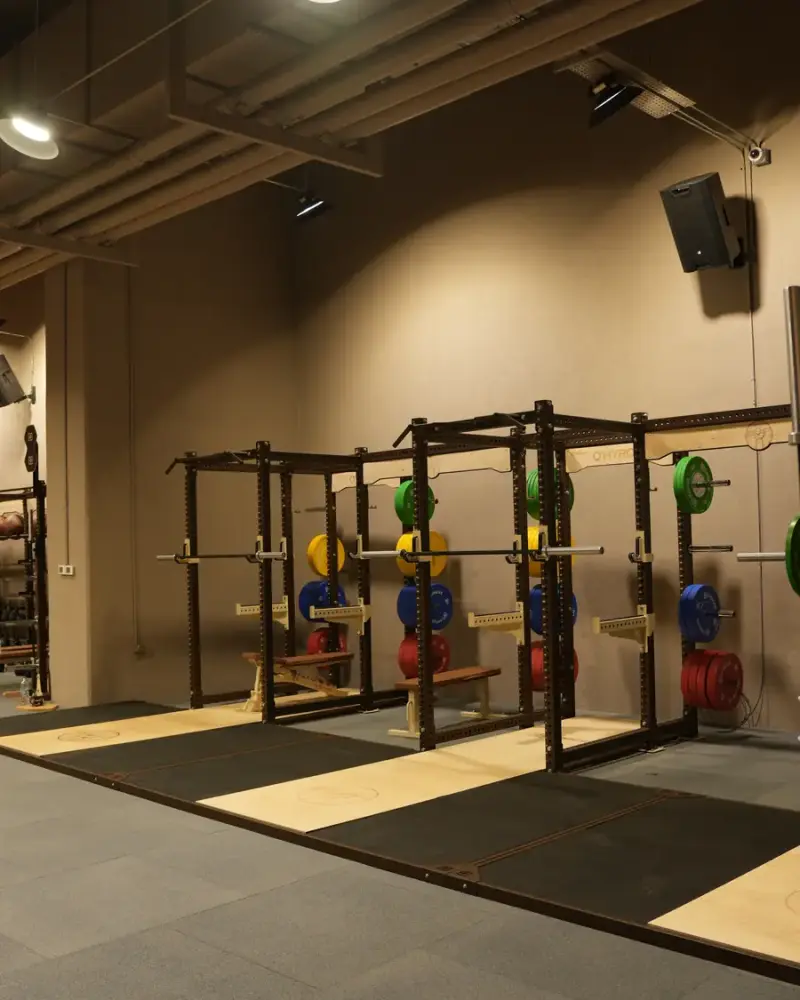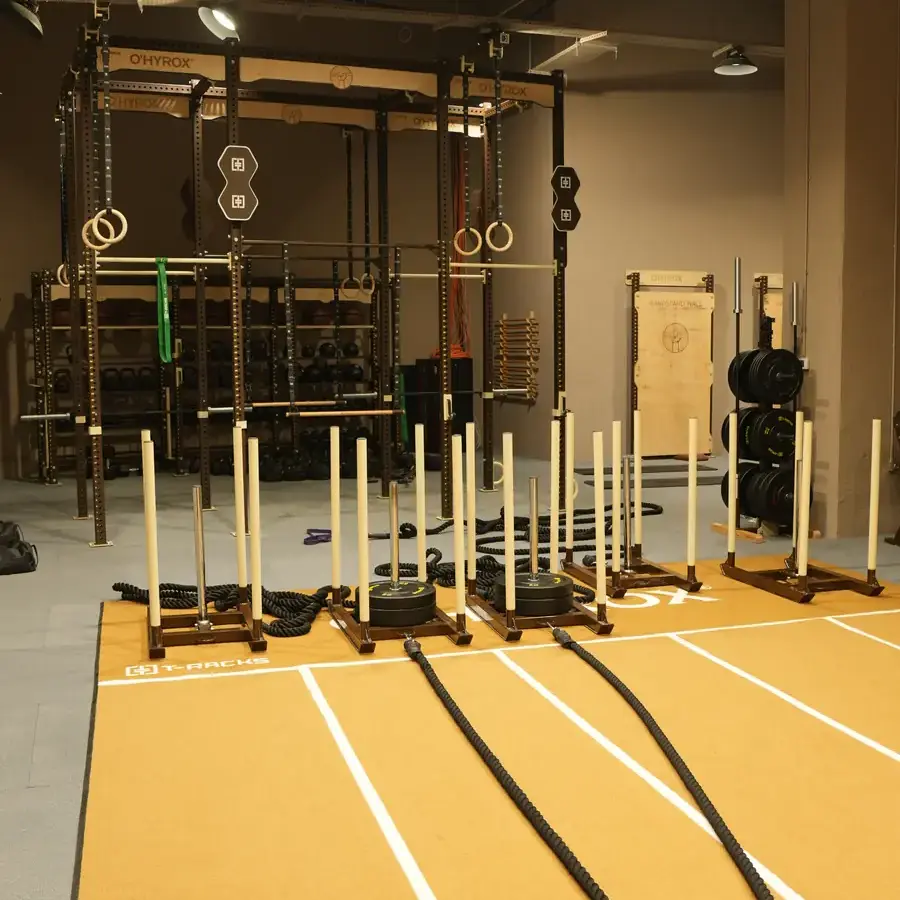
Kuvvet dayanıklılığı, bir kası ya da kas grubunu orta düzey bir dirence karşı uzun süre, kalitesini bozmadan çalıştırabilme kapasitesidir. HYROX’ta sled itmek, kum torbasıyla hamle yürümek ya da yüz wall ball atmak tek bir ağır kaldırıştan çok bu kapasiteye dayanır. Yine de birçok sporcu ya yalnızca ağır kaldırır ya da yalnızca koşar ve aradaki boşluğu yarışın ortasında fark eder.
In this article we walk step by step through the difference between the two concepts, which one is used more at the stations, how to build the sets and how to fit them into a weekly plan. The aim is for the work you do in the gym to carry over more directly to the minutes on the race floor. You do not need to overhaul your program; often adding small adjustments to your existing strength sessions is enough to start feeling the difference at the stations.
The difference between maximal strength and strength endurance
Maximal strength is the highest force you can produce once, with everything you have. A heavy squat or deadlift attempt measures it. In that kind of work the nervous system learns to recruit large muscle fibers at the same time, the set is short and the rest is long. In strength endurance the same muscles work for minutes; fatigue builds inside the muscle, breathing speeds up and technique slowly wants to come apart.
The two are not rivals. A certain base of maximal strength makes moderate loads feel relatively light, so heavy lifting should not be dropped entirely. But in HYROX the real question is not whether you can move the sled once; it is whether you can keep pushing it without stopping, lap after lap, on legs that have already run. That calls for a separate training stimulus.
Which capacity is at work in the HYROX stations?
Nearly all eight stations are efforts of a few minutes with moderate or moderately heavy loads. The sled push and sled pull ask the legs and trunk to produce force for an extended period. The farmers carry taxes grip and the shoulder girdle. Sandbag lunges open and close the hips and knees under load again and again. Wall balls drain the legs and shoulders in a rhythmic way. What they share is not a single peak but a long plateau.
That is why the athlete who loses time at the stations usually does not lack strength; the strength simply cannot be sustained. The first thirty seconds go well, then muscle burn and breathlessness combine and the number of pauses climbs. Strength endurance training targets exactly that second half.
How to train strength endurance
The core principle is to keep the load moderate and extend the working time or the number of reps. Sets are built so that they do not take you to failure but make the final reps clearly hard. Rest periods are noticeably shorter than in maximal strength work; the goal is not full recovery of the muscle but returning to work with partial recovery.
- Uzun setler: Goblet squat, lunge ya da kettlebell swing gibi hareketlerde tekrar sayısını, tekniği koruyabildiğiniz sınıra kadar artırın.
- Süreye dayalı bloklar: Tekrar saymak yerine belirli bir süre boyunca sabit bir ritimde çalışın; bu, istasyondaki zihinsel durumu taklit eder.
- Taşıma çalışmaları: Farmers carry, önde tutuşlu taşıma ve sandbag taşımaları kavrama ile gövde dayanıklılığını birlikte geliştirir.
- Kızak ve itme varyasyonları: Hafif-orta yükle uzun mesafe itmek, bacaklara sürekli kuvvet üretmeyi öğretir.
- Devre formatı: İki ya da üç hareketi arka arkaya bağlayıp kısa dinlenmeyle tekrarlamak, yerel yorgunluğu genel yorgunlukla birleştirir.
A good guide for choosing load is feeling, when the set ends, that you could have done a few more reps. Ending every set at failure may look impressive in the first weeks, but it makes recovery harder and lowers the quality of your running for the rest of the week. Progress comes from increasing time or reps first and load second.
Fitting them into your weekly program
Two strength endurance sessions a week is a sufficient starting point for most amateur athletes. One can follow a heavier strength session with short rest; the other can be a station day combined with running. Not placing the heavy leg session on the day right before a quality interval run protects the value of both workouts.
As the race approaches, these sessions become more race-like: running and stations are done back to back, loads approach race loads and rest shrinks. In the base phase, movement variety and technical quality come first. Athletes training at Hybrid Sky usually spread this transition over several weeks as well, preferring gradual adaptation over sudden jumps in load.
How to observe your own strength endurance
You can understand where you stand through simple observations without a lab test. Noting how many pauses you need to cover a fixed distance with a given load is a good start. For example, repeating the same carry distance with the same kettlebell a few weeks apart and comparing the number of pauses and how hard it felt makes progress visible. What matters is keeping conditions as constant as possible: a similar time of day, a similar warm-up and a similar day before.
Another indicator is the moment technique starts to slip near the end of a set. Shallower squats during wall balls, the torso dropping forward in lunges or shorter steps on the sled push all show that the muscle is nearing its endurance limit. Recording that moment on your phone and watching it helps you see which area tires first. Is it the legs, the grip or the trunk that gives in first? The answer tells you what to emphasize in the coming weeks.
Writing these observations as short notes in a training log creates a valuable record when you look back a few months later. Trends matter more than numbers: is the same work finishing with fewer pauses, do the final reps look cleaner? Simple measures like these also support motivation, because you see concrete progress before race day arrives.
Common mistakes
The most common mistake is confusing strength endurance with cardio. Working very fast with a light load raises heart rate but does not give the muscles enough resistance. The reverse is also a problem: doing short sets with a heavy load and counting it as endurance work. Another mistake is forcing out the final reps after technique has broken down; that comes back in the race as a no-rep or an injury risk.
Finally, neglecting recovery reduces the benefit of this kind of work. Long sets leave noticeable fatigue in the muscles. Sleep, enough protein and carbohydrate, and light movement days let you arrive ready for the next session. If you have ongoing pain or joint discomfort, consult your physician before pushing the program.
Frequently Asked Questions
Should I stop lifting heavy to build strength endurance?
No. Heavy lifting builds a base that lets you carry moderate loads more comfortably. Keeping one short heavy strength block per week and dedicating the second session to endurance is a balanced solution for most athletes. As the race approaches, the volume of the heavy block can be reduced, but it does not need to disappear completely; that way the base you have built is preserved and does not fade in the final weeks.
How many reps count as strength endurance?
There is no strict cutoff; what matters is a long working time and a load that stays moderate. Sets that you can sustain with good technique for an extended time, with a final portion that feels demanding, serve this purpose.
Can I put it on the same day as running?
You can; in fact the combination is useful closer to race day. But on a day when you plan quality interval running, moving the heavy leg endurance work after the run or to a separate day protects the quality of the run.