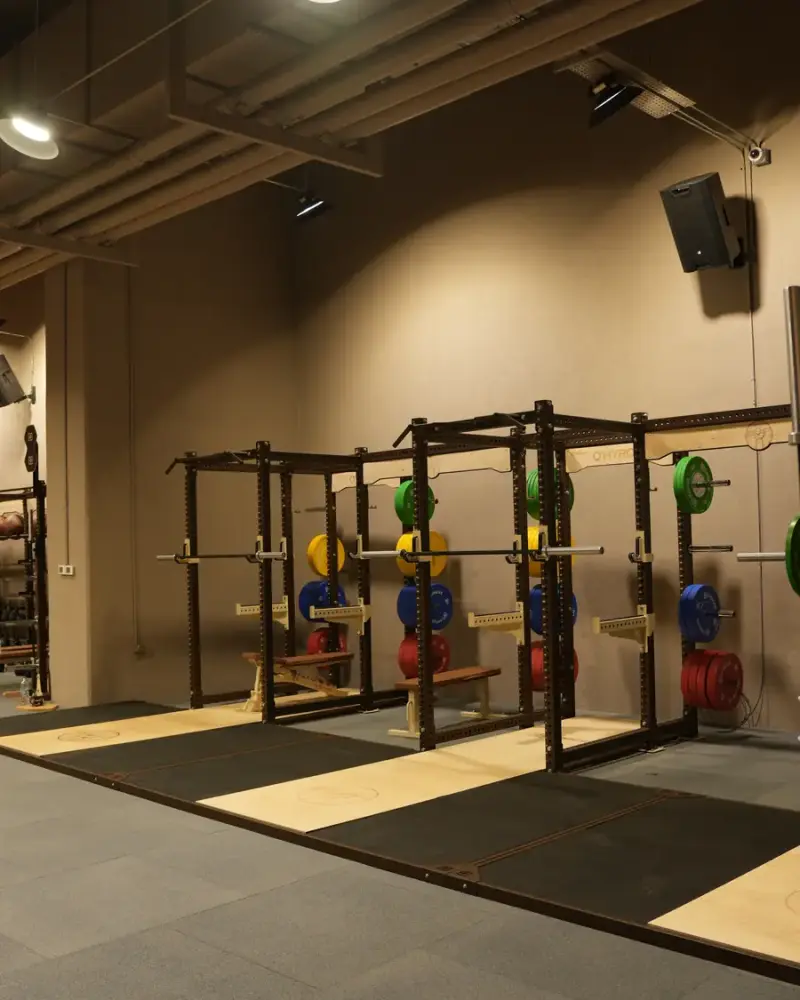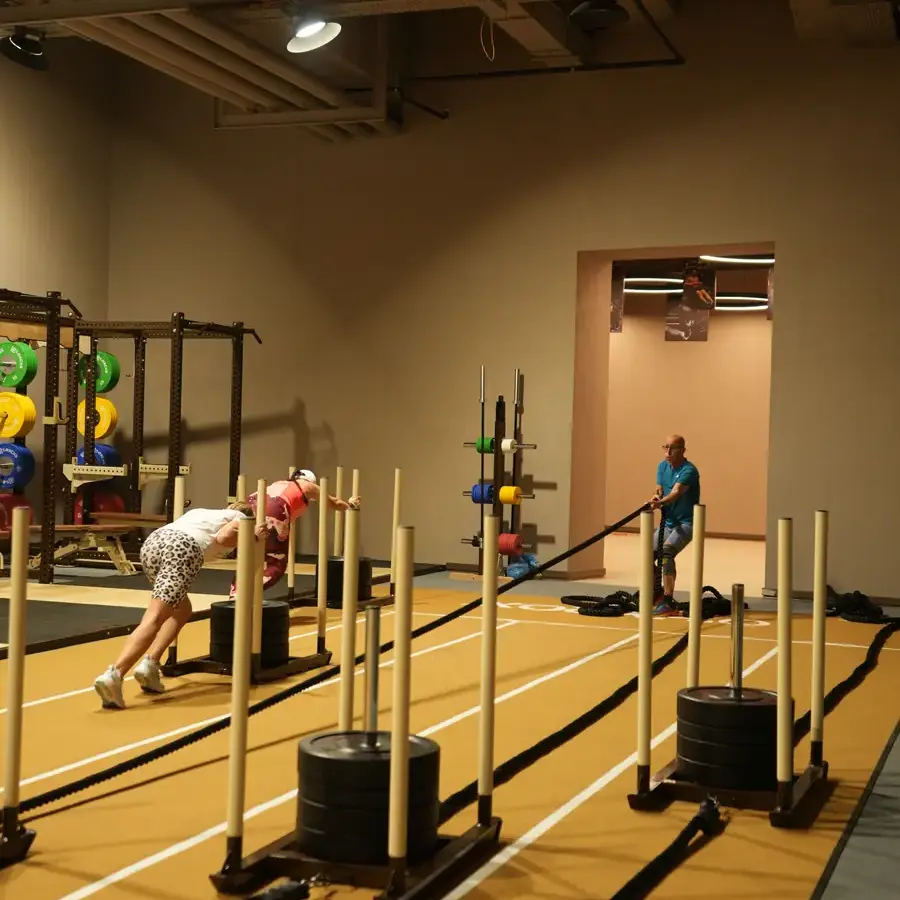
HYROX prep for female athletes, in particular, calls for some specific notes on the programming side. The course is the same and the distances are the same, but the loads differ, and the strength-endurance balance usually starts from a different point. Reading these differences correctly makes the prep plan both more efficient and more sustainable.
At O’Hybrid Sky, a large share of the female athletes preparing for HYROX at our facility in Skyland İstanbul come in with a profile that's strong on endurance and has room to grow in upper-body strength and grip endurance. Building the program around this profile gives clearly better results than applying a generic template.
Reading Your Starting Profile Correctly
The first step in programming is to start with measurement, not assumptions. The key data a female athlete should know when starting HYROX prep are: 5-kilometer run time, the number of unbroken Wall Ball reps, how many seconds it takes to cover 25 meters on the Sled Push at race weight, unbroken Farmers Carry distance, and 1000-meter SkiErg time.
These five data points determine which stations get priority. More often than not, the running and erg side comes out in good shape, and the sled and carry stations become the program's focus. In that case, the weight of the weekly plan should go to strength and carry work, not running.
Prioritizing Upper Body and Grip
The stations that challenge female athletes most in HYROX are usually the Sled Pull, Farmers Carry and Burpee Broad Jump. What these three have in common is that they depend on upper-body and grip capacity. So the program needs to make dedicated room for these areas.
- Dead hangs: Twice a week, in sets building up to a total of 2-3 minutes. The simplest and most effective tool for grip endurance.
- Pulling strength: Pull-up variations, lat pulldowns and rows. The Sled Pull draws directly on this capacity.
- Loaded carries: Farmers Carry, suitcase carry and front rack carry. 300-400 meters total in one session a week.
- Pushing strength: Push-ups and overhead presses make the upward phase of the Burpee Broad Jump easier.
- Trunk endurance: Anti-rotation and plank variations protect your posture on the carry stations.
Spreading this work across the week gives better results than cramming it all into every session. Grip work in particular should go on a different day from the carry stations done with tired hands.
Protecting Your Running Advantage
A common mistake among athletes with a strong endurance side is cutting running volume too much while emphasizing strength work. Eight kilometers of the total distance in HYROX is running; losing that advantage is costly.
To strike the balance, keep at least two running sessions a week: one tempo or interval session and one longer run at an easy pace. These two sessions are enough to maintain running capacity during a strength block. In most cases, replacing a third running session with station work is more efficient.
Compromised Running
HYROX's signature challenge is that the runs are done on tired legs. So post-station running work is just as necessary as pure running training. A simple format: a Sled Push or lunges followed by a 400-600 meter run, for three or four rounds. This work builds the adaptation that pays off most on race day.
Accounting for Cyclical Variables
Many female athletes notice their training capacity changes over the month. In some phases heavy strength sessions feel easier, while in others the same load feels harder. Reflecting this observation in the program makes more sense than sticking stubbornly to a fixed template.
The practical approach is to keep the weekly plan flexible: rather than fixing the heavy strength session to a specific day, keep it movable within the week. Recording her own data in a training log lets the athlete see personal patterns over time. Setting a general rule here isn't right; each athlete's own tracking is the most reliable guide.
Patience with Load Increases
When increasing station loads, technique needs to stay the priority. Extending distance at the same sled weight instead of adding weight, or raising the number of unbroken reps instead of increasing Wall Ball weight, is often the better path to progress.
When working with female athletes at our facility in Sarıyer, we plan load increases in two-week blocks. At the end of each block the same test is repeated, and the load goes up only if technique holds. This seemingly slow approach gets you further after eight weeks than attempts at rapid increases.
Sample Weekly Structure
In a twelve-week prep block, a typical week can be set up like this:
- Monday: Lower-body strength and sled work.
- Wednesday: Interval running and erg work.
- Friday: Upper-body strength, pull-focused, plus grip work.
- Saturday: Station combinations and compromised running.
- Sunday: Long easy run or active recovery.
This structure includes four training days and one light day. More than five hard sessions a week makes recovery difficult for most athletes; protecting rest days directly affects results, especially when trying to build strength and endurance in the same phase.
Practical Notes on Equipment and Load Selection
The dimensions of the equipment you train with affect performance. A standard barbell diameter can be challenging to grip for some athletes; a thinner bar or kettlebell alternatives work the same muscle group more effectively. Similarly, adjusting box jump height or sled rope length to your own height makes it easier to set up technique correctly.
When selecting loads, you need to settle your race category from the start. Station weights differ between Women's Open and Pro; doing the final block of preparation at the full weight of the category you'll race in is essential. Training with lighter loads throughout and then meeting the real weight on race day is one of the most common planning mistakes.
Clothing and shoe choices also need to be tested during preparation. Clothing that becomes uncomfortable over distance, or a shoe that doesn't give enough support in wall balls, costs more time on race day than you'd expect. It's worth setting aside time to try these details in simulation sessions.
The Contribution of Group Training
In HYROX preparation, group training offers a clear advantage, especially for athletes preparing for their first race. Training in a group working toward a similar goal both makes consistency easier and lets you learn station techniques by watching other athletes.
Another benefit of a group setting is that it creates conditioning similar to the race atmosphere. Being able to hold your own pace while other athletes work beside you is one of the most useful skills on race day. Athletes who train alone are more prone to getting swept up in the pace around them and going off plan in the race.
That said, a group program doesn't fully meet individual needs. Extra work targeting your weak stations needs to be done in separate sessions. A structure that combines the two, meaning two group sessions and one individual focus session a week, works well for most athletes.
Setting the Right Race Goal
In your first HYROX, aiming to complete the course without penalties is a healthier start than setting a target time. From your second race on, you'll have station-by-station data, so you can set realistic time goals.
At O’Hybrid Sky, we run group and individual sessions for female athletes preparing for HYROX on İstanbul's European Side. If you want a program built around your own data, we can start with an assessment session; once the baseline measurements are in, it becomes very clear which stations to prioritize.