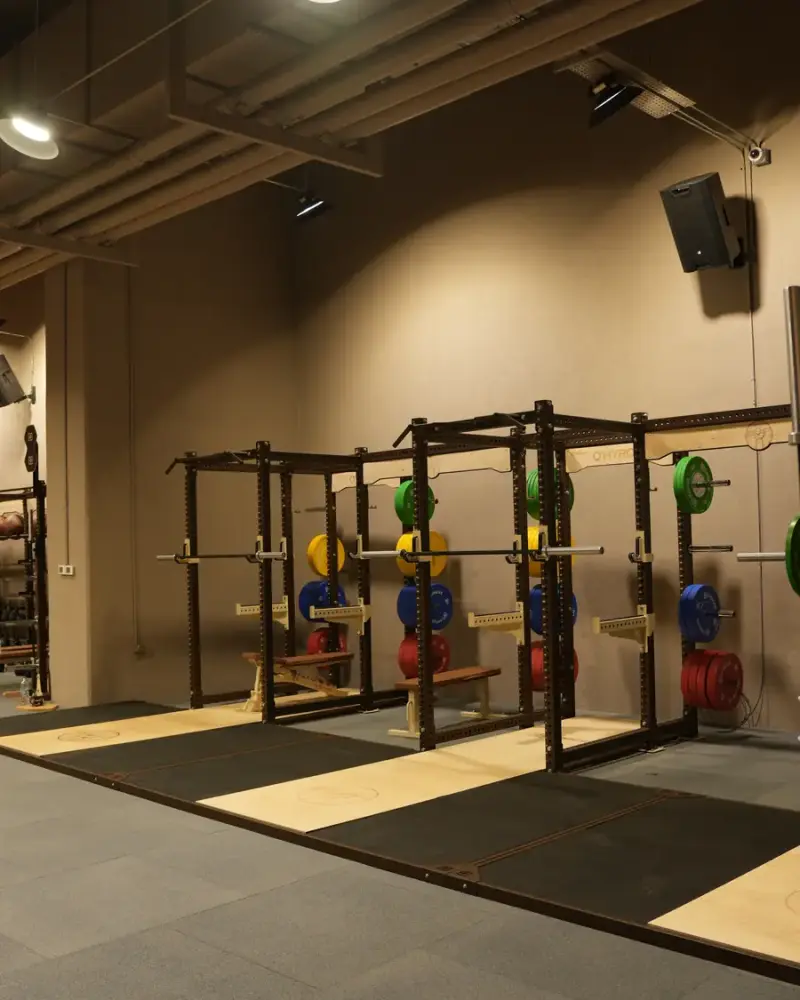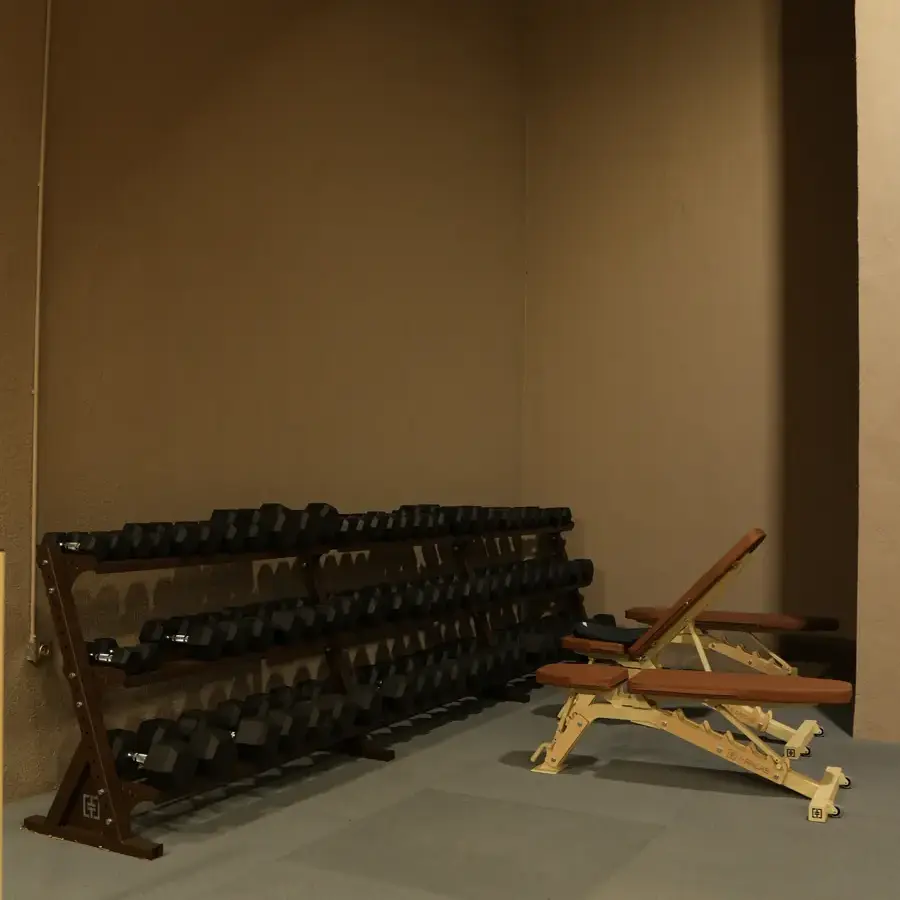
Strength enduranceis the real currency of hybrid races like HYROX. How much you lift for one rep matters, but what finishes you in the race is the strength you have left on the seventieth of 100 wall balls. The logic of high-rep sets targets exactly that: the capacity to sustain strength under fatigue.
At O’Hybrid Sky, this is the area where athletes see the clearest progress in our sessions at Skyland İstanbul. Someone whose max strength hasn’t gone up a single kilo in months can make striking gains in strength endurance within weeks. In this article, we cover why high-rep sets work, how to program them, and which traps to avoid.
What Is Strength Endurance?
Strength endurance describes a muscle group’s capacity to sustain repeated contractions under moderate or high load. It rests on a different physiological foundation than max strength: efficient use of intramuscular energy stores, lactate tolerance, capillary density, and resistance to neuromuscular fatigue.
HYROX’s eight stations test this capacity directly. 1000 meters of rowing, 200 meters of farmers carry, 100 wall balls, 80 meters of sandbag lunges. None of them is a max strength test; all of them involve sustained, repeated force production. That’s why preparing with classic strength training logic falls short.
The Strength Continuum
It helps to think of strength as a continuum. At one end is 1-3-rep max strength; at the other, muscular endurance over hundreds of reps. In between lie the power, hypertrophy, and strength endurance zones. A HYROX athlete’s needs are concentrated in the middle-right part of this continuum, but without a base at the left end, the right end can’t rise high enough.
The Logic of High-Rep Sets
High reps here covers the 12-30 rep range and long time-based sets. Training in this range triggers three separate adaptations.
- Metabolic adaptation: Lactate buffering capacity and energy production efficiency within the muscle increase.
- Neuromuscular endurance: The motor unit recruitment pattern holds up longer under fatigue.
- Technical endurance: Movement quality breaks down less as the rep count rises; this is the factor that saves the most time in HYROX.
The third one is especially overlooked. An athlete who does the first 30 wall balls perfectly loses squat depth by rep 60 and gets a “no rep.” The time lost comes not from a lack of strength but from a lack of technical endurance.
Practical Set Schemes
Straight High-Rep Sets
The simplest format: 3-4 sets of 15-20 reps, moderate load, 90-120 seconds of recovery between sets. The goal is no noticeable technique breakdown up to the last rep of the last set. Ideal for squats, Romanian deadlifts, goblet squats, and push-ups.
Cluster Sets
Breaking a high total rep count into small chunks. For example, doing 40 wall balls as 4×10 with 20 seconds of breathing in between. This method lets you accumulate volume while preserving technical quality. The same logic applies to race strategy: breaking it up is often faster than going unbroken.
Descending Pyramid
Schemes like 21-15-9 or 20-15-10-5. Because the rep count drops as fatigue rises, the athlete can keep moving. This format is also strong for motivation; every set is shorter than the last.
Time-Based Sets
Setting a duration instead of counting reps. 45 seconds of work, 15 seconds of rest, 6-8 rounds. Practical for stations like farmers carry, sled push, and SkiErg. With the burden of counting removed, the athlete can stay focused on technique.
Load Selection
The most common mistake with high-rep sets is keeping the load too light. The last 3-4 reps really need to be hard; otherwise the stimulus is no more than a cardiovascular stroll. A practical reference is 50-65 percent of your max strength.
- If you complete your target reps on the first set with 2-3 reps in reserve, the load is right.
- If you can’t reach the target reps, the load is too heavy; technique breaks down and you lose adaptation.
- If even the last set isn’t hard at all, the load is too light; increase it next session.
Since station weights in HYROX are fixed, training at race weight is especially valuable. Keeping the sled weight close to the race value and breaking up the distance is more accurate preparation than doing long distances with a light load.
Weekly Volume and Recovery
High-rep work leaves a different kind of fatigue than max strength work. The nervous system is less fatigued, but muscle damage and metabolic fatigue are greater. This affects the next day’s running session.
Here’s how practical placement works: two strength endurance sessions a week, one lower-body focused and the other upper-body and core focused. The day after the lower-body session, light active recovery is more productive than a long easy run.
For athletes working in and around Sarıyer and Maslak who can train three or four days a week, the layout used in O’Hybrid Sky programs follows a rhythm of one day strength, one day hybrid, one day running. In group sessions at Skyland İstanbul, this rotation is both sustainable and makes progress measurable.
How to Measure Progress
Progress in strength endurance isn’t shown by a single number. The data worth tracking are:
- Total reps completed at the same load.
- Time to complete the same number of reps.
- Recovery time needed between sets.
- How quickly your heart rate returns to baseline after a set.
- How well range of motion is maintained on the last reps.
The fourth point is especially valuable. If you recover faster after the same workload, your aerobic and strength systems are improving together. That alone determines the quality of the station-to-run transition in HYROX.
Common Mistakes
The first mistake is using high reps as a substitute for max strength. Without a base, strength endurance stalls at some point. The second mistake is taking every session to failure; this approach leads to a drop in performance after a few weeks. The third mistake is continuing to rep after technique breaks down, which both undermines adaptation and creates risk.
The fourth and most subtle mistake is overdoing variety. Trying different movements every session makes progress impossible to measure. Keeping a core movement pool fixed and progressing load and volume is far more productive.
Combining with Race Simulation
In the final phase of preparation, you need to combine strength endurance sets with running. For example, a 500-meter run, then 20 wall balls, then running again; this combination mimics real race conditions. It’s the bridge that carries the capacity built through isolated set work into the race context.
Doing this type of session more than once a week usually creates unnecessary fatigue. Once a week, and twice a week when you’re 4-6 weeks out from the race, is enough.
Wrapping Up
The logic of high-rep sets is the bridge that combines strength and endurance in HYROX prep. Choose the load correctly, maintain technique to the last rep, build volume gradually, and give recovery the place it deserves.
The experience of athletes training at O’Hybrid Sky in Sarıyer, Istanbul shows this: most of the time lost at the stations comes not from a lack of strength but from an inability to sustain it. If any joint or muscle pain persists during training, it’s wise to consult a health professional before increasing the load.