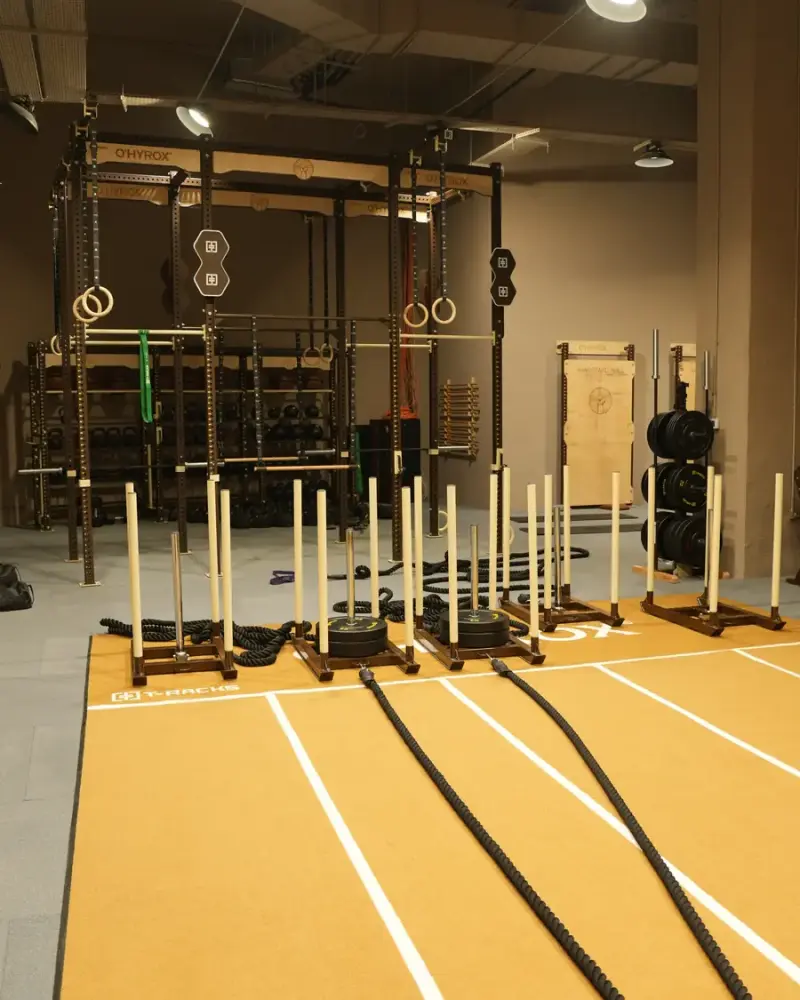
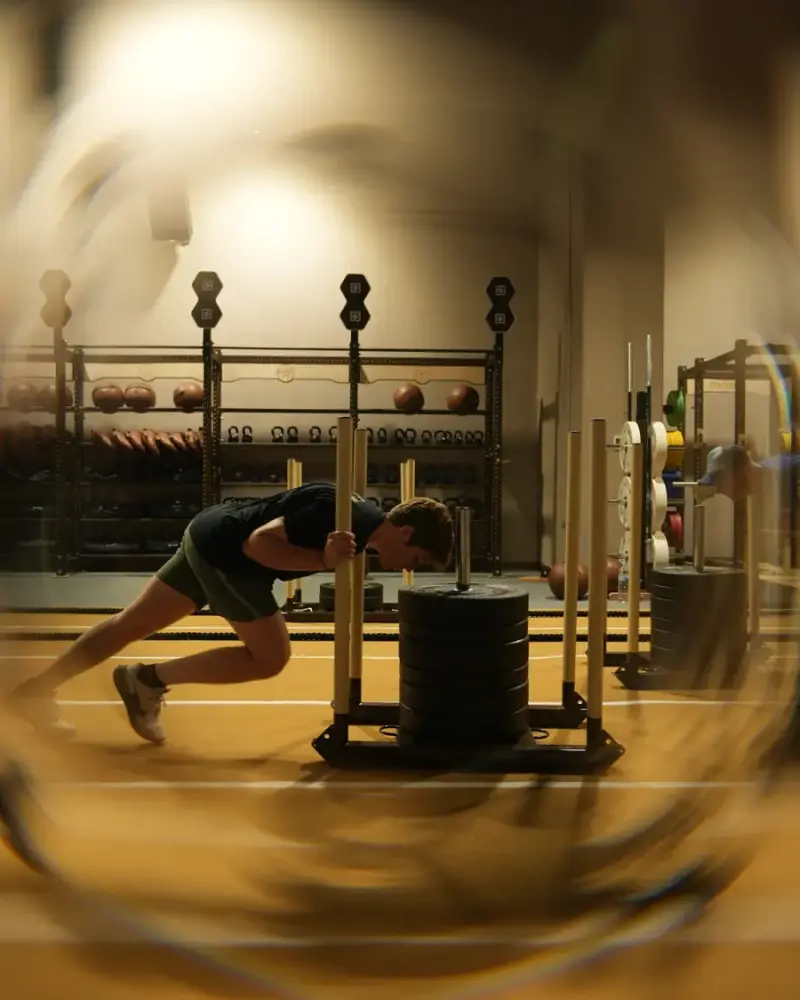
Building sled push power on Bosphorus hills, in short, is the most valuable geographic advantage available to HYROX athletes training in Istanbul. The sled push is the station that costs the most time and drives heart rate up the most in the race. The classic way to prepare is sled work in the gym, but Sarıyer’s steep hills mimic the same physiological and biomechanical demand surprisingly well.
At O’Hybrid Sky, in our programs at Skyland İstanbul, we use hill work as a complement to sled prep. Especially when the gym is busy or access to the sled area is limited, hills offer an alternative with nothing lost. In this article we cover the logic and practical application of this approach.
Why Is the Sled Push So Hard?
The sled push in HYROX demands two things at once: high force production and sustaining it continuously. A normal strength movement has an eccentric, lowering phase, and that phase provides a brief recovery. The sled push has no eccentric phase at all; just pushing, purely concentric work. That depletes the muscles’ energy stores quickly.
Biomechanically, the sled push requires continuous pushing with the torso leaning forward, the hips in extension, and the ankles in plantar flexion. The quads, glutes, and calves all work near max at the same time. This position and load profile closely resemble running up a steep hill.
Where Is the Similarity with Hills?
Running up a steep hill, your torso leans forward, your stride shortens, the push phase lengthens, and the ankle and hip extensors do most of the work. If the hill is steep enough, it becomes a pushing movement that turns into a walk; that’s the natural movement closest to the sled push.
Something is missing, too: on a hill your arms and upper back aren’t loaded as they are on the sled, and trunk stabilization works differently. So hills don’t replace the sled; they complement it.
Suitable Hills in Sarıyer
On the European side of the Bosphorus, within Sarıyer, many steep streets climb up from the shore. Criteria to consider when choosing these hills:
- Grade: The 8-15 percent range is ideal. Steeper hills turn into a survival struggle rather than technique work.
- Length: Between 60 and 150 meters, ideal for being close to sled distances.
- Surface: Smooth asphalt, not cobblestones; cobbles carry a risk of slipping.
- Traffic: Quiet streets, preferably dead ends or with little traffic.
- Descent safety: A safe, walkable return path for recovery.
There are many routes meeting these criteria around Skyland İstanbul and in Sarıyer’s neighborhoods near the shore. Once you’ve found a good hill, you can use the same route for weeks and measure progress clearly.
Hill Session Formats
Format 1: Short Max-Effort Pushes
20-30 meters on the steepest part of the hill, pushing up at the fastest possible pace. Then walk all the way down and recover for 2-3 minutes. 6-10 reps. This format targets the explosive strength demand of the first meters of the sled push.
The goal is to hit nearly the same time on every rep. If times get noticeably longer on the last reps, either recovery is insufficient or there are too many reps.
Format 2: Sustained Pushes
80-120 meters of hill, as a powerful walk or slow run at sled push tempo. Walk down in between with 90 seconds of recovery. 5-8 reps. This format better mimics the metabolic load of the 50-meter sled push in the race.
Format 3: Hybrid Hill Circuit
A format combining hill work with running: a 100-meter powerful push uphill, walk down, then a 400-meter flat tempo run, 60 seconds of rest. 5-6 rounds. This directly prepares the sled-to-run transition in HYROX and is the most race-specific hill format.
Format 4: Weighted Hills
Climbing hills with 8-15 kilos in a backpack is a practical way to increase load. But you need to start gradually, mindful of the load on the spine, and not sacrifice technique. Not recommended for beginners; you should have at least a few months of hill work behind you.
Technique Points
For hill work to truly carry over to the sled push, attention to technical detail is needed:
- Torso angle: Lean forward from the hips, not the waist; keep your back neutral.
- Stride length: Short, quick steps are more efficient than long strides.
- Foot strike: Push through the forefoot; don’t let the heel sit on the ground.
- Arm use: A powerful, rhythmic arm swing supports pushing force.
- Breathing: Rhythmic and deep; holding your breath gives speed in the first 10 meters but brings collapse later.
- Gaze: 5-10 meters ahead, not at your feet; this protects your torso position.
Fitting It into Your Weekly Program
Hill work is a high-intensity session type that causes muscle damage. It should be done once a week, twice at most. It’s important not to plan a heavy lower-body strength session the next day; leave at least 48 hours for recovery.
A practical setup: a hill session midweek, a long easy run at the weekend, strength at the start of the week. This arrangement works well for athletes living in Sarıyer with easy access to the routes. A weekly rotation with sled work in the facility is also possible: sled one week, hills the next.
Increasing Volume
It’s wise not to increase hill volume by more than 10-15 percent a week. The calf and Achilles area are the structures most loaded by this work; increasing volume too fast raises the risk of discomfort there. Walking rather than running the descent significantly reduces total impact load.
Measuring Progress
You can measure by repeating the same hill, same distance, and same format. Data to track: rep time, consistency of times between reps, post-session recovery speed, and perceived effort. If you repeat the same session four weeks later and see a lower heart rate for the same time, your capacity has improved.
You also need to test the carryover of this gain to the sled push directly. Doing a standard sled push test in the facility at the end of a hill block shows whether the carryover has happened.
Safety Notes
Because hill work is done outdoors, it needs extra care. Wear visible clothing on streets open to traffic and choose early morning or quiet hours. Don’t do hill work on wet or icy surfaces. Don’t skip the warm-up; tackling a steep hill on cold muscles is an unnecessary risk.
If you have persistent pain in your Achilles tendon, calves, or knees, it’s advisable to consult a healthcare professional before starting hill work. This type of training can bring existing issues to the surface.
Wrapping Up
The Bosphorus hills are a ready-made sled push training ground for HYROX athletes in Istanbul. Hill work done with the right grade, the right distance, and the right technique is a strong complement to sled work in the facility.
O’Hybrid Sky’s location in Sarıyer, Istanbul gives direct access to these routes. Making the city’s geography part of your training plan is both a source of variety and a practical advantage. Just think of the hill not as an obstacle but as equipment.