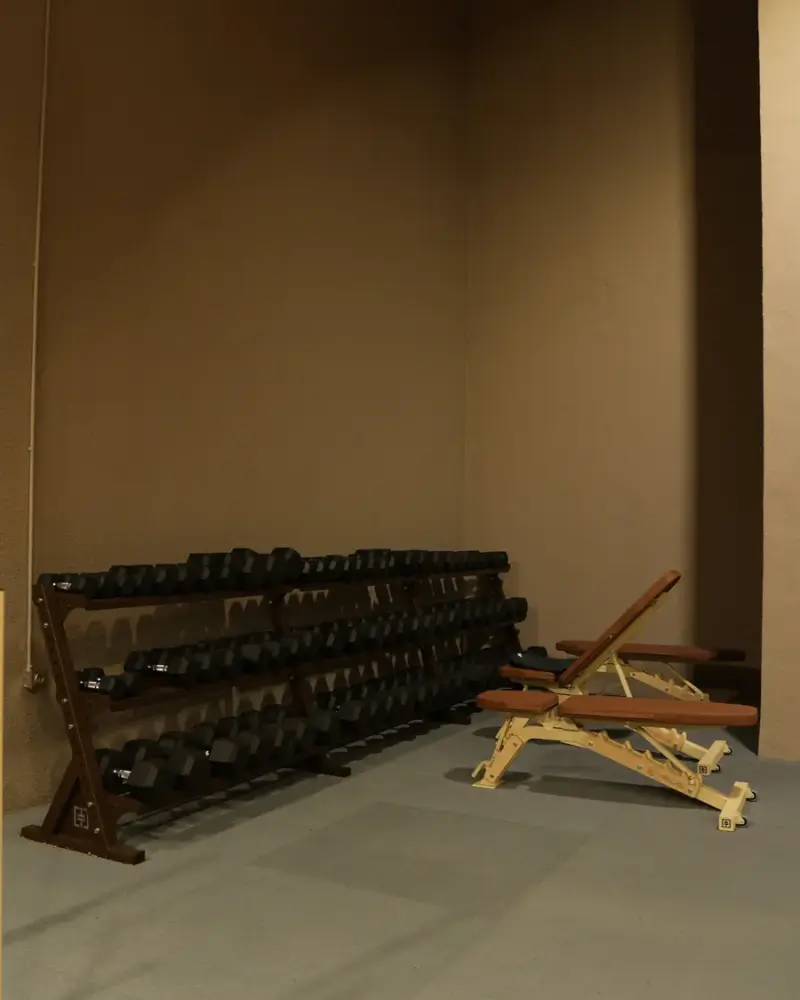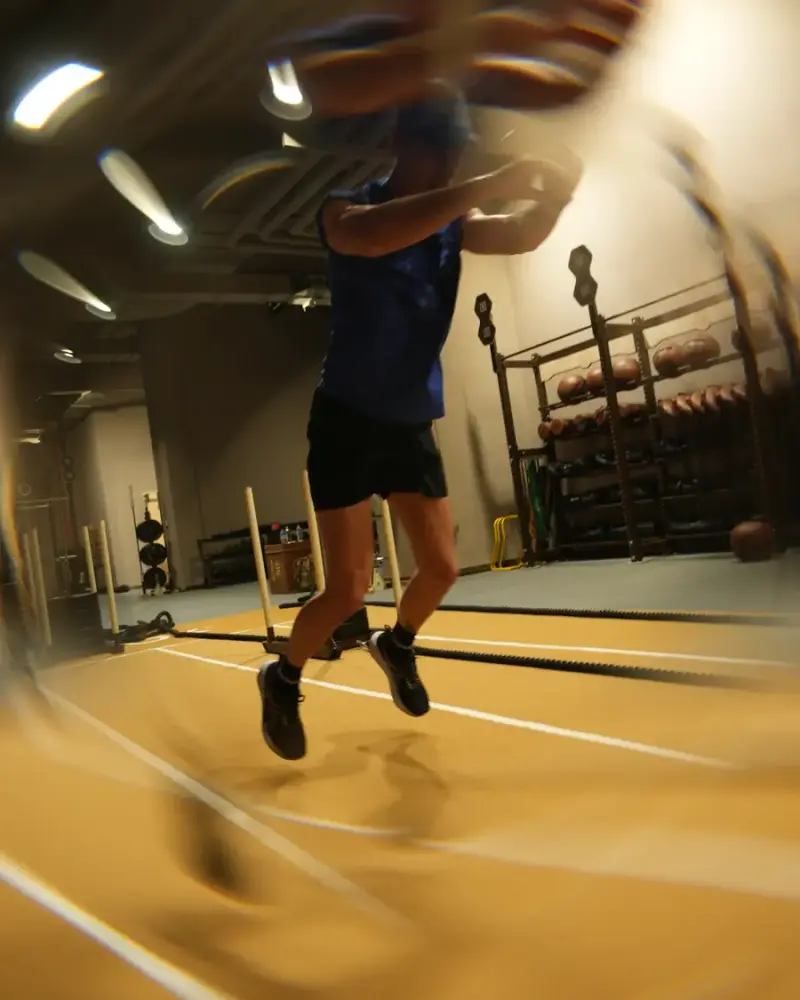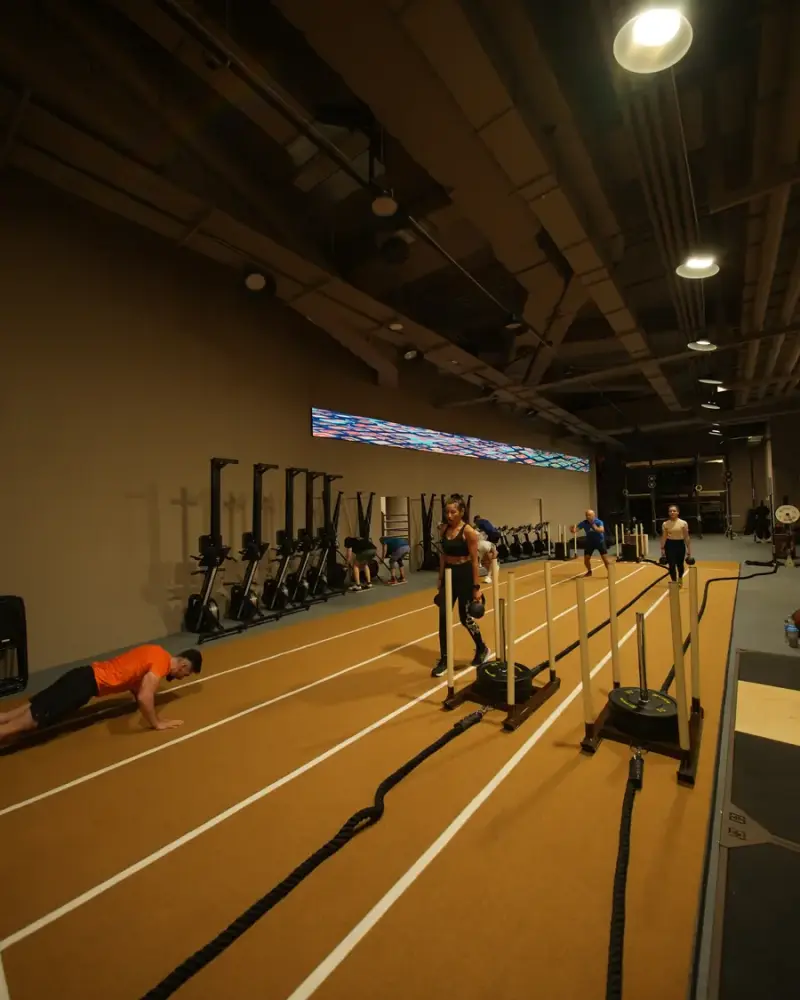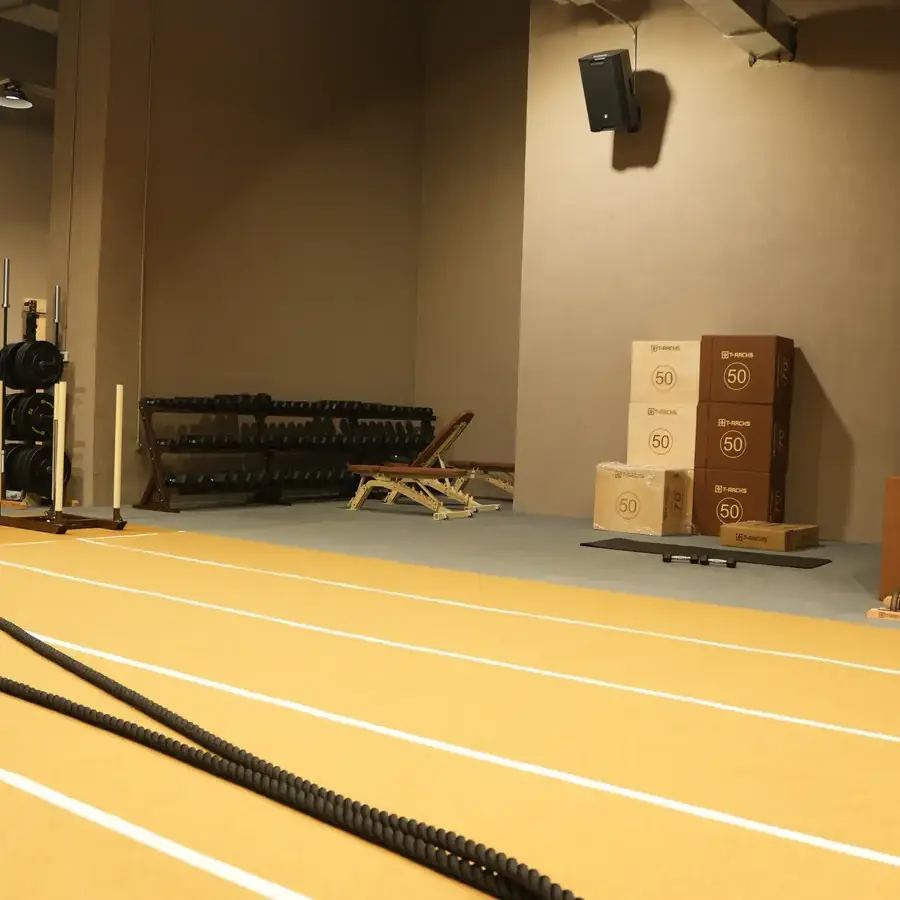
Deciding whether to train through pain is the situation HYROX athletes face most often and manage worst. Hybrid training is by nature high-volume and made up of varied loads; at some point, discomfort shows up in the shoulder, knee, lower back or Achilles area. The decision made in that moment determines the difference between a two-week break and a three-month layoff.
At O’Hybrid Sky, the approach we teach athletes in our programs at Skyland İstanbul is simple: don't ignore pain, and don't panic either. Use a decision framework. In this article we share that framework. But let's be clear from the start: this article is not diagnostic or treatment advice; it offers a general approach to training planning. For persistent or severe pain, you should consult a healthcare professional.
Pain Isn't Always a Stop Signal
Everyone who trains lives with some degree of discomfort. Muscle soreness after a hard session, tenderness in the first weeks of a new movement, heavy legs after a long run; none of these are signs of injury.
On the other hand, some types of pain are genuine warning signs. Telling them apart is the basis of the training decision. Stopping completely isn't always the right answer either; inactivity carries its own cost.
Signs of Training-Related Discomfort
- A sensation that eases with the warm-up and fades during the session.
- General fatigue soreness felt symmetrically on both sides.
- Muscle tenderness that eases on its own within 24-48 hours.
- Discomfort felt only under certain loads that doesn't affect daily movement.
Signs That Need Attention
- Pain that doesn't ease with the warm-up and increases during the session.
- One-sided, sharp, pinpoint pain.
- Pain that affects daily movement, walking or sleep.
- Swelling, noticeable warmth or discoloration.
- Numbness, tingling or a feeling of weakness.
- A complaint that hasn't eased, or has even worsened, for a week or longer.
If any of the signs in the second list are present, the decision is clear: stop training that area and see a healthcare professional. This isn't something training planning can solve.
A Three-Question Decision Framework
When you encounter discomfort of the kind in the first list, asking these three questions before the session helps.
Question 1: What Happened After the Warm-Up?
If the pain eased after a gradual 10-12 minute warm-up, you can continue the session, but with an adapted plan. If it stayed the same or got worse, the right call is to skip movements that load that area today.
Question 2: Is Movement Quality Maintained?
If pain restricts your range of motion and compensation patterns appear, meaning your body shifts the load elsewhere, continuing that movement creates a new problem. If quality can't be maintained, the load or the movement has to change.
Question 3: How Do You Feel After the Session?
This question is answered the next day. If the pain after the session is the same or less, the choice was right. If it has increased noticeably and is still high 24 hours later, the session was too much; the next one needs to be more conservative.
Adapting Training: Modify Instead of Stopping
Stopping training completely when you're in pain is unnecessary in most cases. The targeted capacity can be maintained in other ways. Adaptation options:
- Swap the movement: Replace the painful movement with an alternative that works the same muscle group. With shoulder discomfort, do horizontal pulling instead of vertical pressing.
- Limit range of motion: Work within a pain-free range. Partial squats instead of full squats.
- Reduce the load: Do the same movement with lighter load and higher reps.
- Change the modality: If running hurts, shift aerobic volume to the bike or an ergometer.
- Unilateral work: Keep training the unaffected side.
- Reduce volume: Cut the number and length of sessions while maintaining intensity.
The fourth option is especially useful in HYROX preparation. For running-related discomfort, the ergometer and bike remove impact load while preserving your aerobic base. An athlete who trains this way for two or three weeks doesn't experience significant capacity loss on return.
Making the Call as Race Day Approaches
The pain decision changes with the time left until the race. With three months to go, the cost of caution is low; taking two weeks off and coming back solid makes sense. With two weeks to go, the decision is more complex.
Let's be clear here: if the nature of the pain is uncertain, the decision whether to race should be made with a healthcare professional. From a training planning perspective, though, the practical approach is to reduce volume in the final weeks before the race and focus on technique and recovery. That's the logic of the taper anyway; when pain is present, this phase can naturally be run more conservatively.
The Decision to Postpone a Race
Missing a race is better than missing a season. The HYROX calendar offers multiple events throughout the year. Skipping one race is a far smaller loss than three months without training. Keeping this perspective in mind prevents emotional decisions.
A Preventive Approach
The best way to manage pain is to reduce the likelihood of it appearing. Practices that achieve this in HYROX preparation:
- Keep weekly volume increases around 10 percent.
- Plan a lighter week every three to four weeks.
- Don't increase volume and intensity at the same time.
- Never skip the warm-up.
- Treat sleep and nutrition as part of training.
- Don't pile up excessive reps in a single movement pattern; keep variety.
Real-time technical feedback in O’Hybrid Sky sessions at Skyland İstanbul is the most effective part of this preventive approach. Repeating a faulty movement pattern for weeks causes more problems than a single hard session.
The Return Process
The return after a break is the stage where the most mistakes are made. Athletes start where they left off to make up for lost time, which usually ends with the same problem recurring.
A sensible return starts at 50-60 percent of the volume you left off at and builds gradually over two to three weeks. Monitor for 48 hours after each increase. It looks like lost time, but it delivers results far faster than repeated setbacks.
If you have a return protocol from a healthcare professional, your training plan should follow that protocol, not general rules.
Wrapping Up
Deciding whether to train through pain isn't a binary choice; it's a range of adaptation options. Read the signs correctly, use the three-question framework, consider modifying instead of stopping and don't rush the return.
The most fundamental principle we teach athletes at O’Hybrid Sky’s facility in Sarıyer, Istanbul, is this: long-term progress comes from the sum of uninterrupted weeks. For persistent, severe pain or pain that affects daily life, consult a healthcare professional before making any training decision.